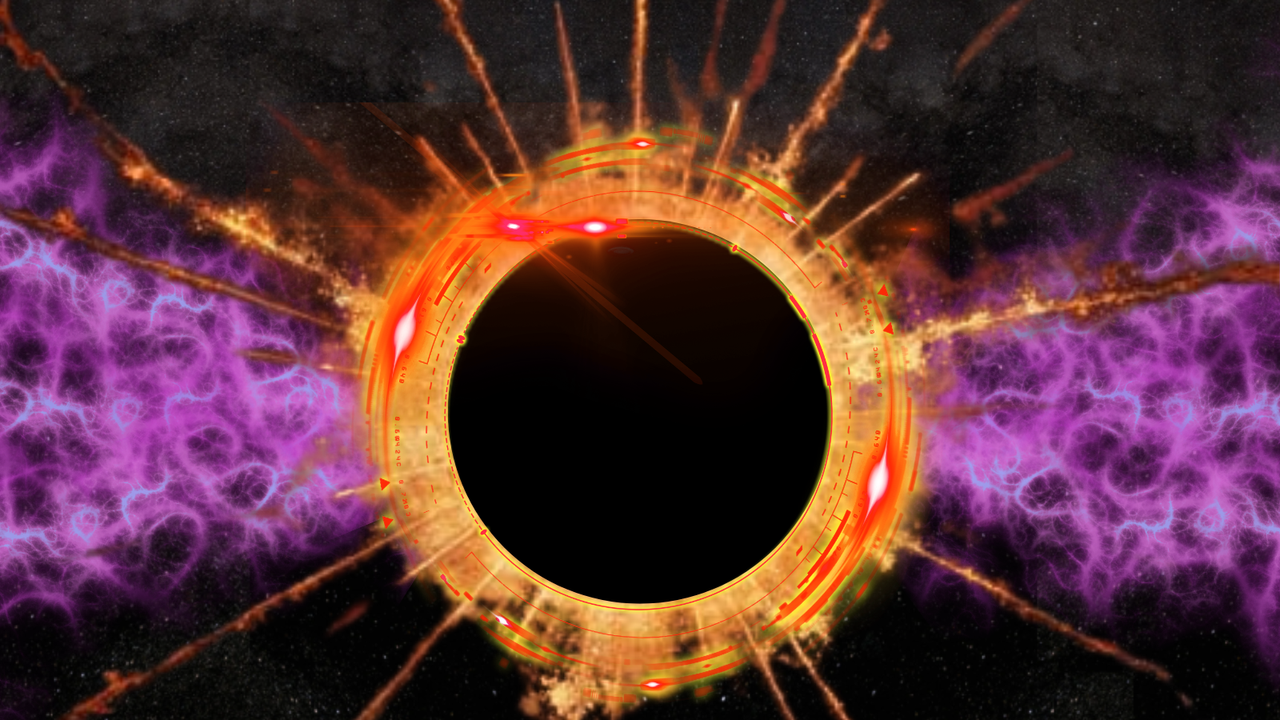
The James Webb Space Telescope has detected numerous supermassive black holes in the early universe, presenting a puzzle for astrophysicists. These objects shouldn't exist yet according to standard formation models. The universe is only a few hundred million years old in these observations, too young for black holes to grow so massive through conventional accretion alone.
A new mechanism involving decaying dark matter offers a potential solution. Researchers propose that dark matter particles decaying in the early universe could have provided the energy and conditions needed to seed supermassive black holes faster than previously thought possible. This process would bridge the gap between theoretical predictions and Webb's actual observations of surprisingly mature black holes in the infant universe.
The discovery challenges our understanding of black hole formation and early cosmic evolution. Webb's infrared capabilities allow astronomers to peer deeper into the early universe than ever before, revealing objects that fundamentally reshape our models of how the cosmos developed. The decaying dark matter hypothesis requires further testing, but it demonstrates how observational breakthroughs force theoretical frameworks to evolve.