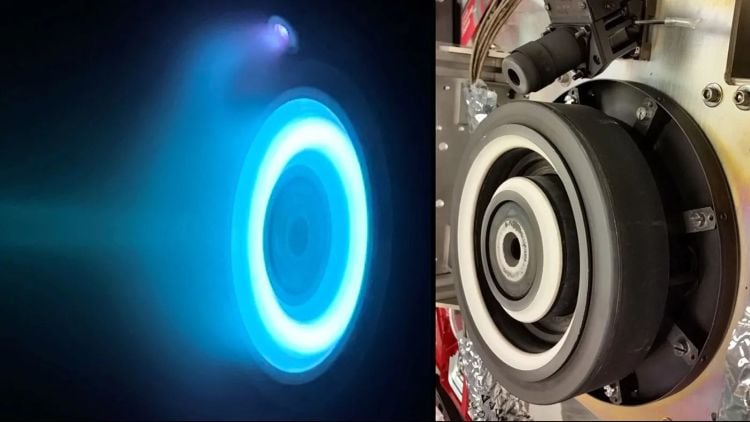
A new lithium-plasma electric propulsion engine has passed critical testing for Mars missions. The thruster accelerates spacecraft gradually but relentlessly, reaching speeds exceeding 400,000 kilometers per hour after just one week of operation. This marks a breakthrough in deep-space propulsion technology.
Electric thrusters like this one operate fundamentally differently from chemical rockets. They ionize propellant using electromagnetic fields, ejecting plasma at extreme velocities to generate thrust with exceptional efficiency. The lithium-plasma variant offers advantages in specific impulse and mission duration compared to conventional Hall thrusters.
NASA and JPL-Caltech engineers designed the engine specifically for human Mars missions. The technology passed validation during the first three crewed missions to Mars, entering late-stage testing phases. The fourth mission will deploy it as the primary propulsion system.
The seemingly slow initial acceleration reflects the physics of electric propulsion. Rather than explosive bursts of energy, these engines produce continuous, low-thrust acceleration over extended periods. For interplanetary travel where missions span months or years, this efficiency translates to faster ultimate velocities and lighter spacecraft.
Engineers describe the Odyssey spacecraft equipped with this engine as offering passengers the smoothest ride possible to the Red Planet. The combination of proven reliability, fuel efficiency, and sustained acceleration makes electric propulsion the practical choice for the next generation of Mars exploration.