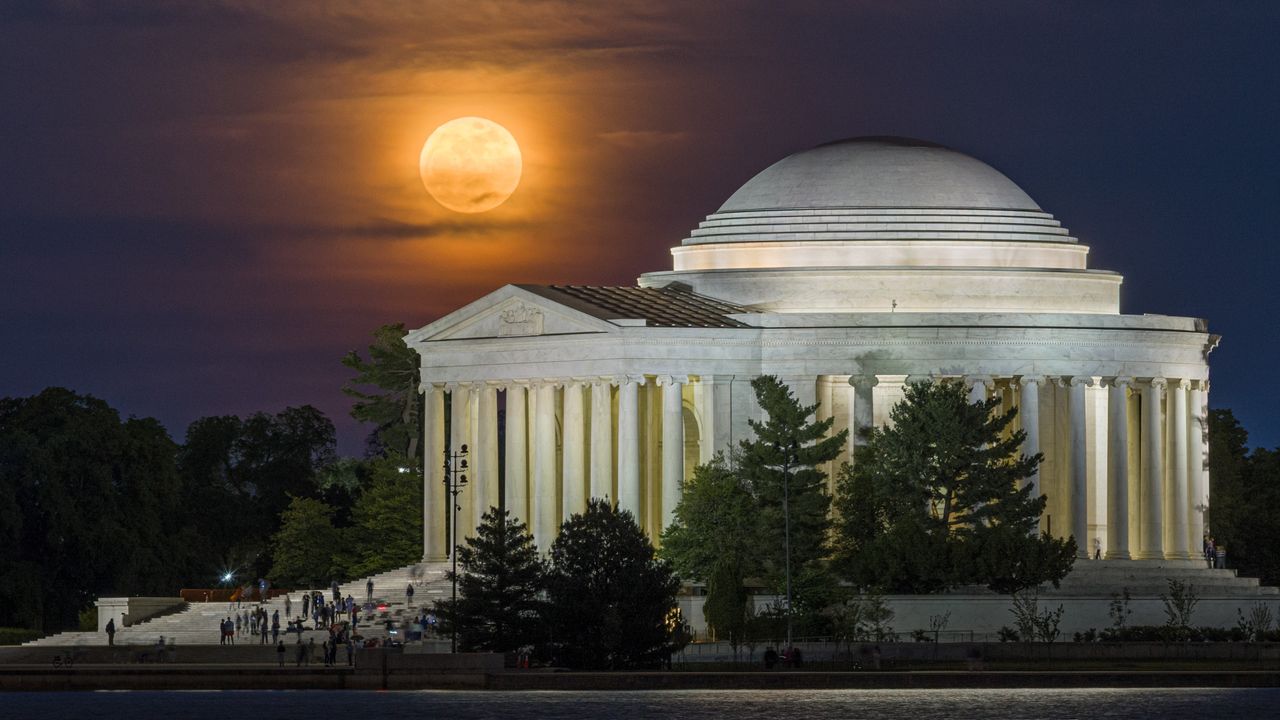
May's Flower Moon will illuminate the night sky this month, followed by a rare Blue Moon on May 31. The two full moons bracket the calendar month, with the May full moon earning its traditional name from the spring flowers blooming across North America during this period.
A Blue Moon occurs when two full moons fall within the same calendar month, a rarity that happens roughly once every 2.5 years. The May Flower Moon reaches its peak illumination when the Moon travels directly opposite the Sun in its orbit, positioning Earth between the two bodies. This alignment occurs at a specific moment, though the moon appears full for several nights surrounding that point.
Observers worldwide have captured stunning photographs of the Flower Moon as it rose across different continents. The lunar disk appears largest and most golden when near the horizon, an optical illusion caused by Earth's atmosphere bending light from the distant satellite.
The back-to-back full moons offer skywatchers two opportunities to observe lunar details. Binoculars or small telescopes reveal craters, mountains, and valleys across the lunar surface without requiring specialized equipment.