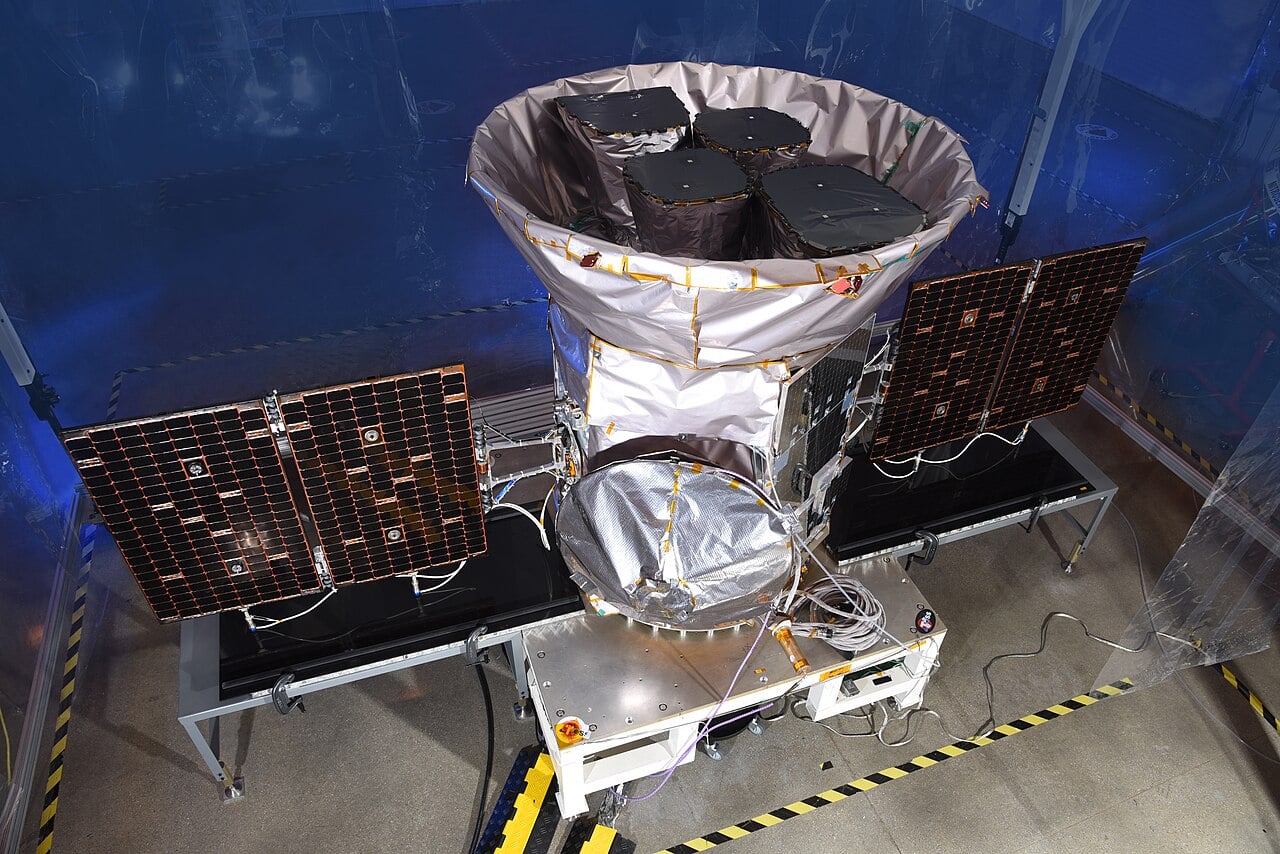
NASA's TESS satellite has revealed a puzzling gap in exoplanet demographics across the Milky Way. Astronomers confirmed that nearly every star hosts at least one planet, yet the galaxy's most abundant stars display a striking absence of sub-Neptunes, the second-most common planet type overall.
The data shows small, faint red dwarf stars, which comprise the majority of the galaxy's stellar population, host rocky super-Earths in abundance. Yet these same stars almost never harbor sub-Neptunes, planets larger than Earth but smaller than Neptune. This inverts expectations based on planetary systems around Sun-like stars, where sub-Neptunes rank second in frequency.
The finding raises questions about planetary formation and migration around low-mass stars. Super-Earths may form readily in the inner regions of protoplanetary disks around red dwarfs, while conditions for sub-Neptune formation or retention remain unclear. The TESS mission, which launched in 2018, has catalogued thousands of exoplanet candidates, providing the statistical power needed to identify these population-level patterns.
This discovery fundamentally reshapes our understanding of how planets assemble themselves across different stellar types and suggests formation mechanisms differ significantly between planetary systems orbiting massive and low-mass stars.