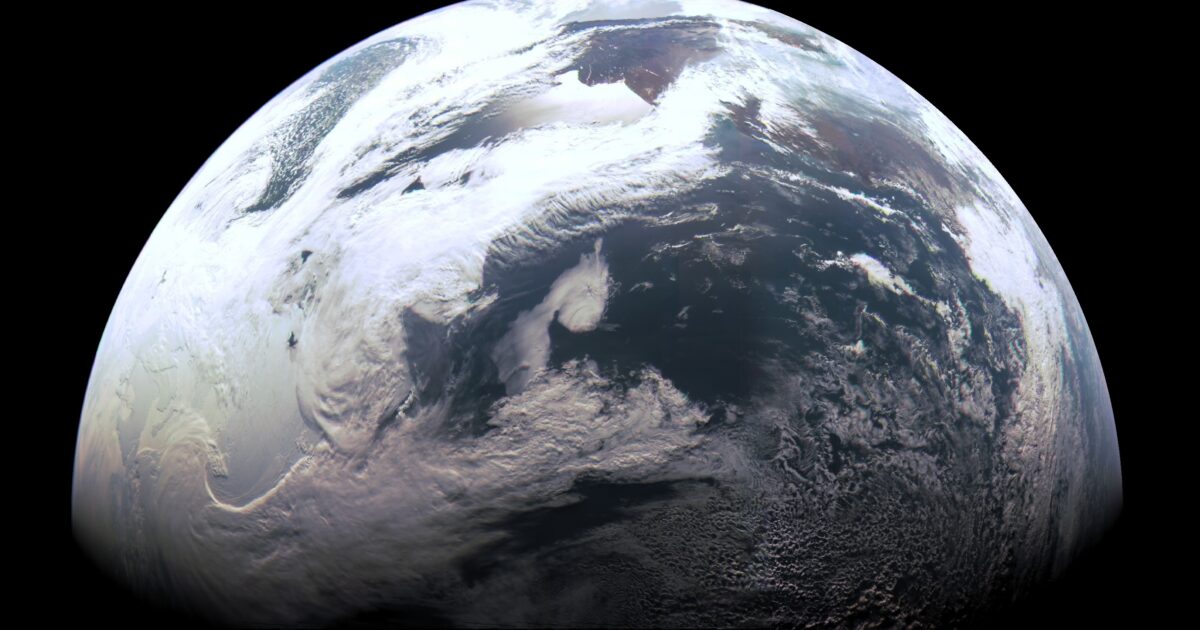
# Earth Looks Best When We Explore the Rest
NASA's Earth science missions face funding pressures that threaten the agency's ability to monitor our planet's climate, weather patterns, and environmental health. The Planetary Society calls for sustained investment in these programs as part of Earth Day advocacy.
NASA operates a fleet of Earth-observing satellites that track atmospheric composition, ocean temperatures, ice sheet dynamics, and land use changes. Missions like Landsat, the Earth Observing System, and various atmospheric research spacecraft generate data essential for climate science and disaster response.
The organization argues that space exploration and Earth stewardship work together. Studying other planets refines our understanding of Earth's climate system. Technology developed for Mars rovers and lunar missions drives innovation in Earth monitoring.
The Planetary Society urges Congress and the White House to maintain funding for NASA's Earth science division. Current budgets constrain the replacement of aging satellites and the development of next-generation instruments. Without adequate resources, critical data streams measuring atmospheric greenhouse gases, sea level rise, and polar ice loss face interruption.
The message frames Earth observation not as separate from space exploration, but as integral to it. Protecting our planet requires the same commitment to science and technology that sends rovers to Mars.