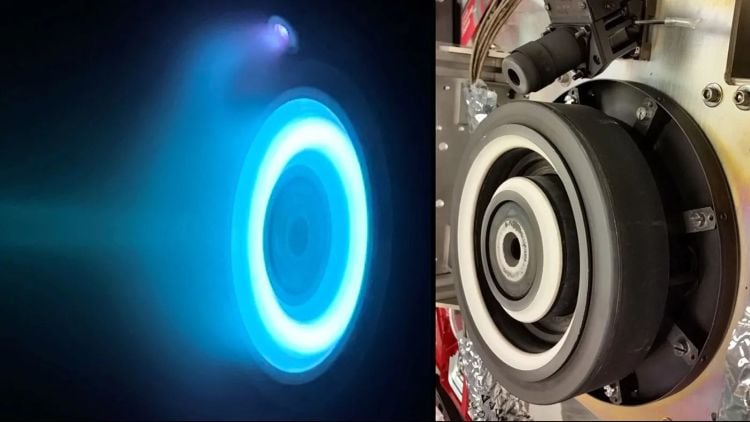
A lithium-plasma electric propulsion engine has passed critical testing for future Mars missions. The thruster operates with remarkable efficiency, accelerating spacecraft gradually to extreme velocities. Early acceleration appears minimal, but over time the engine reaches speeds exceeding 400,000 kilometers per hour.
Electric propulsion systems like this one consume far less propellant than conventional chemical rockets, making them ideal for long-duration deep space travel. The technology allows spacecraft to achieve high velocities through sustained acceleration rather than brief, explosive burns. This approach reduces fuel mass and extends mission range, both essential for crewed Mars missions.
NASA and JPL-Caltech developed the lithium-plasma engine through iterative testing phases. The thruster proved its reliability during unmanned mission simulations, demonstrating consistent performance across extended operating periods. Engineers report the technology is now entering late-stage validation before deployment on actual spacecraft.
Future human missions to Mars will rely on advanced propulsion systems like this one. The engine's smooth acceleration profile and fuel efficiency make it far superior to chemical propulsion for interplanetary transit. With successful testing complete, the lithium-plasma thruster stands ready to power humanity's journey to the red planet.