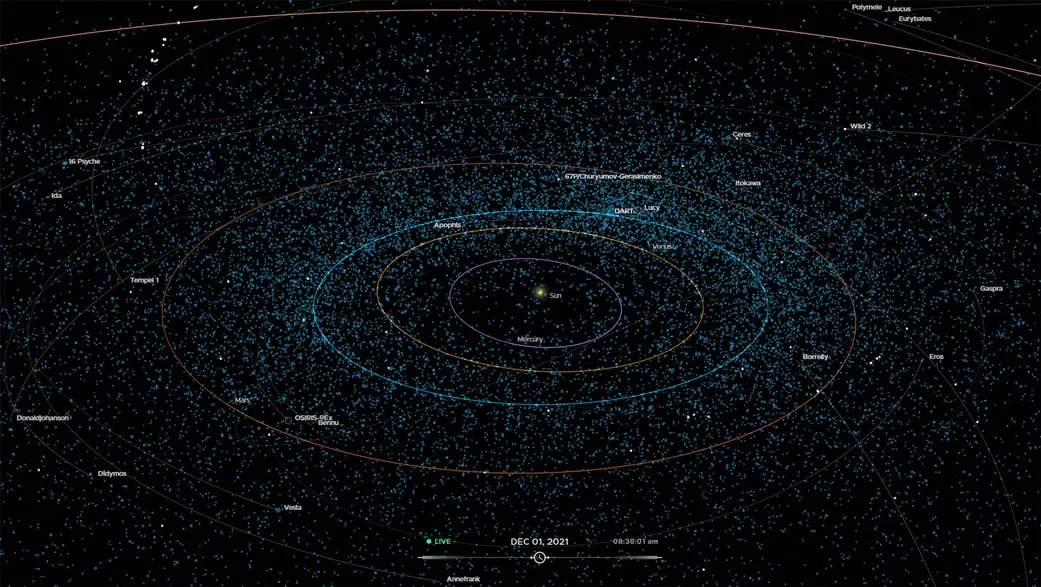
Alessandro Beolchi of Khalifa University of Science and Technology has developed a computationally efficient method for plotting trajectories to Near-Earth Objects, addressing a major challenge in asteroid mission planning.
Tens of thousands of NEOs orbit within reach of spacecraft, offering valuable resources and scientific opportunities. However, calculating rendezvous trajectories traditionally demands enormous computational resources. Beolchi's approach reduces that burden significantly while maintaining accuracy.
The new method streamlines the complex calculations required to chart courses through space to these miniature worlds. By lowering computational demands, the technique makes asteroid missions more feasible for space agencies and commercial operators with limited processing power.
The research opens pathways for more frequent and diverse missions to NEOs. NASA, ESA, and private spaceflight companies increasingly target these objects for science, resource prospecting, and planetary defense studies. Faster trajectory planning accelerates mission timelines and reduces development costs.
Beolchi's work represents progress in astrodynamics, the field governing spacecraft navigation and orbital mechanics. As humanity expands its presence beyond Earth orbit, efficient trajectory design becomes essential for sustainable space exploration and utilization of near-Earth resources.