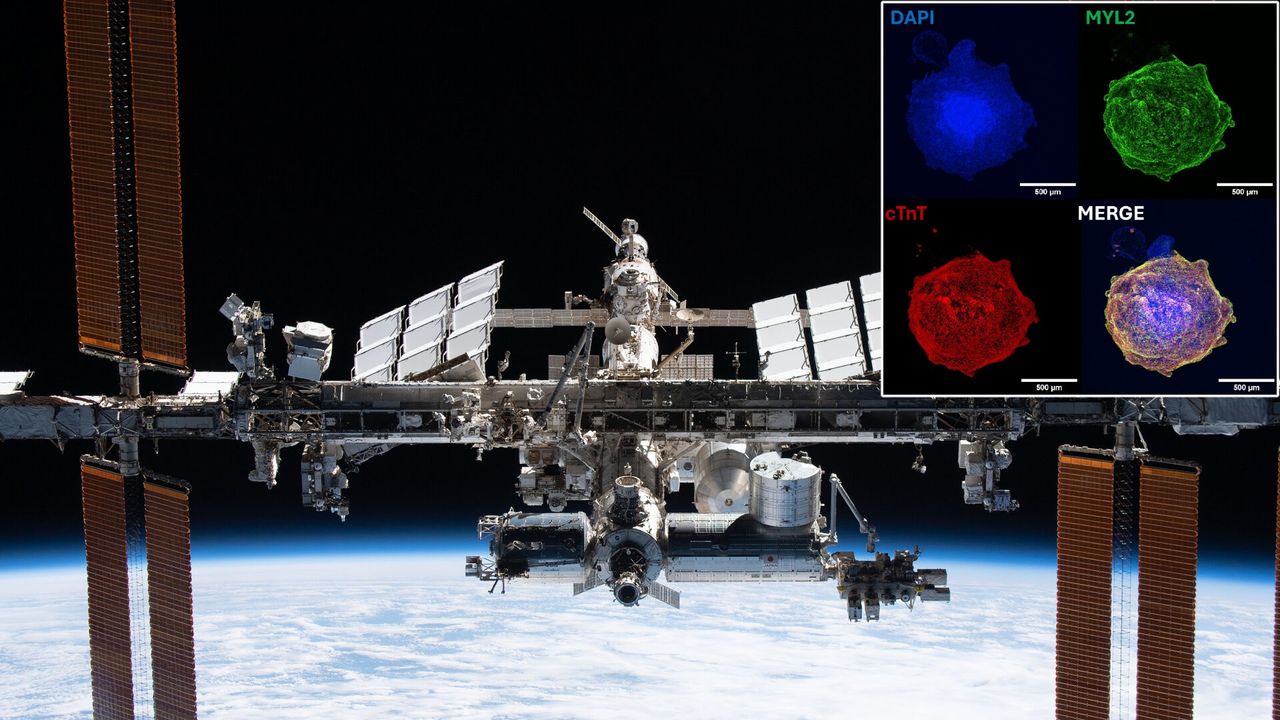
Researchers have discovered that human heart tissue grown from stem cells develops faster in microgravity than in Earth laboratories. While prolonged spaceflight causes the human heart to weaken and shrink, miniature hearts engineered in orbital conditions show accelerated growth rates compared to identical experiments conducted on the ground.
The finding emerges from studies examining how microgravity affects cellular development. Scientists cultured heart tissue from human stem cells aboard spacecraft and in terrestrial labs to compare growth patterns. The space-based samples demonstrated superior development speed, suggesting that the absence of gravity alters cellular processes in ways that benefit cardiac tissue engineering.
This paradox reveals important details about how gravity influences biological systems. The human cardiovascular system deteriorates during spaceflight due to fluid redistribution and reduced workload on the heart. Yet those same conditions apparently accelerate the growth of engineered cardiac cells.
The research carries implications for both space medicine and regenerative medicine on Earth. Understanding why stem cell-derived heart tissue thrives in microgravity could inform strategies to grow replacement cardiac tissue for transplant patients. Researchers may develop methods to replicate space-like conditions in ground-based bioreactors, potentially revolutionizing treatment for heart disease without requiring orbital experiments.