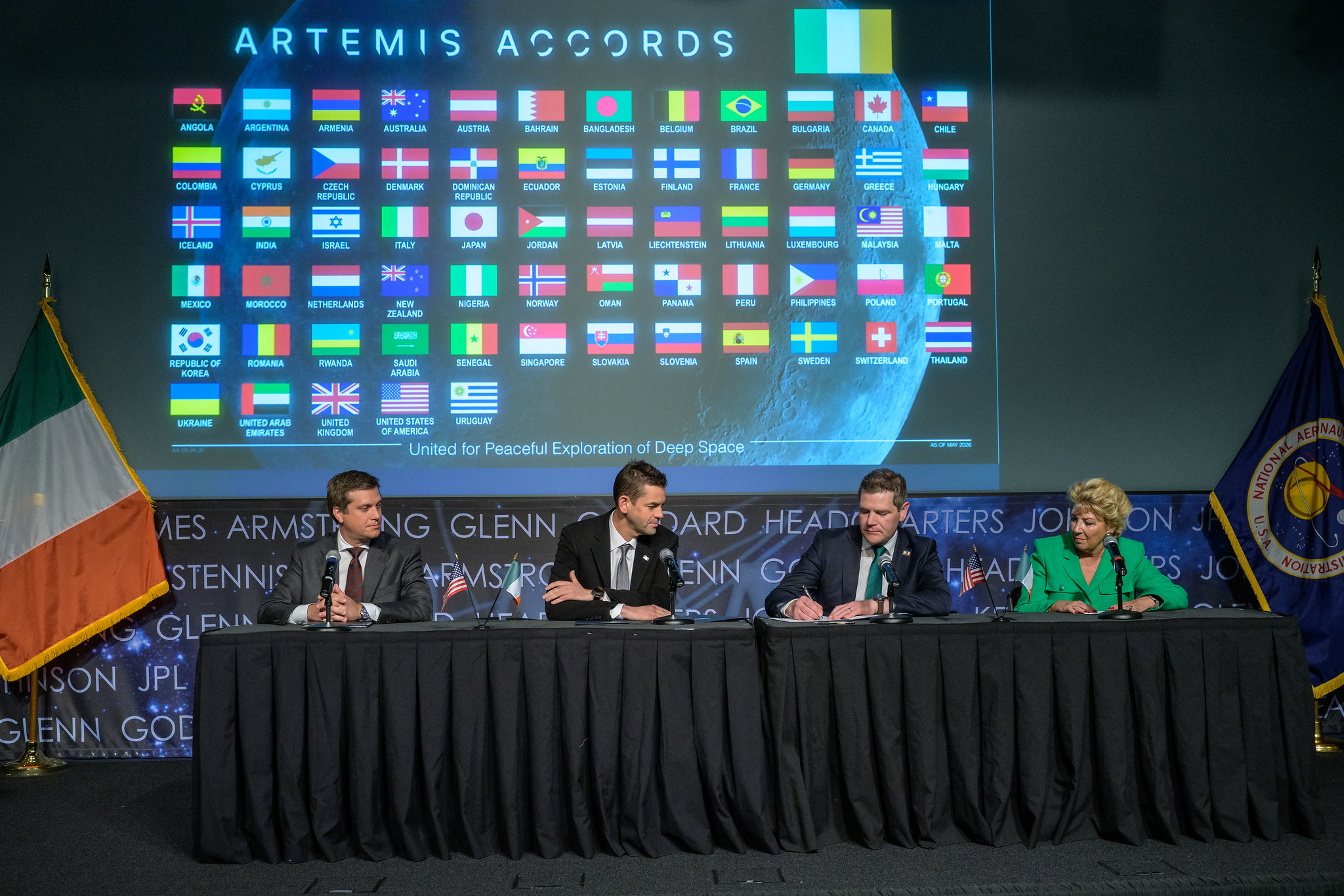
Ireland formally signed the Artemis Accords on Monday, joining 23 other European Space Agency member states in committing to responsible space exploration. NASA hosted the signing ceremony, adding Ireland to a growing coalition of nations pledging adherence to principles of transparency, safety, and peaceful conduct in space activities.
The Artemis Accords establish a framework for sustainable lunar exploration and broader space operations. Signatories commit to registering space objects, ensuring transparency in space activities, and respecting the outer space treaty obligations that prohibit national appropriation of celestial resources. The agreement also emphasizes safety protocols to prevent orbital debris and hazardous practices that could endanger space assets and astronauts.
Ireland's signature reflects the nation's strategic position within European space infrastructure and its deepening ties with NASA. As an ESA member since 1975, Ireland contributes to continental space programs while now formally aligning with the broader international consensus on space governance represented by the Artemis Accords.
The Accords take their name from NASA's lunar program, which aims to return humans to the Moon and establish sustained presence there. The agreement provides diplomatic structure for the international cooperation necessary to achieve these goals while preventing conflicts over resources and territorial claims on the lunar surface.
Each signatory nation affirms commitment to responsible practices in space debris mitigation, safety standards for launch operations, and transparency regarding space missions. The framework also encourages peaceful competition and scientific collaboration among spacefaring nations.
Ireland's accession strengthens the Accords' legitimacy as a quasi-international standard for space conduct. With ESA member states now unanimously represented, the agreement encompasses Europe's combined space capabilities and establishes unified principles guiding European astronauts, launch providers, and space agencies. This coordination supports NASA's Artemis program while positioning European partners as equals in lunar exploration architecture.
The growing number of signatories demonstrates international consensus