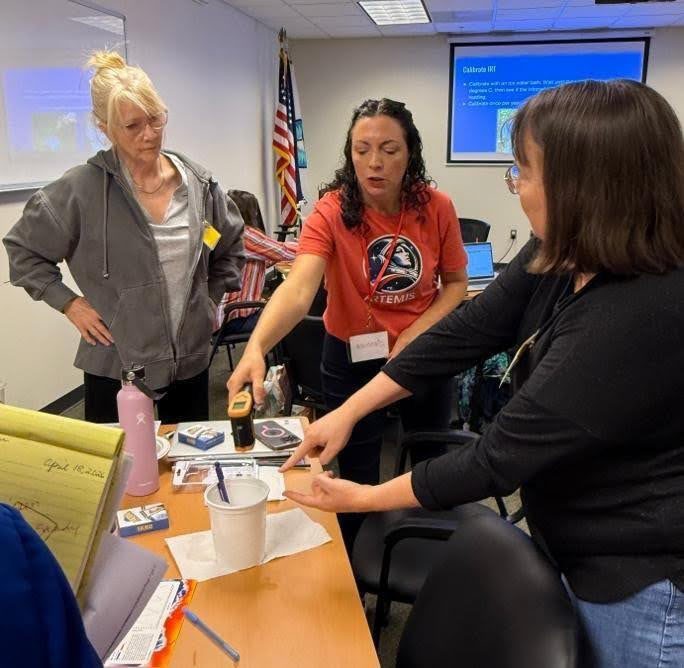
NASA and the GLOBE Program are building a regional science education network across Virginia's Tidewater region through partnerships with 38 educators from seven school districts. The collaboration integrates NASA eClips, a multimedia resource platform, with GLOBE's earth observation curriculum to strengthen classroom instruction in earth science and environmental monitoring.
The Elizabeth River Project and other community organizations anchor this effort, creating connections between formal education and real-world environmental work. Teachers gain access to NASA satellite data, ground-based observation techniques, and video content that directly connects to local coastal ecosystems. Students participating in GLOBE protocols contribute observations to a worldwide database, making their work part of NASA's broader earth science research infrastructure.
This model addresses a persistent gap in STEM education. Rather than treating space science as abstract or distant, the partnership demonstrates how NASA's tools and data apply to immediate environmental challenges. Virginia's Tidewater region, facing sea-level rise and coastal change, offers educators concrete examples for data literacy and climate science instruction.
The regional approach amplifies individual teacher efforts. By coordinating across districts, educators share resources, professional development time, and best practices. NASA eClips provides classroom-ready content aligned to standards. GLOBE's citizen science framework transforms students into data collectors whose contributions feed into legitimate science operations at NASA.
This strategy extends NASA's reach beyond traditional outreach into systemic educational change. When 38 teachers strengthen their practice simultaneously within connected communities, the impact cascades. Their students develop operational fluency with satellite imagery, understand the scientific method through environmental monitoring, and recognize careers connecting space science to planetary stewardship.
The partnership reflects NASA's recognition that exploration depends on informed citizens who understand earth systems and data science. Building this foundation in coastal Virginia creates a template for similar collaborations nationwide.
WHAT THIS MEANS: NASA and GLOBE are proving that space agency resources catalyze meaningful regional STEM improvement when embedded in coord