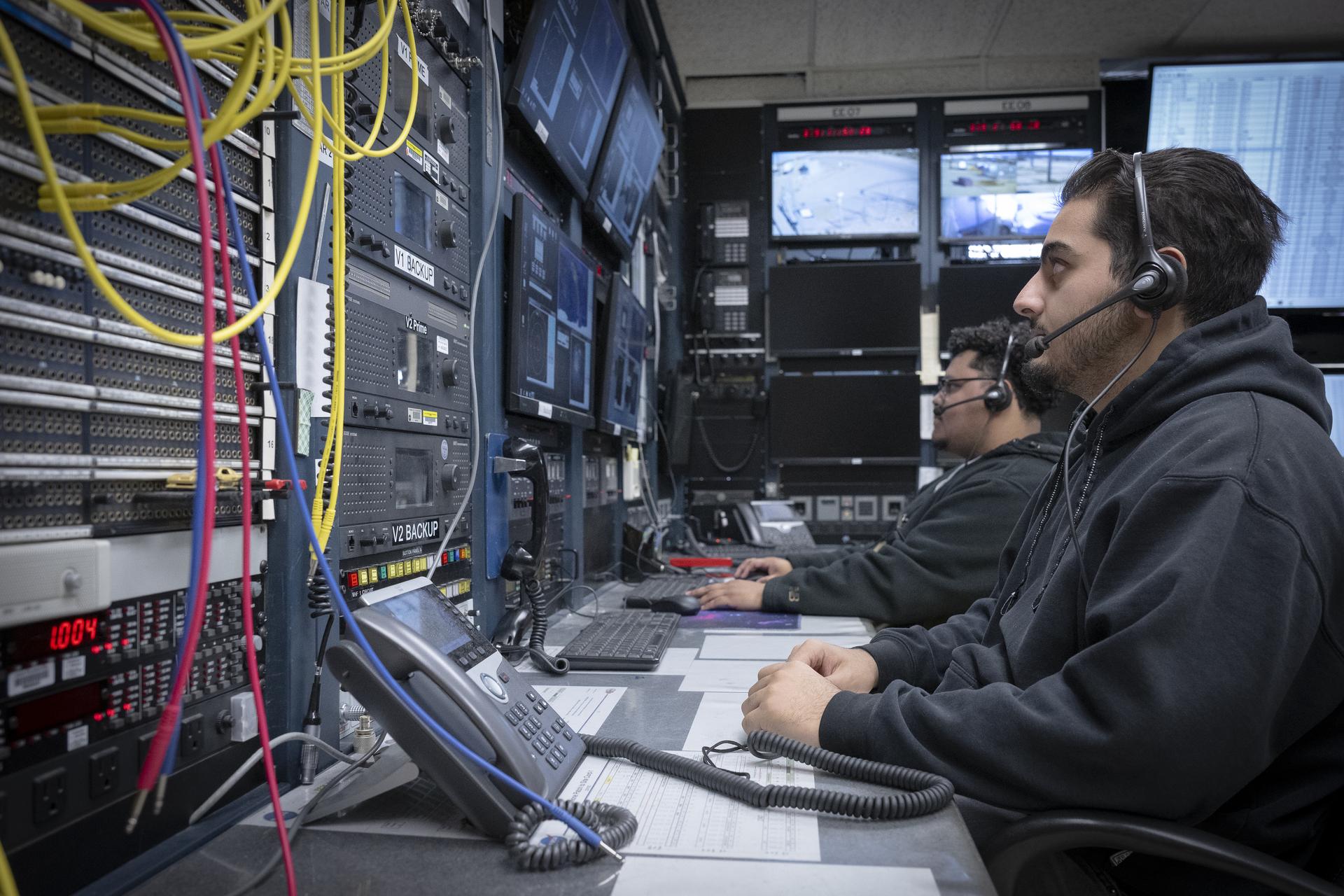
NASA's Armstrong Flight Research Center operates the Dryden Aeronautical Test Range at Edwards, California, a critical infrastructure system enabling experimental aircraft programs and space technology validation. The DATR provides real-time communications, precision tracking, and data acquisition for research flights across the agency's portfolio.
Armstrong tests advanced aeronautical concepts through flight research that directly informs spacecraft design and operational procedures. The center's experimental aircraft programs explore everything from autonomous flight systems to novel propulsion architectures. These projects require continuous telemetry streams, ground-to-air communications, and trajectory monitoring across test ranges spanning hundreds of miles over the Mojave Desert and Pacific Ocean.
The DATR infrastructure processes data from multiple simultaneous missions, translating raw flight parameters into actionable engineering information. This capability accelerates the development cycle for both aeronautics research and space exploration technologies. Armstrong has historically served as the landing and test site for NASA's Space Shuttle orbiter fleet, and the center continues supporting hypersonic vehicle development and other cutting-edge aerospace research.
Edwards Air Force Base, which hosts Armstrong, provides the geographic advantage of vast unpopulated airspace suitable for high-risk experimental flights. The DATR's distributed network of ground stations, radar systems, and communication nodes creates a controlled environment where engineers can safely push aircraft and spacecraft systems to their operational limits.
Recent Armstrong projects include X-57 Maxwell, an electric propulsion research aircraft, and work on advanced materials and control systems. The DATR enables these programs by delivering the telemetry backbone each requires. Without this infrastructure, researchers would lack the real-time situational awareness needed to safely conduct high-speed, high-altitude, or autonomous experimental flights.
THE BOTTOM LINE: The Dryden Aeronautical Test Range represents essential ground infrastructure that translates experimental aircraft design into reliable space and aeronautics capabilities, bridging the gap between laboratory development