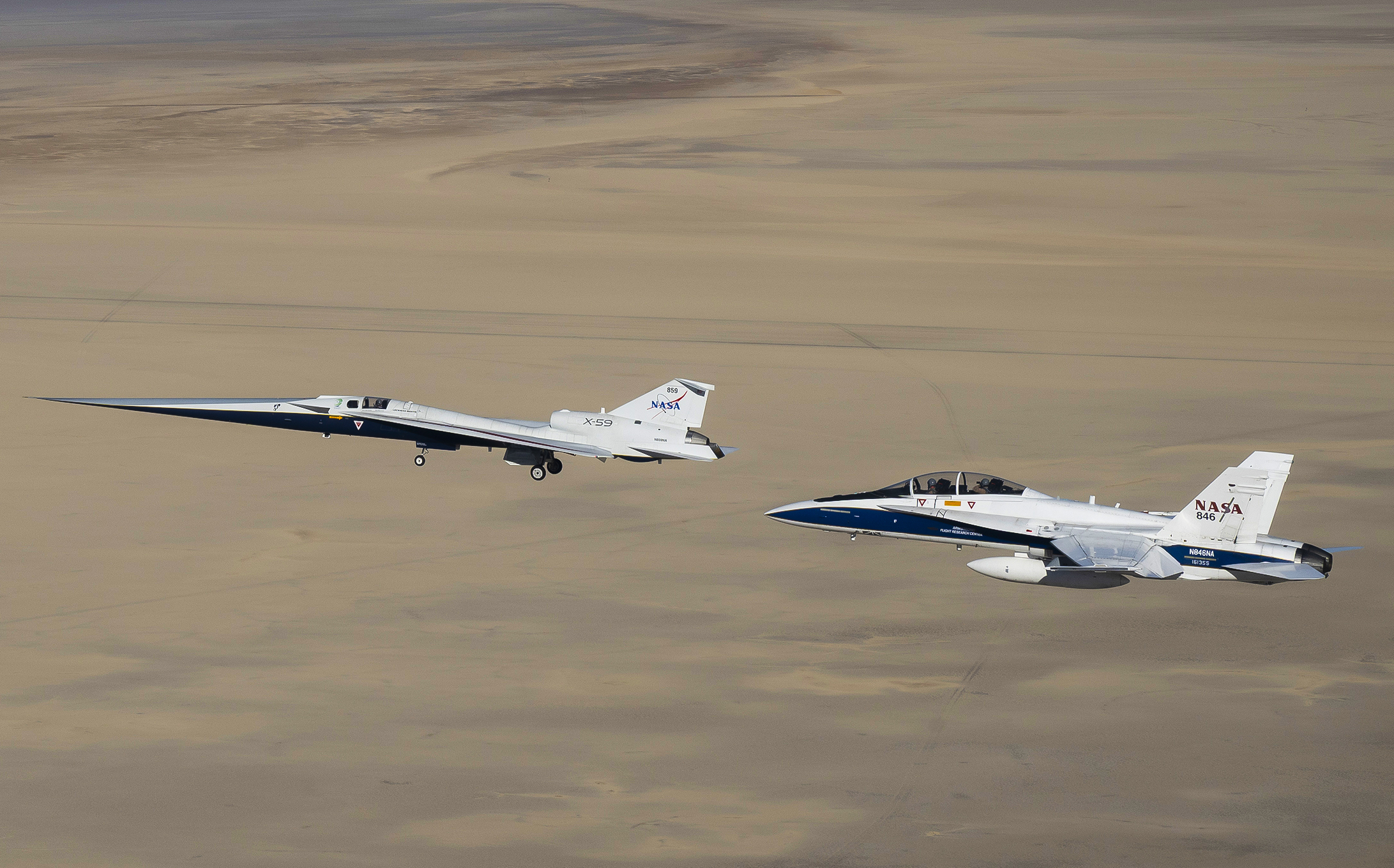
NASA Armstrong Flight Research Center in Edwards, California, expanded its experimental aircraft fleet this year with the addition of two F-15 supersonic jets and a Pilatus PC-12 utility plane. The center operates as NASA's primary hub for cutting-edge aeronautics research and flight testing.
Armstrong serves as the institutional successor to the work of Neil Armstrong and other test pilots who advanced aviation through experimental flight programs. The facility conducts high-risk, high-reward research that informs both civilian and military aviation development.
The F-15 jets join Armstrong's existing collection of research aircraft and enable investigations into supersonic flight dynamics, aerodynamic phenomena, and advanced control systems. These twin-engine fighters operate at speeds exceeding Mach 2, providing platforms to study transonic and supersonic flow regimes impossible to replicate in ground-based wind tunnels alone.
The Pilatus PC-12, a single-engine turboprop, expands Armstrong's capability for utility and general aviation research. The aircraft supports payload testing, sensor validation, and low-speed aerodynamic studies critical for civilian aircraft development and safety certification.
Armstrong's fleet directly supports NASA's broader aeronautics research agenda, which encompasses urban air mobility, autonomous systems, high-altitude operations, and next-generation propulsion technologies. Research conducted at the center feeds directly into industry standards and helps validate technologies before commercial deployment.
The center's legacy traces to the 1940s when it served as a training ground for experimental test pilots. Today, Armstrong personnel conduct flight research across multiple domains including low-boom supersonic transport, electric propulsion systems, and AI-assisted flight control. These projects position commercial aviation and space exploration capabilities for the coming decade.
The fleet expansion reflects sustained federal investment in aeronautics research despite competition for space dollars. Armstrong's work remains foundational to maintaining American leadership in aviation technology and safety innovation.
THE