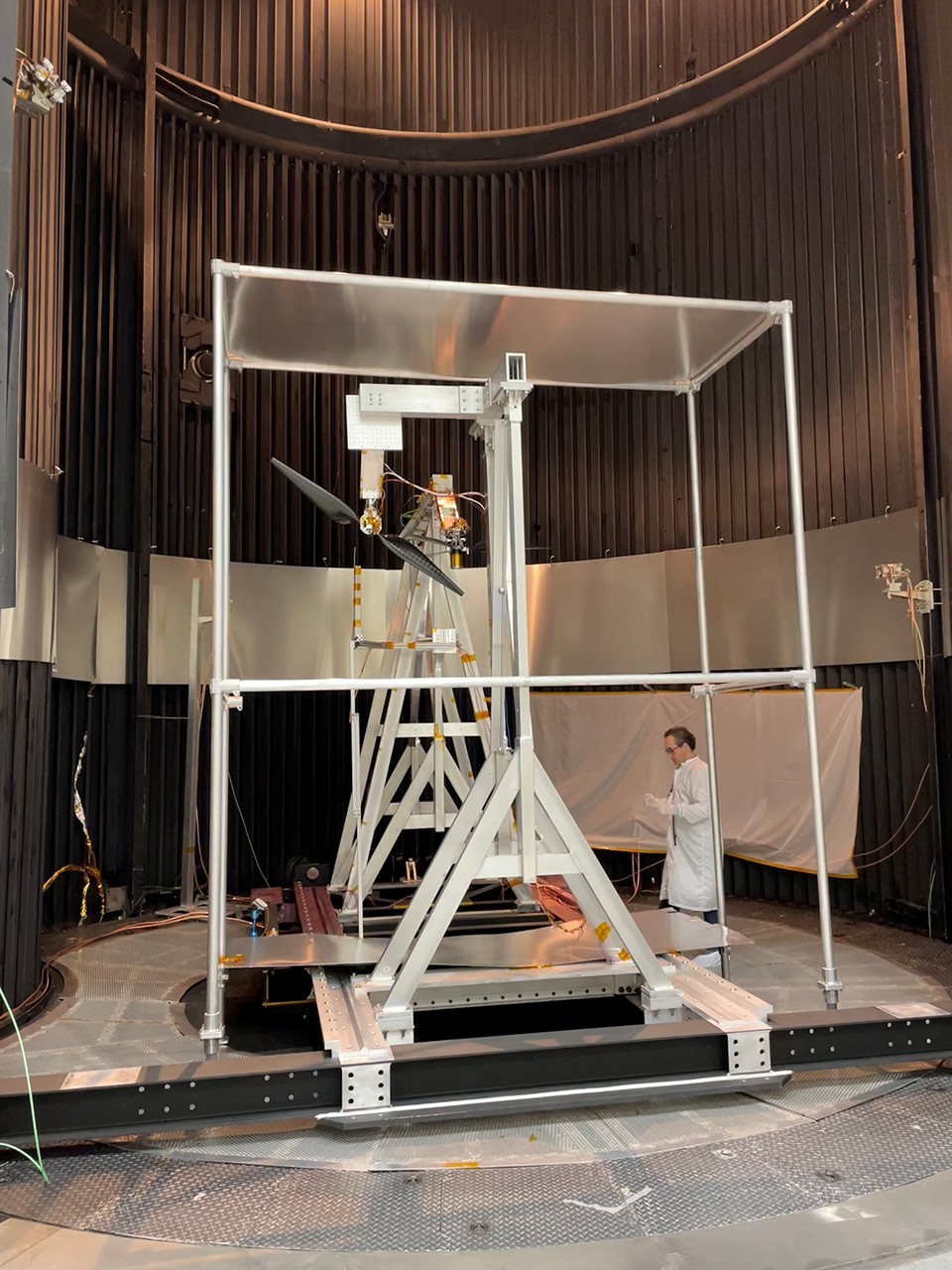
NASA engineers have pushed experimental Mars helicopter rotor blades past the sound barrier in ground tests at the Jet Propulsion Laboratory in Southern California. The rotors sustained supersonic speeds without structural failure, opening a path toward faster, more capable aircraft for future Martian exploration.
Engineer Fernando Mier-Hicks led the investigation inside JPL's 25-Foot Space Simulator in November 2025. The team tested next-generation rotor designs to understand how they perform under extreme aerodynamic stress. Results show these blades can exceed Mach 1 and remain intact, a threshold previous Mars rotors could not approach.
This advance matters because Ingenuity, NASA's first Mars helicopter, operated with rotors spinning at roughly 2,400 revolutions per minute. That design achieved horizontal speeds of just 10 meters per second across Jezero Crater. Faster rotors enable helicopters to cover greater distances, survey wider terrain, and conduct more ambitious science missions on Mars.
The Martian atmosphere presents unique challenges. At roughly 1 percent Earth's density, it demands rotors spin at extraordinary rates to generate lift. Pushing rotors to supersonic blade-tip speeds requires materials and designs that can withstand intense centrifugal forces and aerodynamic heating. The JPL tests validated that next-generation geometries meet those demands.
Future Mars helicopters could operate at higher altitudes, climb steeper terrain, and fly longer missions. They might scout ahead of rovers, access inaccessible geology, or support extended human exploration once astronauts arrive at Mars. Each kilometer gained through improved rotor performance expands the scientific reach of planetary missions.
The research feeds directly into NASA's plans for advanced aerial platforms on Mars. While no next-generation helicopter has received final approval for flight, the engineering foundation now exists. The rotors proved their mettle