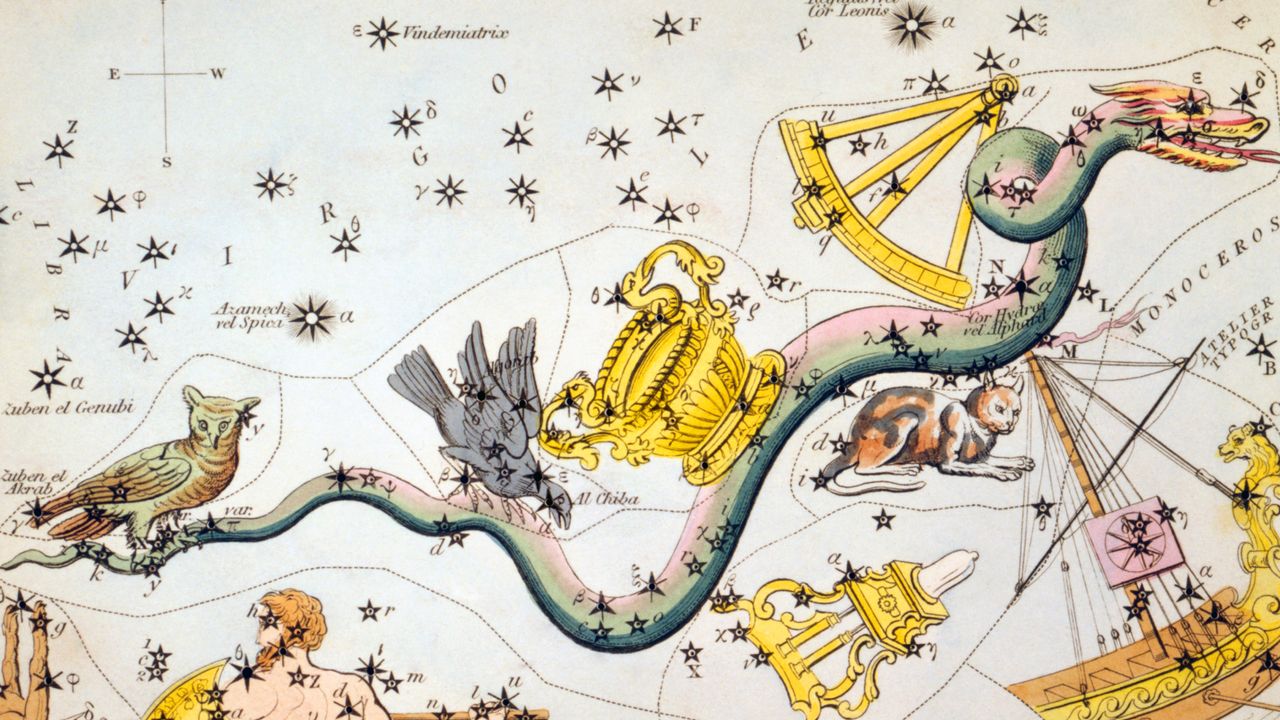
The May night sky hosts four major constellations rooted in classical mythology, each visible to naked-eye observers across the Northern Hemisphere. These stellar patterns trace stories spanning Greek and Roman tradition, offering a direct link between ancient storytelling and modern astronomy.
Ursa Major dominates spring skies, depicting the Great Bear. Greek mythology connects this constellation to Callisto, a nymph transformed into a bear by Zeus' jealous wife Hera. The seven brightest stars form the asterism known as the Big Dipper, which serves as the sky's most reliable navigation tool. Observers can locate Ursa Major by scanning the northeastern quadrant after sunset in May.
Leo the Lion represents the creature killed by Hercules during his first labor. The constellation's brightest star, Regulus, marks the lion's heart and sits on the ecliptic path where planets travel. This positioning makes Leo a crucial reference point for tracking planetary motion across the zodiac.
Virgo sprawls across the spring sky as the largest zodiac constellation. Ancient cultures associated this figure with various harvest goddesses, including the Greek Demeter. The bright star Spica marks a spike of wheat held in Virgo's hand, reinforcing the agricultural symbolism embedded in these ancient patterns.
Corvus the Raven completes the quartet of spring constellations. This small but distinctive pattern sits south of the ecliptic. Apollo's sacred bird appears in multiple Greek myths, often associated with prophecy and divine messages.
Finding these constellations requires minimal equipment. Dark skies away from light pollution enhance visibility, though suburban locations suffice for brighter stars. A smartphone stargazing app provides real-time constellation identification. Beginning observers should start with Ursa Major's Big Dipper, then use this reference point to locate neighboring constellations.
The mythology embedded in these ancient star names