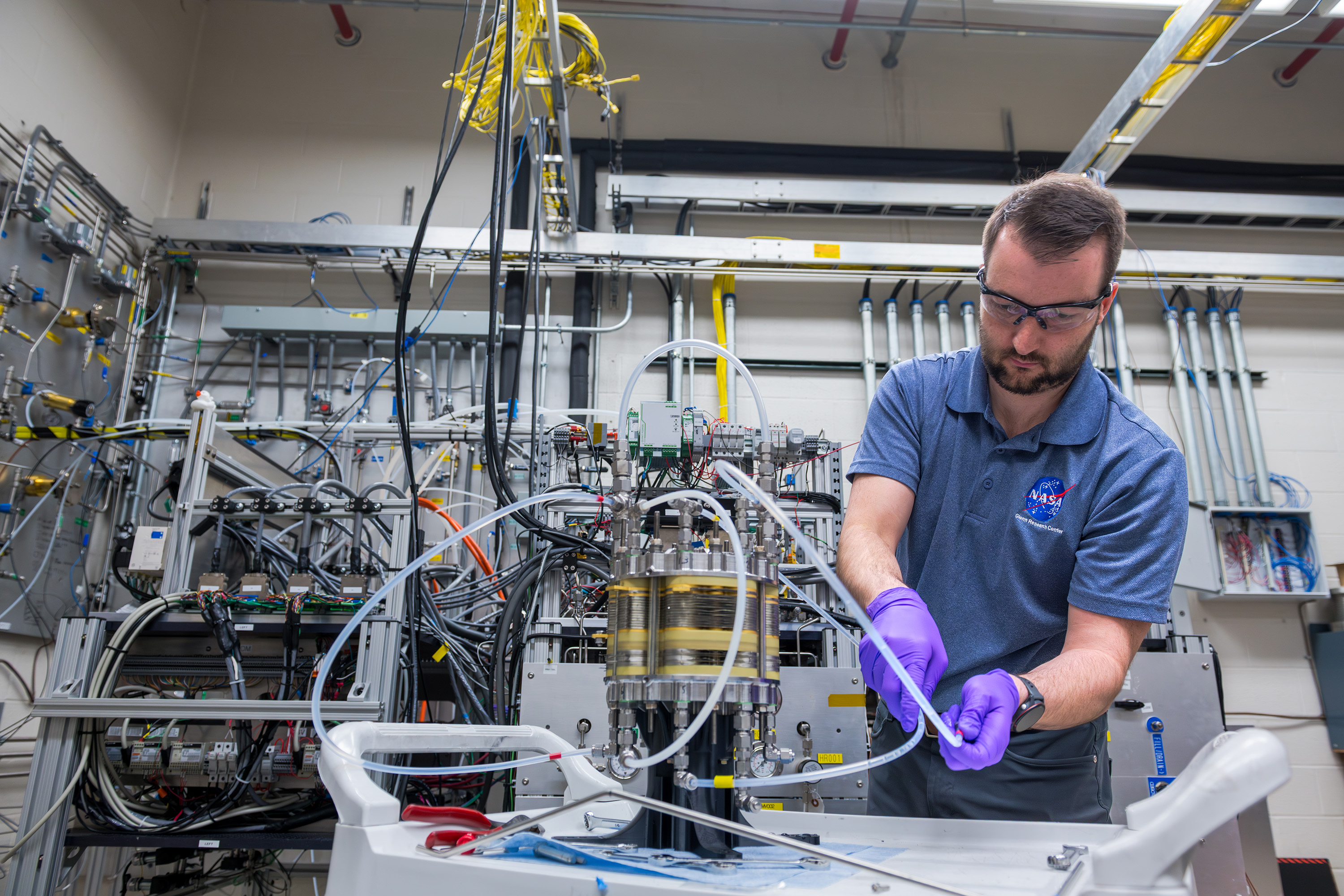
NASA researchers are testing regenerative fuel cells designed to store energy and sustain long-duration operations on the lunar surface. The tests involve a cylindrical fuel cell system fitted with nearly 270 sensors and 1,000 data collection points to monitor performance across diverse conditions.
The fuel cell operates through a reversible electrochemical process. During lunar day, when solar panels generate excess power, the system converts water into hydrogen and oxygen through electrolysis. During the two-week lunar night, when temperatures plummet and solar generation ceases, the fuel cell recombines hydrogen and oxygen to produce electricity and water, sustaining critical systems without relying on massive battery banks.
This technology addresses a fundamental challenge for lunar exploration. The Moon's 14-day day-night cycle creates extreme power management demands. Current battery technology requires enormous mass to store enough energy for the extended darkness. Regenerative fuel cells offer a lighter, more efficient alternative that reduces payload requirements for long-term lunar bases.
NASA's tests measure fuel cell efficiency, durability under thermal cycling, and performance metrics across the full range of lunar environmental conditions. The data collected guides engineering decisions for future Artemis missions and sustained lunar operations.
The regenerative fuel cell approach directly supports NASA's Moon to Mars architecture. Establishing reliable energy storage on the lunar surface enables the extended surface stays and research activities essential for understanding lunar geology, searching for water ice, and preparing for human Mars missions. This technology could eventually support the production of rocket fuel from lunar water ice, reducing Earth launch costs for deep space missions.
These tests represent incremental but concrete progress toward building the infrastructure for humans to live and work on another world. By solving the energy storage problem, NASA removes a critical technical barrier to transforming temporary lunar visits into sustained scientific outposts.