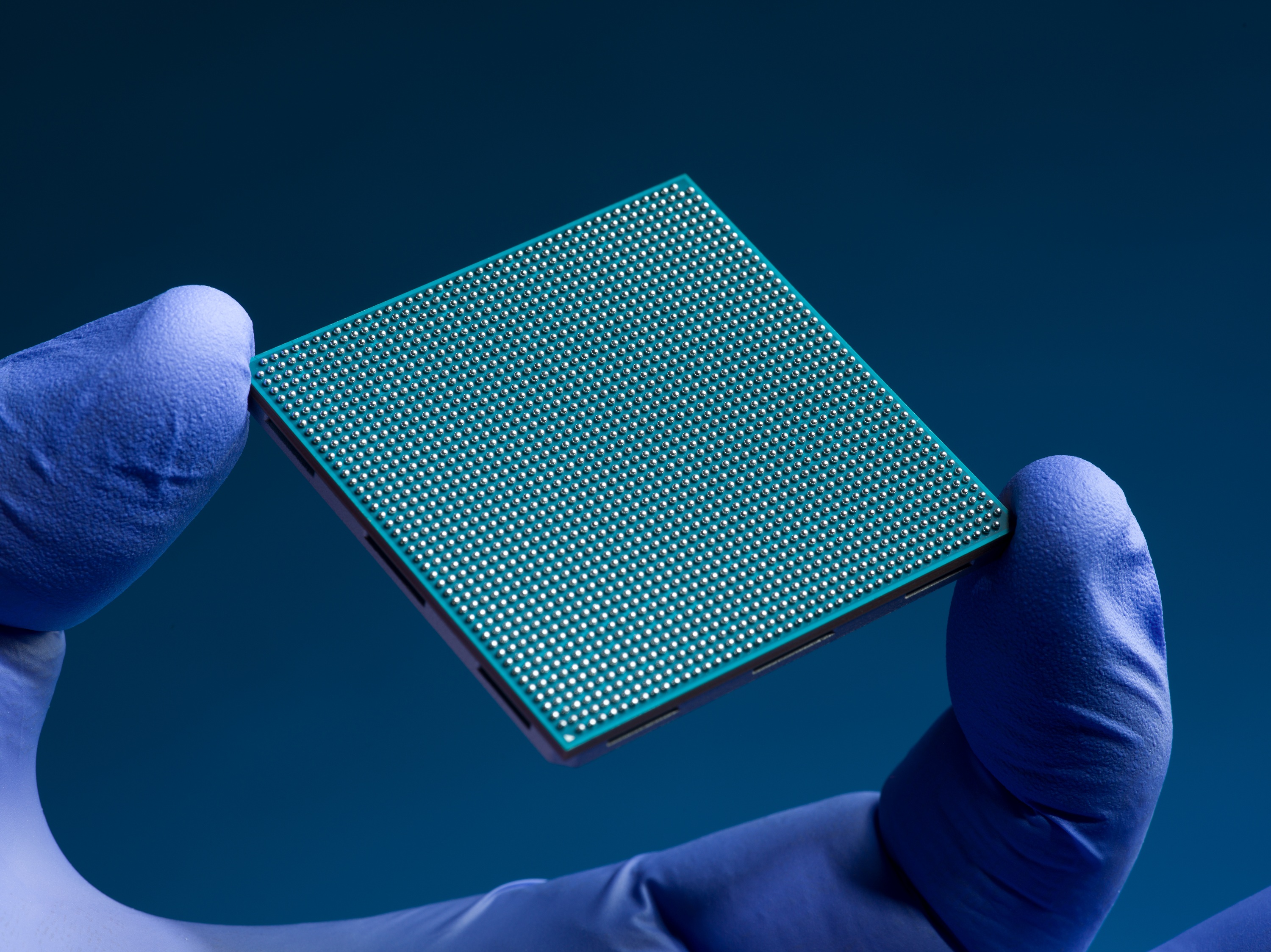
NASA's High Performance Spaceflight Computing project is developing radiation-hardened processors designed to transform spacecraft autonomy and accelerate scientific discovery. Current spacecraft rely on chips developed decades ago, chosen for their proven reliability in the harsh radiation environment of space rather than raw computational power. These legacy processors bottleneck autonomous operations and limit the complexity of onboard data analysis.
The new generation of flight-qualified processors will deliver substantially greater computing capacity while maintaining radiation tolerance. This capability enables spacecraft to make independent decisions without waiting for commands from Earth, critical for deep space missions where communication delays stretch to hours. Autonomous navigation, real-time sensor analysis, and adaptive mission planning become feasible with enhanced onboard processing power.
Scientific instruments aboard future spacecraft will analyze data immediately rather than transmitting raw observations to Earth for analysis. Mars rovers could navigate faster and more intelligently. Planetary probes could adjust observation priorities based on unexpected discoveries. Deep space missions operating beyond real-time communication become genuinely autonomous instead of merely remote-controlled.
The testing phase validates that upgraded processors survive the space radiation environment without degradation. Solar cosmic rays and galactic radiation constantly bombard spacecraft electronics, causing errors or failure in unprotected chips. NASA's engineers must confirm that modern, powerful processors function reliably across multi-year missions despite this radiation exposure.
Success here directly addresses limitations that have constrained space exploration for two decades. The computing power available to spacecraft has grown far more slowly than terrestrial computing advances, creating a widening gap between what scientists want to accomplish and what spacecraft can actually do autonomously. Closing that gap unlocks new exploration capabilities.
These radiation-hardened processors will eventually equip lunar Gateway outposts, Mars rovers, and deep space probes. The infrastructure enables longer missions, more complex science, and greater operational independence from ground control. NASA's computing architecture advances alongside its hardware ambitions for returning humans to the Moon and launching crewed Mars