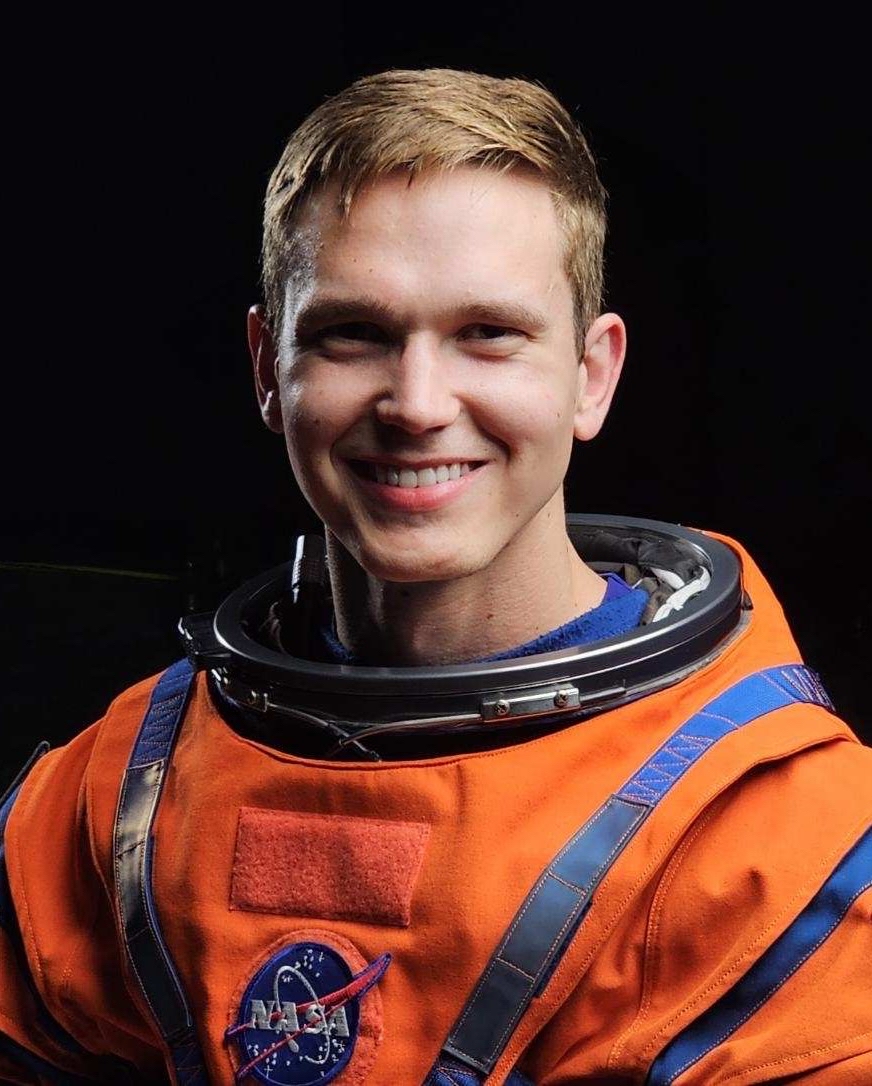
Nicholas Houghton designs life-support and safety systems for NASA's Orion spacecraft, the vehicle carrying astronauts on Artemis missions to lunar orbit and beyond. His work on the Orion Crew Survival Systems team proved critical during Artemis II, which successfully completed its uncrewed test flight around the Moon in May 2024, validating hardware and procedures essential for crewed return missions.
Houghton's career at NASA began through the agency's Pathways internship program, which recruits early-career engineers and scientists. He transitioned to a full-time role within the OCSS division, where his responsibilities include engineering systems that protect astronauts during launch, spaceflight, and emergency scenarios. These systems encompass pressure suits, environmental control, oxygen supply, and abort procedures.
The OCSS team's engineering directly enabled Artemis II's success. That mission tested the Orion capsule's heat shield during re-entry, thermal management systems, and crew compartment integrity without risking human lives. The spacecraft performed flawlessly, returning to Earth and validating design choices that will carry astronauts on Artemis III, planned to land humans near the Moon's south pole within the next few years.
Orion represents the backbone of NASA's Artemis program, which aims to establish sustained lunar exploration and prepare for human Mars missions. Unlike Apollo-era capsules, Orion incorporates modern materials, autonomous systems, and redundant safety mechanisms engineered by teams like Houghton's. Each system undergoes rigorous testing on the ground and in flight to ensure zero tolerance for failure.
Houghton's journey from NASA intern to full mission engineer reflects the agency's strategy of developing talent from within. The Pathways program identifies individuals early, allowing them to contribute meaningfully to active exploration programs while building expertise. His work on