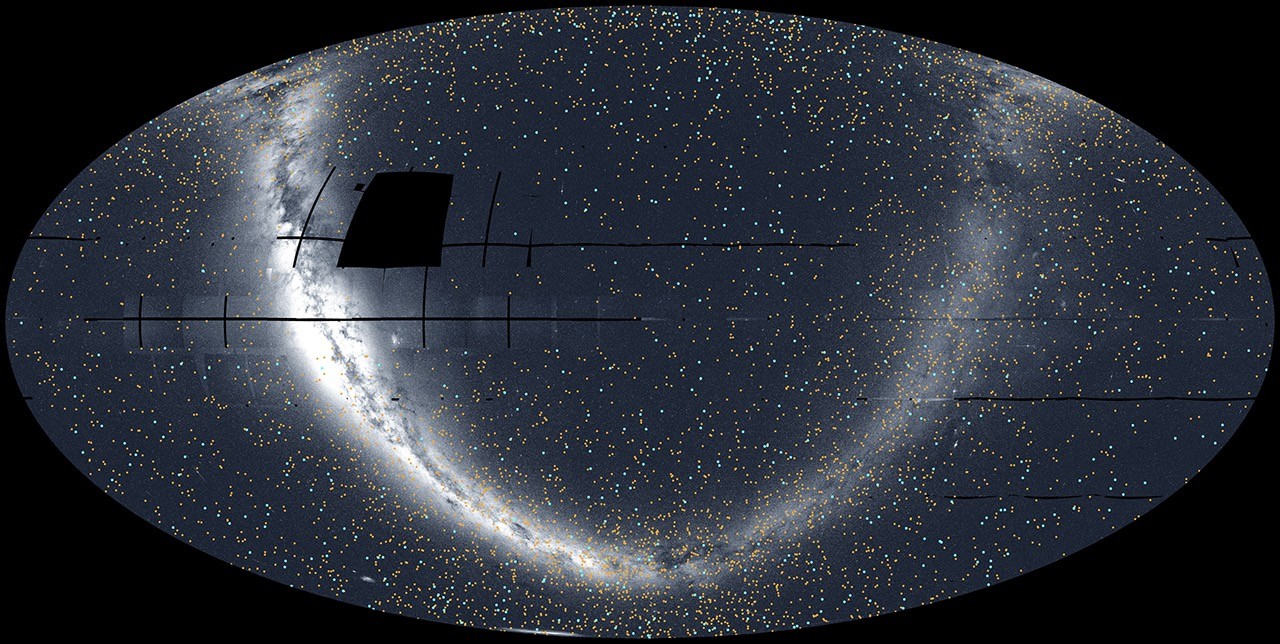
NASA's Transiting Exoplanet Survey Satellite (TESS) has released its most comprehensive map of the night sky, capturing millions of stars across the celestial sphere. The mission, which launched in 2018, conducts a systematic survey of the entire sky in search of exoplanets orbiting distant stars.
TESS operates by monitoring the brightness of stars with extreme precision. When a planet passes in front of its host star from Earth's perspective, it causes a tiny dip in the star's light. These transits reveal the planet's presence, size, and orbital period. The satellite's latest data release represents the culmination of years of observation and processing, delivering one of the most detailed stellar catalogs ever assembled.
The comprehensive sky map identifies millions of stars down to magnitude 16, making it invaluable for astronomers worldwide. TESS has already confirmed thousands of exoplanets and identified countless additional candidates awaiting verification. This catalog serves as a foundation for follow-up observations by ground-based telescopes and other space observatories like the James Webb Space Telescope.
The mission's scope extends beyond exoplanet discovery. TESS data enables research on stellar variability, stellar flares, binary star systems, and other dynamic phenomena. Astrophysicists use the dataset to study the properties of stars themselves, improving our understanding of stellar evolution and behavior.
TESS operates from a unique orbit that provides a nearly unobstructed view of most of the sky. Unlike Kepler, its predecessor, TESS surveys the entire celestial sphere rather than focusing on specific regions. This all-sky approach means fewer bright stars escape observation and allows detection of planets around relatively nearby, well-studied stars.
The latest data release underscores TESS's role as a cornerstone exoplanet-hunting mission. Each stellar image and brightness measurement