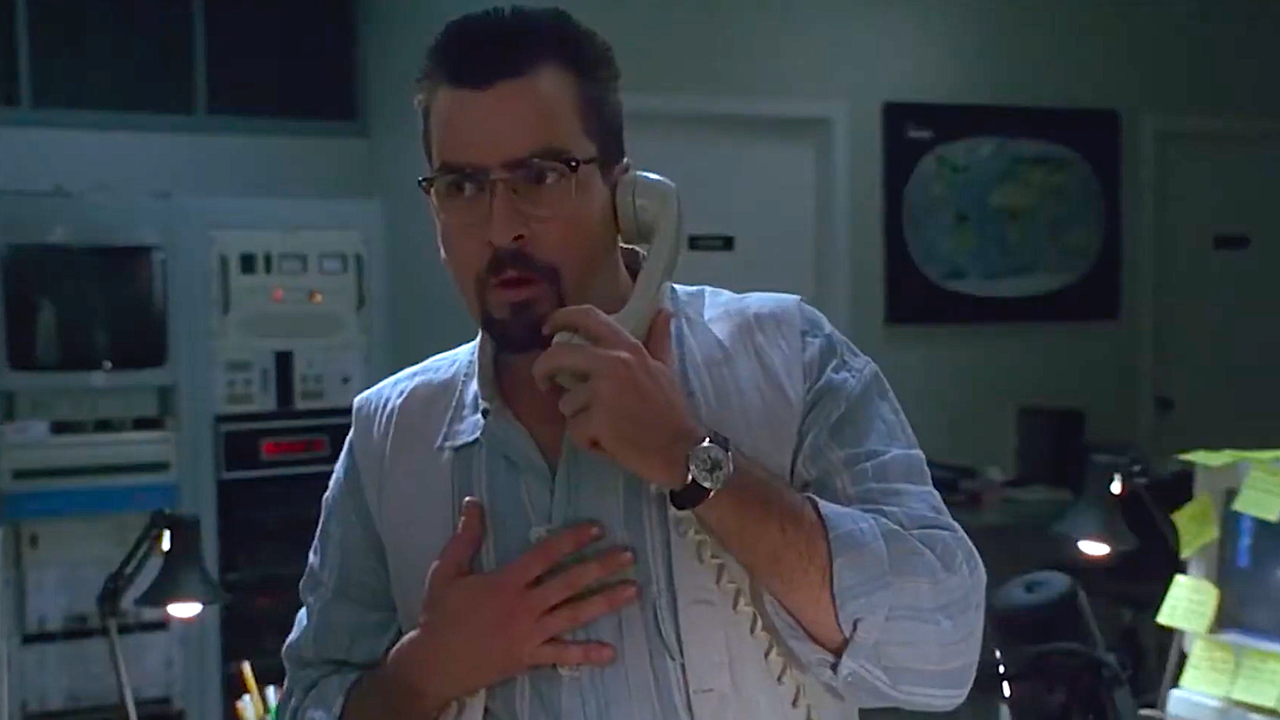
# Charlie Sheen's Overlooked Alien Invasion Film Gains Relevance Three Decades Later
"The Arrival," released in 1996, presents a lean science fiction thriller that explores extraterrestrial contact through a distinctly terrestrial lens. The film stars Charlie Sheen as a radio astronomer who detects an alien signal and uncovers a covert government operation hiding the truth about an incoming spacecraft.
The narrative follows classic first-contact protocols but subverts them with environmental and political themes. The aliens in the film communicate through a non-linear language that fundamentally alters human perception of reality. This linguistic concept drew inspiration from genuine scientific debates about how contact with extraterrestrial intelligence might reshape human cognition and civilization.
The film's core message carries weight today. One character delivers the line: "If you can't tend to your own planet, none of you deserve to live here." This condemnation of environmental negligence resonates differently in 2024 than it did in 1996, when climate science remained less mainstream in popular culture.
What makes "The Arrival" enduring is its refusal to treat alien contact as simple spectacle. Instead of massive battle sequences or laser-wielding invaders, the film examines how contact forces humanity to confront its own destructive patterns. The aliens judge Earth not on military capability but on ecological stewardship.
The scientific underpinnings hold firm. The concept of linguistic relativity affecting human consciousness draws from actual cognitive science. The signal detection scenario mirrors real initiatives like SETI, the Search for Extraterrestrial Intelligence, which continues scanning the cosmos today.
Three decades later, "The Arrival" functions as a prescient warning wrapped in mainstream thriller packaging. Its vision of aliens as disappointed observers of human failure reads as increasingly plausible. The film argues that extraterrestrial intelligence would evaluate