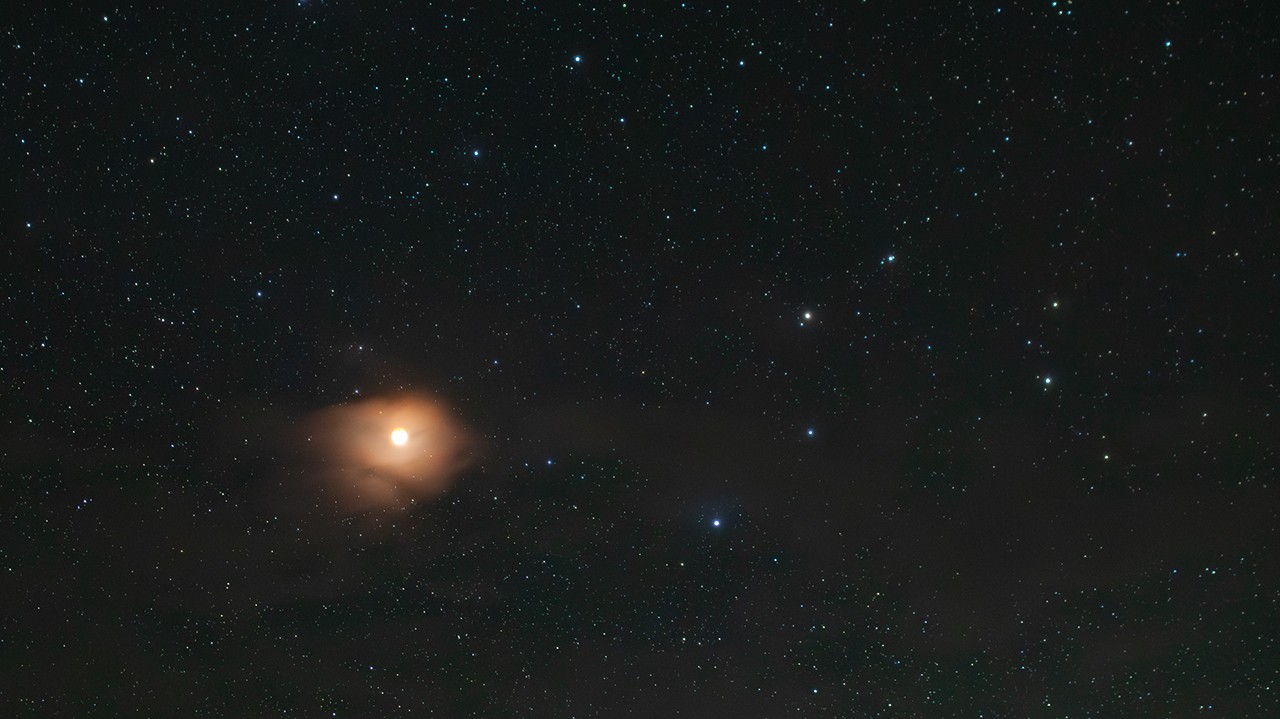
Venus and Jupiter will stage a close conjunction in June 2026, bringing two of the brightest planets into striking proximity after sunset. The Moon will occult Venus during the month, passing directly in front of the brilliant world in an event visible from parts of Earth.
Summer begins in the Northern Hemisphere on June 20, 2026, marking the season when deep-sky objects climb higher into evening skies. Observers will find improved viewing conditions for nebulae and star clusters as these objects reach better positions above the horizon during summer nights.
The planetary alignment offers naked-eye observers an opportunity to track the brightest objects in the night sky without optical aid. Venus shines at magnitude minus 4, making it the most luminous planet, while Jupiter reaches magnitude minus 2. The pair's proximity creates a photogenic arrangement for skywatchers using binoculars or telescopes.
The lunar occultation of Venus represents a geometric rarity. When the Moon passes in front of Venus, the event occurs only from specific locations on Earth's surface where the Moon's shadow path crosses. For observers in the right position, watching the crescent Moon block Venus provides a dramatic demonstration of celestial mechanics and the Moon's orbit relative to Earth and Venus.
Summer's higher arc of the ecliptic, the apparent path of planets and the Sun across the sky, brings Messier objects and other deep-sky treasures into favorable viewing positions. Star clusters like M13 in Hercules and M4 in Scorpius rise higher at midnight, reducing atmospheric distortion and improving detail visibility through telescopes.
Skywatchers should monitor NASA's "What's Up" series for precise timing of these events and observing instructions tailored to their location. The combination of planetary conjunctions, lunar occultations, and seasonal deep-sky opportunities makes June 2026 a rewarding month for both casual