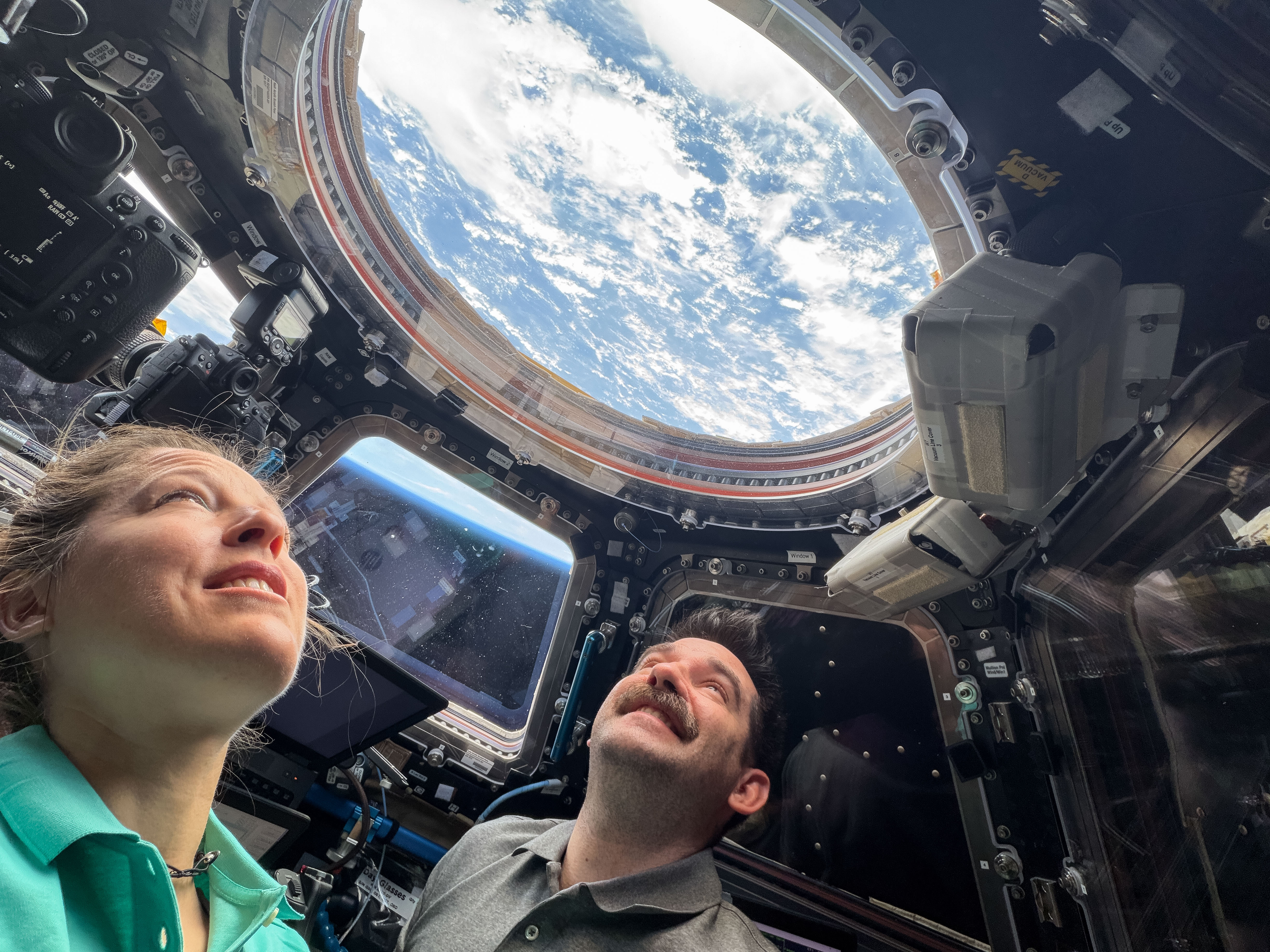
Two Expedition 74 flight engineers observed SpaceX's Dragon cargo vehicle approach the International Space Station on May 17, 2026, from the station's cupola observatory. ESA astronaut Sophie Adenot and NASA astronaut Jack Hathaway monitored the automated docking sequence as Dragon made its approach to the orbital outpost traveling at 259 miles altitude.
The Dragon spacecraft executed its rendezvous and docking procedures autonomously, a routine resupply mission that demonstrates the operational maturity of commercial cargo delivery to the ISS. SpaceX has conducted dozens of these missions since Dragon began regular cargo runs in 2012, establishing itself as a cornerstone of station logistics.
The cupola, a seven-window observatory module developed by the European Space Agency, provides the primary vantage point for monitoring visiting vehicle approaches and conducting external observations. Astronauts stationed there can visually confirm spacecraft positioning and alert mission control to any anomalies during the critical final phases of approach and docking.
Adenot represents France's contributions to the ISS program through the European Space Agency, while Hathaway flies for NASA. Both serve as flight engineers aboard the station, conducting experiments, maintaining hardware, and supporting cargo operations. Their presence at the cupola during Dragon's arrival reflects standard procedures for crew oversight of automated docking events.
SpaceX Dragon cargo variants deliver supplies, experiments, and equipment to the ISS, then return to Earth with research samples and used hardware. The spacecraft launches atop Falcon 9 rockets and executes autonomous rendezvous using GPS, relative navigation systems, and laser rangefinders to achieve precision docking with the station's forward docking port or automated docking adapters.
This May 2026 resupply flight continues the uninterrupted cadence of cargo missions essential to station operations. Regular deliveries enable the ISS