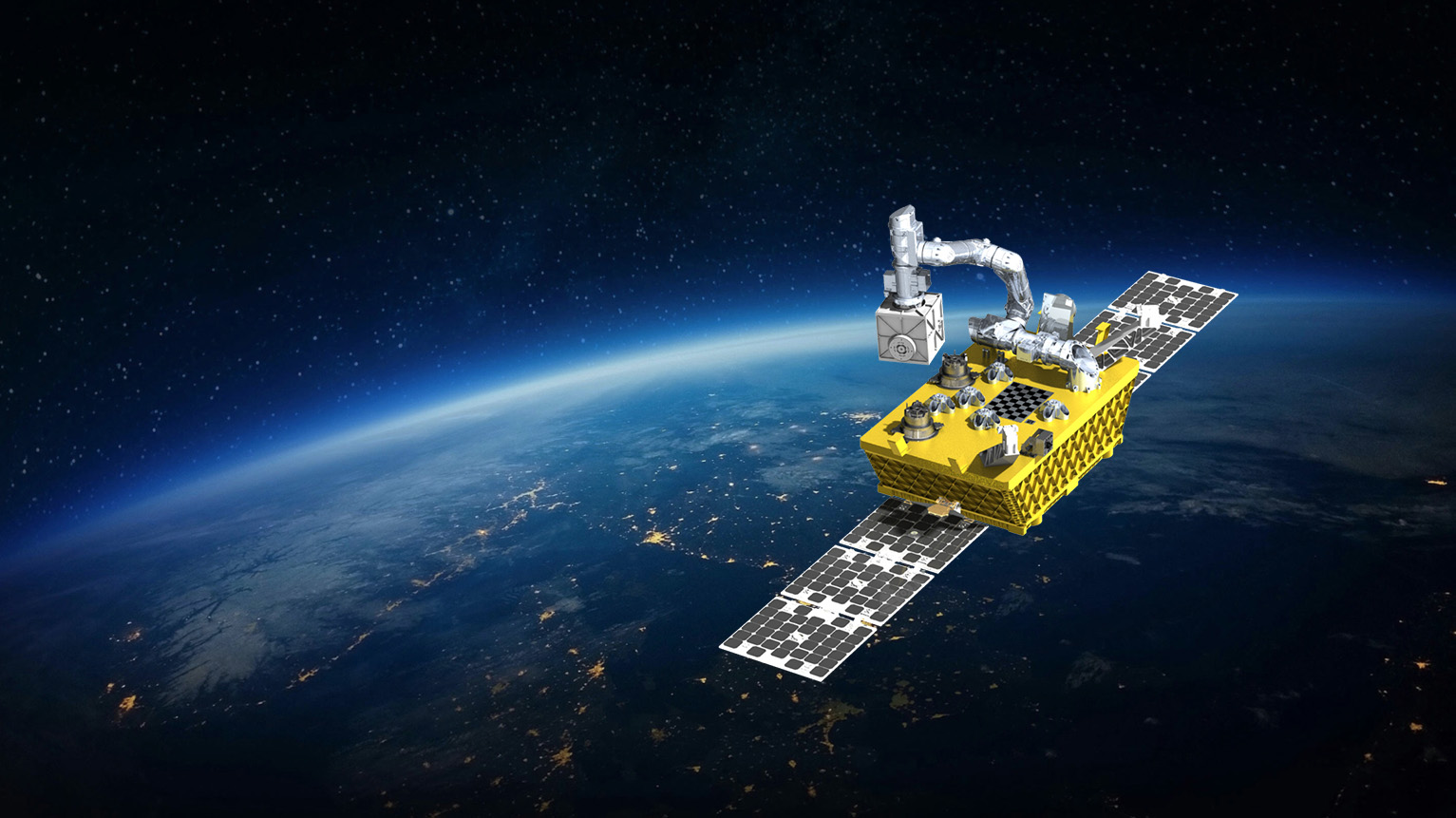
NASA is launching the Fly Foundational Robots (FFR) mission to place a seven-degree-of-freedom robotic arm in low Earth orbit, then opening access to the arm for controlled experiments by qualified U.S. researchers.
The initiative targets principal investigators, postdoctoral researchers, professors, and advanced graduate students with viable experiments and demonstrated technical capability. This approach democratizes space robotics research, moving beyond traditional government-only operations to include academic institutions and research teams with novel ideas for orbital manipulation tasks.
A seven-degree-of-freedom arm matches the dexterity of the human arm, enabling complex movements and fine manipulation in microgravity. This capability opens opportunities for experiments in material science, fluid dynamics, assembly techniques, and other fields that benefit from testing in space environments. Researchers cannot replicate these conditions on Earth.
The FFR mission represents NASA's commitment to expanding the research ecosystem in low Earth orbit. Rather than restricting robotic assets to agency-led missions, NASA recognizes that competition and broader access accelerate innovation. Selected researchers gain hands-on experience operating hardware in space, generating data and insights that advance both robotic capabilities and fundamental science.
The selection process remains rigorous. Proposals must demonstrate scientific merit, technical feasibility, and the applicant's ability to execute the experiment. This ensures mission success while maintaining high research standards.
By opening the robotic arm to external researchers, NASA addresses a growing demand for orbital laboratory time. Commercial space stations under development will eventually offer similar opportunities, but FFR provides early access to the research community. The mission generates valuable operational data about robotic performance in space, informing future designs for both government and commercial platforms.
This initiative strengthens the broader U.S. research infrastructure and positions American scientists and engineers at the forefront of space robotics development. Success with FFR lays groundwork for more ambitious orbital operations, from