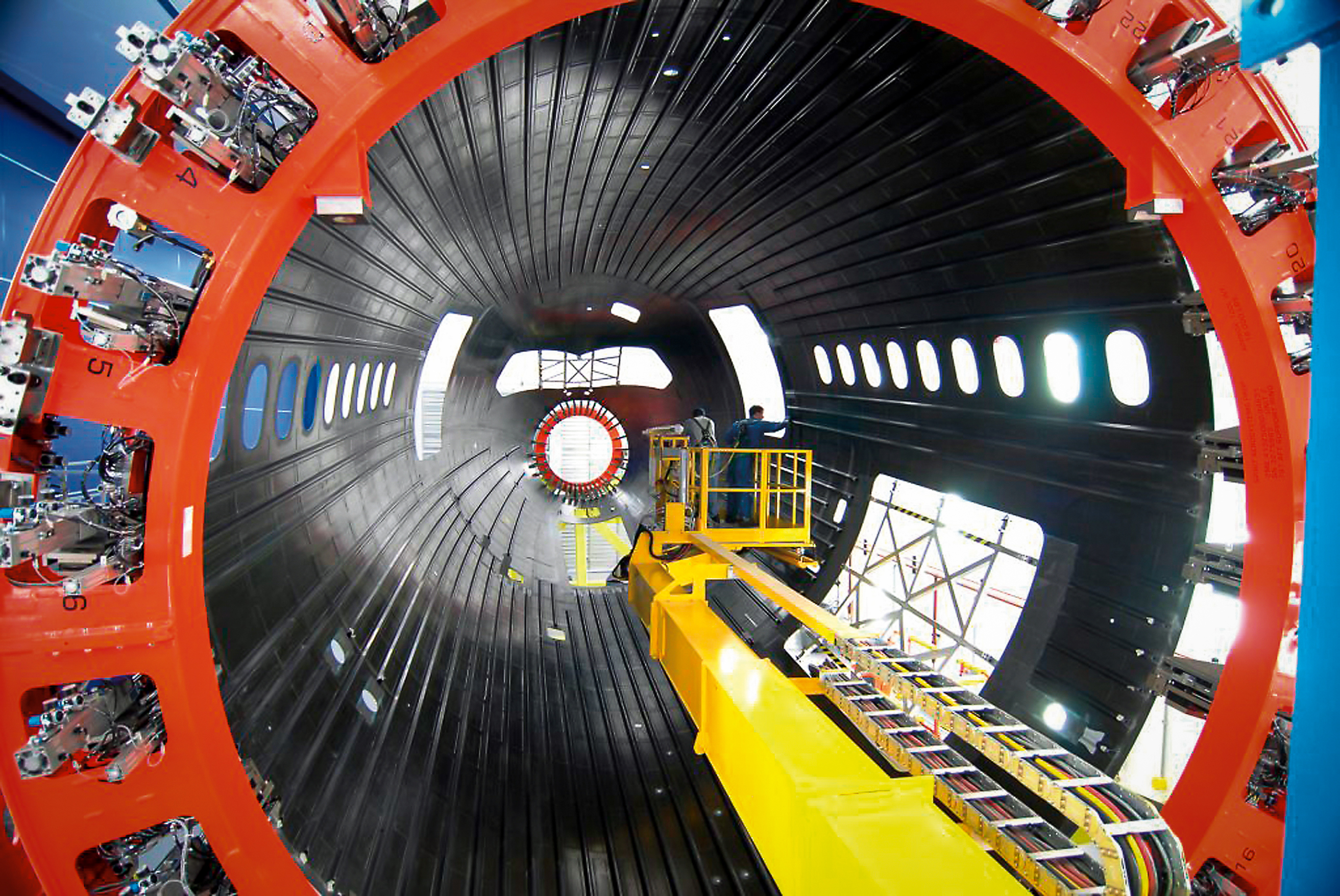
NASA convened the Hi-Rate Composite Aircraft Manufacturing (HiCAM) project for its 2026 spring review at Langley Research Center in Hampton, Virginia. The May 5-7 meeting assembled approximately 150 participants from the Advanced Composites Consortium, a 22-member public-private partnership that includes NASA and leading aerospace manufacturers.
HiCAM targets a fundamental challenge in aircraft production. Composite materials, which combine carbon fiber and resin, offer weight savings and fuel efficiency advantages over traditional aluminum. Yet manufacturing these materials remains slow and costly. The project aims to accelerate production rates while maintaining quality and reducing manufacturing expenses.
The consortium brings together aerospace suppliers, aircraft manufacturers, and NASA engineers to develop next-generation composite manufacturing techniques. Members evaluate progress on production processes, automation technologies, and material innovations designed to scale composite manufacturing from prototype rates to high-volume assembly.
The spring review cycle allows the partnership to assess technical milestones, identify bottlenecks in current approaches, and align future development efforts across the consortium. These collaborative reviews drive the iterative refinement needed to transition laboratory innovations into production-ready systems.
Advanced composites play a critical role in NASA's broader aerospace strategy. Lighter aircraft structures reduce fuel consumption and emissions. Commercial aviation providers rely on these efficiencies to manage operating costs and environmental impact. Faster manufacturing methods directly translate to lower production costs and shorter development timelines for both commercial and government aircraft programs.
The HiCAM initiative reflects a shift in how NASA approaches materials science and manufacturing challenges. Rather than developing technologies in isolation, the agency partners with industry from the outset, ensuring innovations address real production constraints and market demands. This collaborative model accelerates the path from research concept to operational implementation across the aerospace sector.