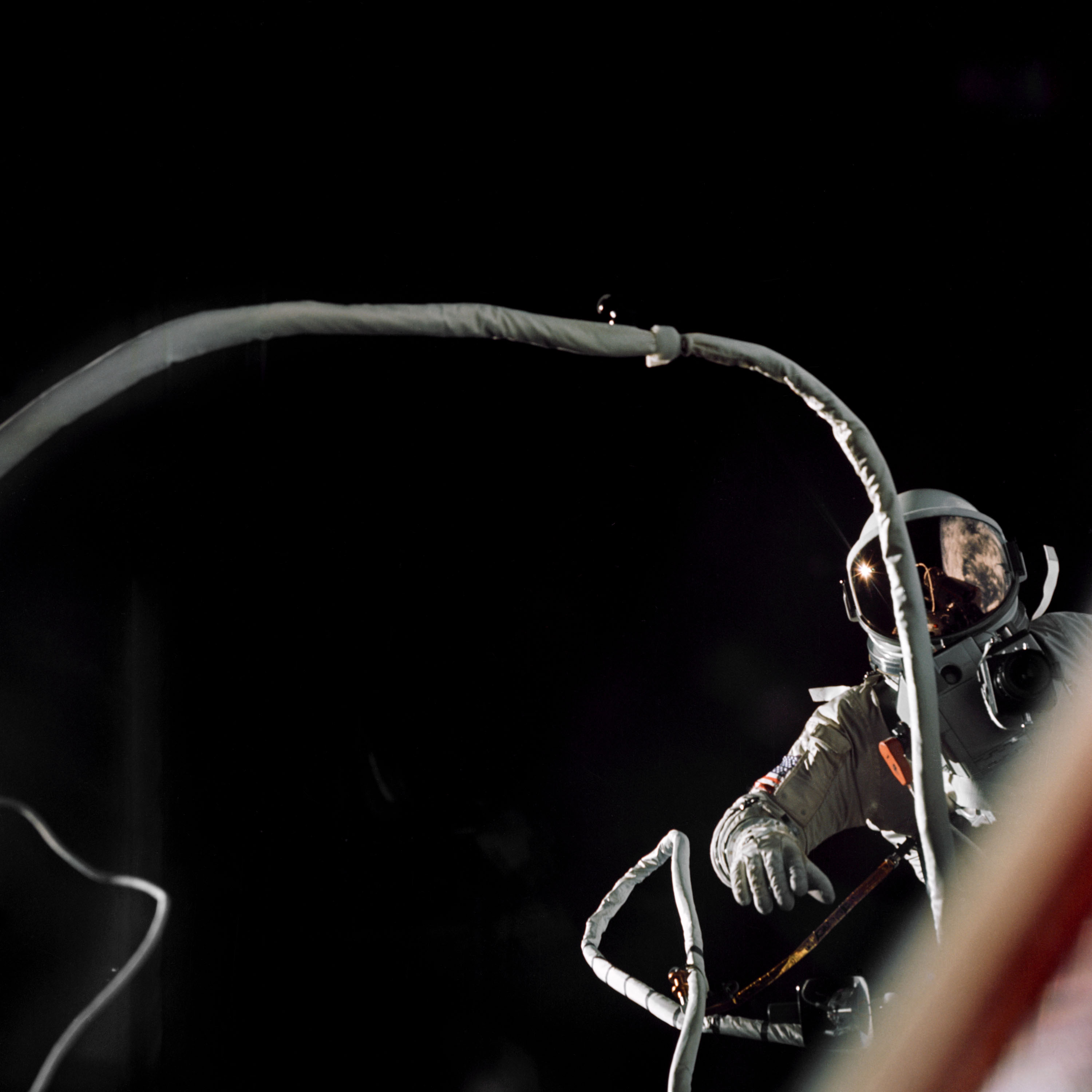
Gene Cernan undertook NASA's second spacewalk on Gemini IX-A on June 5, 1966, executing one of the agency's most physically demanding extravehicular activities to date. The mission had originally been planned for Gemini VIII, but that mission concluded prematurely, shifting the ambitious EVA to the Gemini IX-A crew.
Cernan's spacewalk pushed the boundaries of human capability in ways Edward White's groundbreaking Gemini IV EVA the previous year had not. Where White's historic first American spacewalk had proven the basic feasibility of working outside a spacecraft, Cernan's task demanded sustained exertion and technical precision under extreme conditions.
The Gemini program served as NASA's bridge between Mercury's single-pilot missions and the three-person Apollo spacecraft destined for the Moon. Each Gemini flight tested specific capabilities essential for lunar exploration. Spacewalk proficiency ranked among the highest priorities. Astronauts needed to perform meaningful work in orbit, not simply float untethered for cameras and acclaim.
Cernan's assignment on Gemini IX-A reflected the escalating complexity of NASA's spaceflight objectives. The grueling nature of the work became apparent as the mission unfolded. Operating in the microgravity environment demanded extraordinary physical exertion. Temperature extremes, the bulk of the spacesuit, and the sheer novelty of the environment combined to test Cernan beyond anything training could fully replicate.
The spacewalk contributed directly to NASA's Apollo preparation. Each EVA conducted during Gemini generated data about human performance, equipment reliability, and operational procedures. The insights gained from Cernan's work informed the suit designs, tether systems, and operational protocols that would eventually enable the Moon landings.
By reassigning this critical EVA from Gemini VIII to Gemini IX