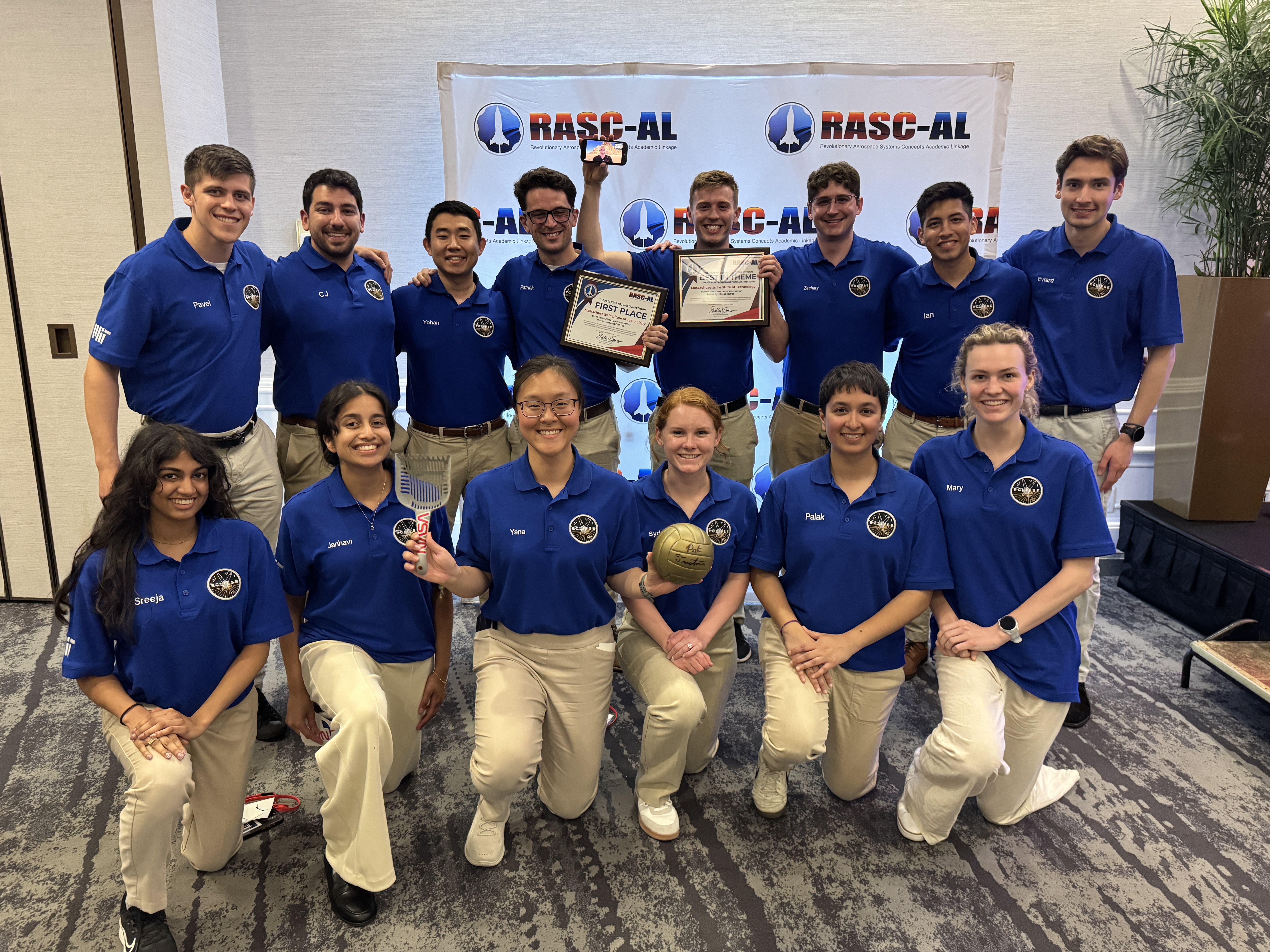
MIT teams dominated NASA's 2026 Revolutionary Aerospace Systems Concepts – Academic Linkage (RASC-AL) competition, capturing first and second place honors in a contest that pushes university students to solve real gaps in space exploration technology.
The winning project, titled Exploration-Class Lunar Integrated Power SystEm, took top honors. This work addresses a fundamental challenge for sustained lunar operations. Power generation and distribution systems remain critical bottlenecks for establishing permanent human presence on the Moon. MIT's design tackles how astronauts and robots can reliably generate, store, and distribute electricity across harsh lunar terrain where temperatures swing from 260 degrees Fahrenheit in sunlight to minus 280 degrees Fahrenheit in shadow.
MIT's second-place entry, Mars Exploration Layered Infrastructure for Operations, Research, and Advancement, shifts focus to the Red Planet. This project conceptualizes systems needed to support long-duration human missions to Mars, where resupply from Earth takes months and failure tolerance must exceed what current technology permits.
Virginia Polytechnic Institute and State University secured third place with a Mars-focused concept, continuing the competition's emphasis on deep space exploration beyond low Earth orbit.
RASC-AL represents NASA's systematic investment in the next generation of aerospace engineers and systems architects. The competition forces students to operate at the intersection of physics, materials science, and practical engineering. Winning designs don't stay theoretical. NASA evaluates whether these concepts merit actual development funding or technology demonstrations.
These competitions serve dual purposes. They populate NASA's talent pipeline with students who already understand agency priorities and operational constraints. Simultaneously, they pressure-test whether university teams can match the rigor demanded by crewed space missions. A power system that fails on the Moon kills astronauts. A habitat design that miscalculates resource consumption strands crews. This forces students to think beyond elegant