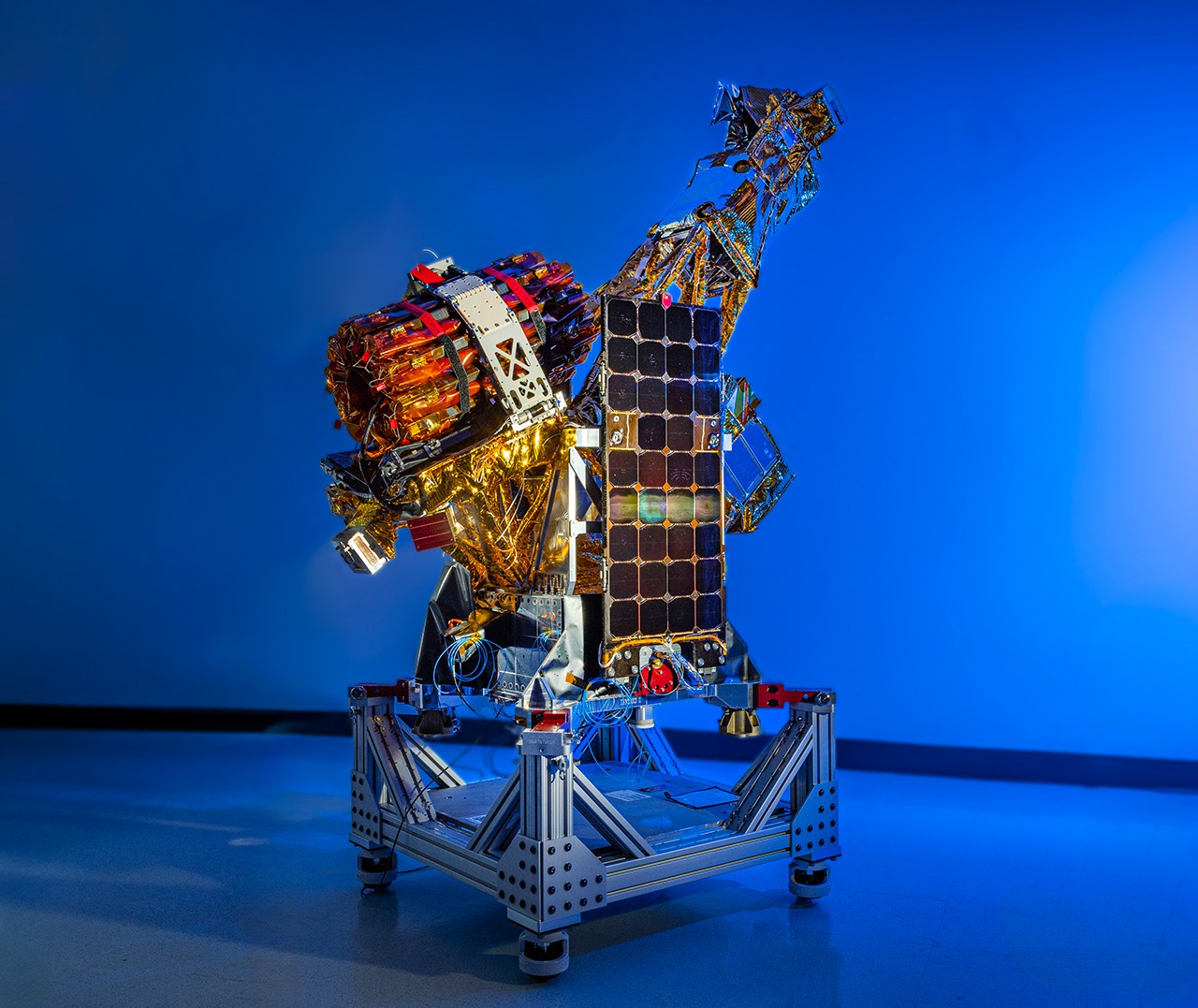
NASA's INCUS mission has completed critical testing phases and moves toward its May 2026 launch window. The three-satellite constellation, built by Blue Canyon Technologies in Lafayette, Colorado, will conduct the first space-based survey of tropical convection dynamics—the powerful updrafts that drive thunderstorms and influence global weather patterns.
INCUS targets a fundamental gap in atmospheric science. Ground-based radar and aircraft observations provide limited data on tropical convection, particularly at high altitudes where updrafts reach their maximum intensity. The satellite constellation will measure vertical air motion, precipitation rates, and storm structure across the tropics with unprecedented spatial and temporal resolution.
Each INCUS satellite carries instruments designed to probe deep convective systems. The mission employs radar and radiometric sensors to map updraft speeds and rainfall within storms that shape tropical circulation patterns and influence global climate. This data feeds directly into weather prediction models and climate research.
The May 2026 timeline positions INCUS for a critical role in Earth observation. NASA's Earth science portfolio relies on coordinated satellite missions to monitor atmospheric processes. INCUS complements existing platforms like the CloudSat satellite and NOAA's GOES weather satellites, filling observational gaps these systems cannot cover.
Tropical convection drives energy transfer between Earth's surface and upper atmosphere. Understanding these processes with precision improves hurricane forecasting, monsoon prediction, and climate model accuracy. Current models struggle with convection representation, introducing uncertainty in long-term climate projections.
Blue Canyon Technologies has built INCUS on a modular, cost-effective platform that reflects the commercial space sector's influence on NASA missions. The company's spacecraft bus design enables rapid development cycles while maintaining scientific rigor.
Testing completion confirms INCUS readiness for the launch pad. The three-satellite design provides redundancy and allows simultaneous observations across multiple storm systems. Once operational, INCUS data will