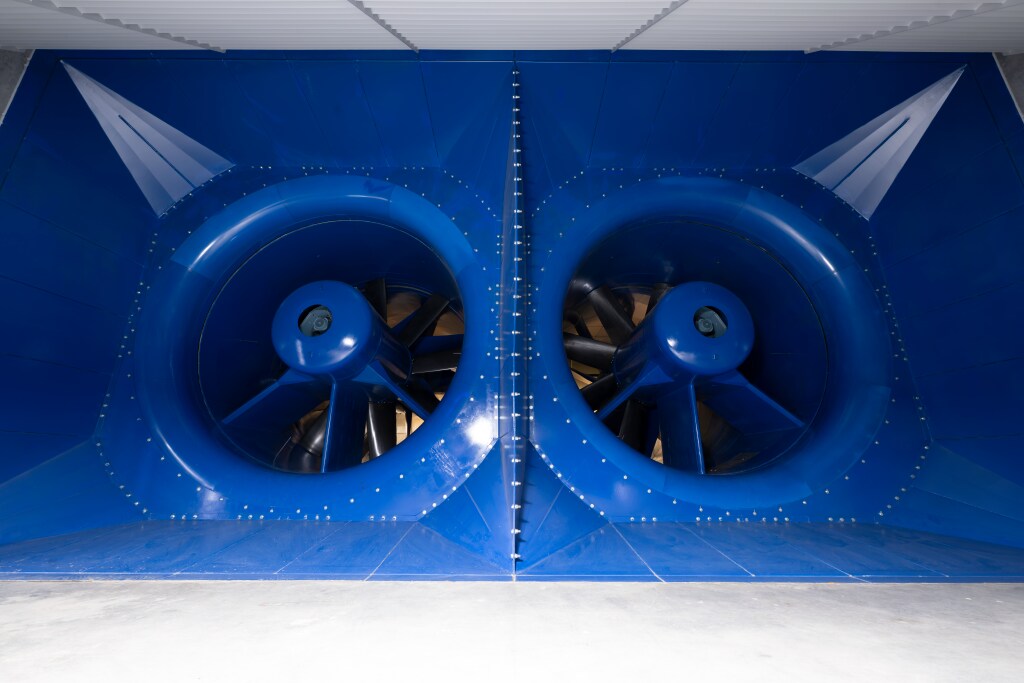
NASA's Flight Dynamics Research Facility represents a specialized aeronautical testing platform designed to evaluate how aircraft behave in complex flight regimes. The FDRF operates as a subsonic wind tunnel with a unique vertical test section, enabling researchers to conduct experiments impossible in standard horizontal configurations.
The facility supports critical research in aircraft stability and controllability, two foundational elements of safe flight design. Engineers use the FDRF to study free-fall dynamics and aircraft spin behavior, phenomena that demand precise measurement and controlled conditions. Spin recovery testing, perhaps the facility's most demanding application, allows researchers to examine how aircraft escape from the most dangerous flight conditions before sending prototypes into actual flight.
The vertical orientation of the test section provides advantages that horizontal tunnels cannot match. Aircraft models can be positioned to simulate attitudes and motions that occur during spins, stalls, and other extreme maneuvers. This geometry permits researchers to observe how aerodynamic forces act on vehicles positioned at angles that would be impossible to achieve safely with traditional wind tunnel arrangements.
The FDRF belongs to NASA's broader suite of aerosciences evaluation and test capabilities. These facilities drive innovation across both experimental and commercial aviation sectors. Research conducted in the facility informs design decisions for military jets, civilian transports, and experimental aircraft, directly affecting safety margins and performance envelopes.
Modern aircraft development relies on computational models, but physical testing in facilities like the FDRF provides validation that simulations alone cannot deliver. Wind tunnel testing reduces the risks inherent in flight testing by allowing engineers to gather precise aerodynamic data before hardware takes to the air. The vertical test section specifically addresses gaps in understanding aircraft behavior during high-angle-of-attack flight and recovery maneuvers.
The FDRF demonstrates how ground-based infrastructure remains central to aerospace advancement. By enabling controlled study of extreme flight conditions, the facility has supported decades of aircraft development and helped establish safety standards that protect