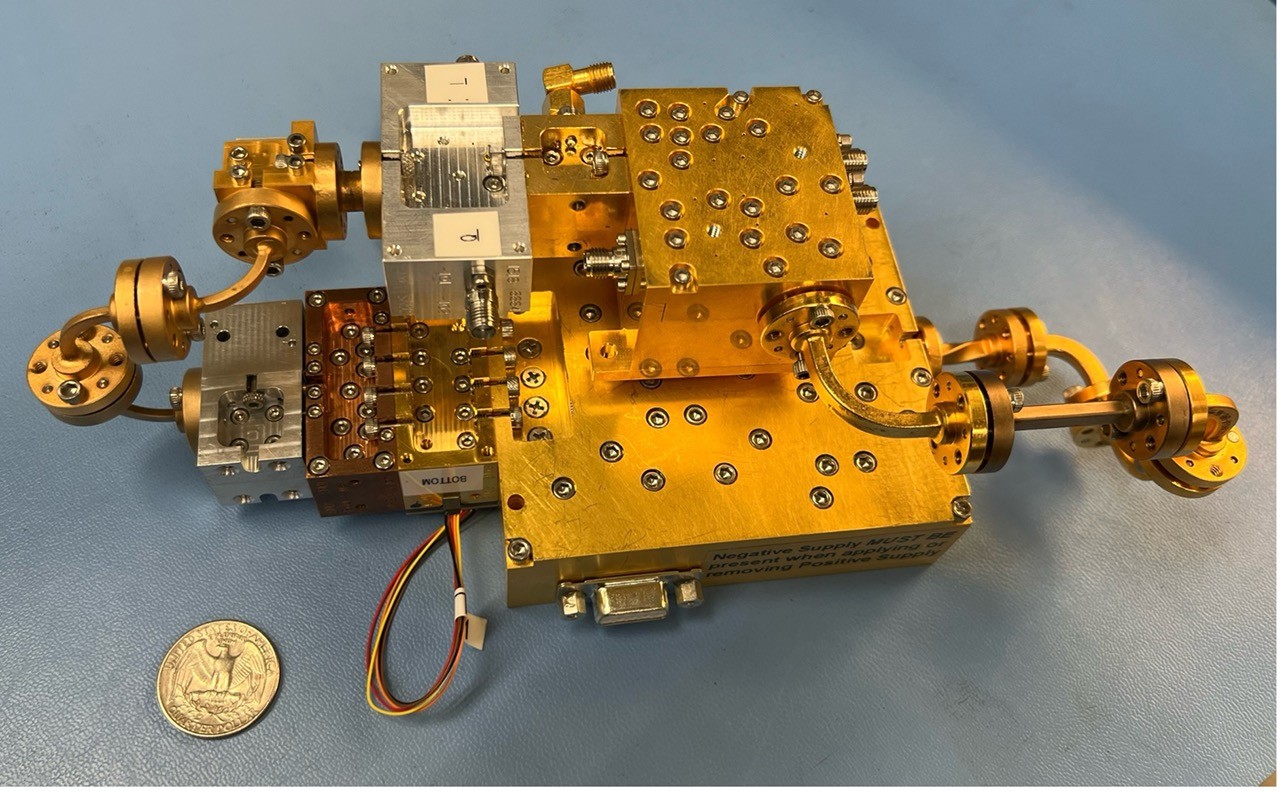
NASA's Jet Propulsion Laboratory has developed CloudCube, a miniaturized multifrequency radar that fundamentally changes how scientists observe cloud systems and precipitation from space. The instrument operates across three distinct radar frequencies spanning 36 to 240 gigahertz, allowing researchers to detect water droplets and ice particles across a broader range of sizes than traditional single-frequency systems.
CloudCube's compact design enables deployment on smaller satellites and aircraft, democratizing access to cloud observations that previously required large, expensive space missions. The simultaneous multi-frequency approach provides unprecedented sensitivity. Lower frequencies penetrate deeper into cloud structures, while higher frequencies detect smaller particles invisible to conventional radar. This layered sensing creates a more complete three-dimensional picture of atmospheric dynamics.
Understanding cloud physics directly impacts weather prediction accuracy and climate modeling. Clouds regulate planetary energy balance by reflecting sunlight and trapping heat. Precipitation patterns affect water resources, agriculture, and disaster preparedness. Current satellite systems often miss critical details about cloud microphysics, the small-scale processes governing water cycle behavior.
The three-frequency design optimizes detection of the full spectrum of atmospheric particles. At 36 GHz, CloudCube observes large raindrops and ice crystals. At higher frequencies approaching 240 GHz, the system resolves tiny cloud droplets and snow particles. This range covers virtually all precipitation conditions encountered in Earth's atmosphere.
JPL engineered CloudCube for efficiency and reliability. The miniaturized architecture reduces power consumption and weight, critical constraints for satellite missions. Smaller platforms mean lower launch costs and faster deployment cycles, allowing scientists to network multiple CloudCube instruments across different orbital paths for global coverage.
Future CloudCube missions could operate alongside existing radar networks, filling observational gaps in tropical regions and over oceans where ground-based radars cannot reach. The system also promises applications beyond Earth observation. Similar mini