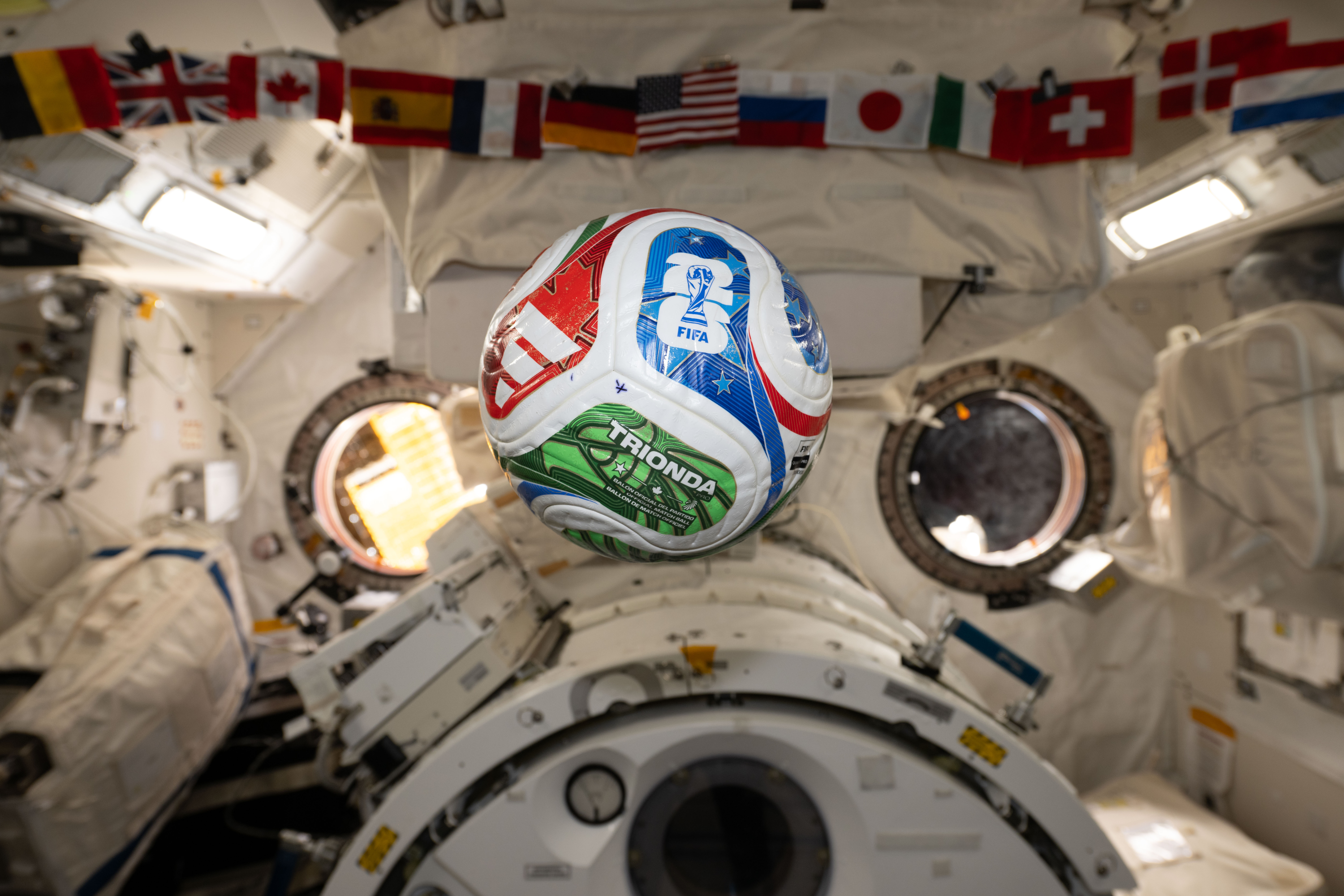
Astronauts aboard the International Space Station conducted a microgravity experiment with soccer balls in March 2026 to understand how internal mass distribution affects motion and stability when gravity vanishes. The research examined how embedded technologies, including match-ball sensors, alter the aerodynamics and handling characteristics of sports equipment in space environments.
The study builds on decades of materials science research conducted on the ISS. By observing how soccer balls behave without gravitational constraints, researchers gained data applicable to designing equipment for future space missions. Understanding mass distribution in microgravity informs engineering decisions for everything from structural components on spacecraft to tools astronauts handle during spacewalks.
The experiment also holds relevance for terrestrial sports technology. Modern soccer balls increasingly integrate sensors that track spin, velocity, and impact force during matches. These embedded systems shift a ball's center of mass and alter its flight characteristics on Earth. The ISS research provides baseline data on how such modifications affect object behavior in weightlessness, knowledge that could eventually inform the design of next-generation performance-tracking devices.
NASA's use of the International Space Station for this type of applied research exemplifies how orbital laboratories serve multiple purposes. The ISS functions as a testbed for fundamental physics, life sciences, materials research, and technology development. Each experiment contributes to both space exploration and improvements in everyday technology used on the ground.
The soccer ball testing joins a long history of ISS investigations into how objects move and interact in microgravity. Previous experiments have examined everything from fluid dynamics to combustion behavior. These studies collectively expand the scientific foundation necessary for long-duration missions to the Moon and Mars, where understanding how materials and equipment perform outside Earth's protective gravity becomes essential for crew safety and mission success.