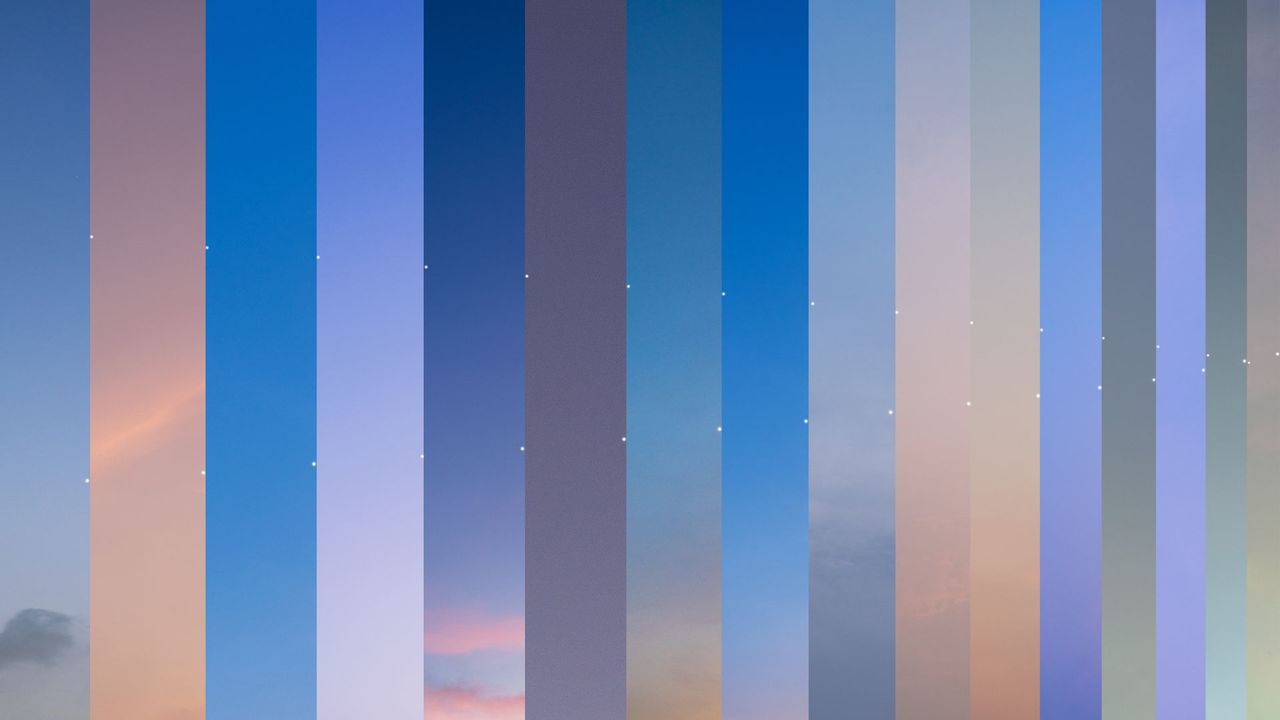
Earth's changing orbital position created a visual illusion that brought Venus and Jupiter together across the night sky during a spectacular 30-day planetary conjunction. The two planets appeared to converge in Earth's sky, moving closer night after night, even as they actually drifted farther apart through space.
This optical effect occurs because Earth orbits the Sun at a different speed and distance than both Venus and Jupiter. As Earth moves along its orbital path, the relative positions of these planets shift dramatically from our perspective. Venus, the innermost of the two, orbits much faster than Jupiter, completing full circuits around the Sun in 225 Earth days compared to Jupiter's 12-year orbit. This speed difference creates the illusion of the planets dancing across the sky.
Conjunctions happen regularly as celestial mechanics dictate planetary positions. When two planets align in Earth's sky, they appear close together from our vantage point, though they may be separated by millions of kilometers in space. Venus and Jupiter conjunctions rank among the most visually striking astronomical events visible to the naked eye, thanks to their exceptional brightness. Venus ranks as the second brightest object in the night sky after the Moon, while Jupiter shines as the third brightest.
A 30-day photographic collage documenting this conjunction captures the beautiful dynamic geometry of the solar system. Such sequences reveal how planetary positions evolve night by night, showing the relentless mechanics driving celestial motion. The images demonstrate why ancient astronomers valued observatories and why tracking planetary positions became foundational to understanding orbital mechanics.
These conjunctions remain accessible to naked-eye observers worldwide, requiring no telescopes or specialized equipment. They serve as reminders that the solar system operates as an intricate clockwork mechanism, where every object follows mathematical laws governing motion and gravity. The apparent convergence of Venus and Jupiter exemplifies how perspective shapes astronomical observation, a lesson that remains relevant for modern