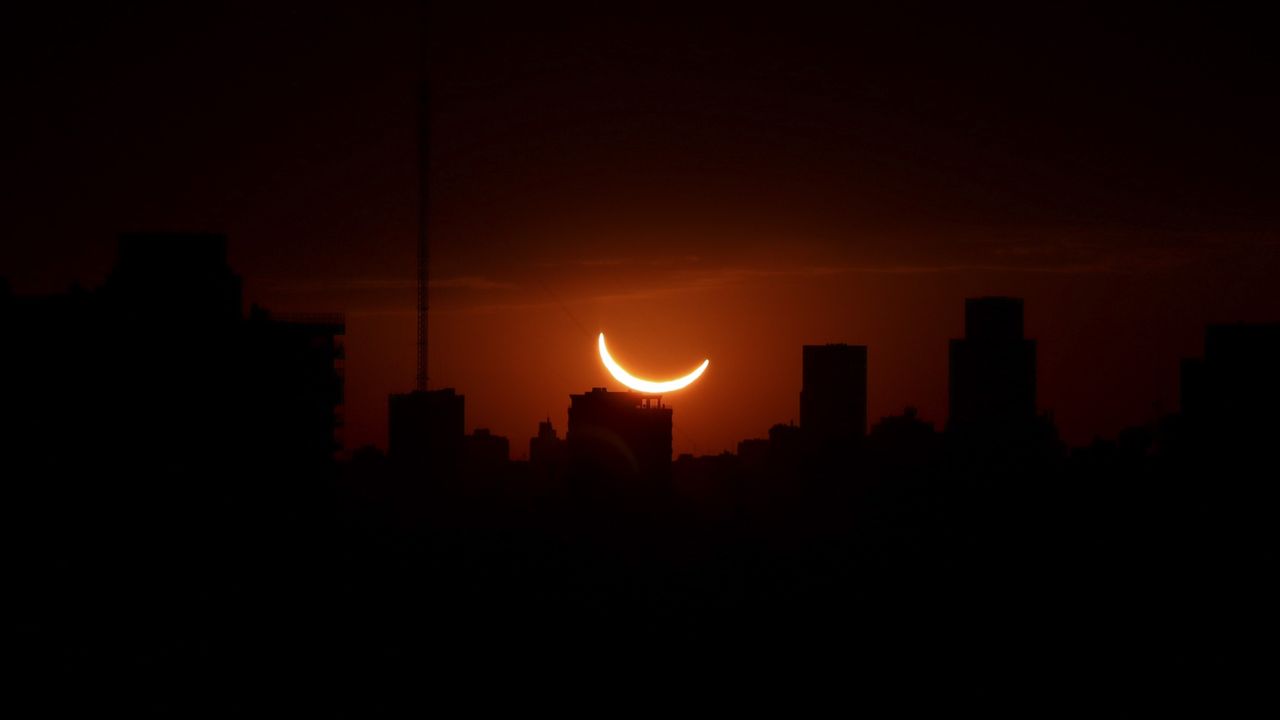
A total solar eclipse will cross Earth on August 12, 2026, offering millions of people across multiple continents a rare opportunity to witness totality. The eclipse path will sweep through Greenland, Iceland, Spain, and Portugal, with partial eclipse visibility extending across Europe, North Africa, and western Asia.
The 2026 eclipse follows the 2024 total solar eclipse that crossed North America. Unlike that widely accessible event, the 2026 path covers smaller geographic areas, but the celestial mechanics remain equally dramatic. During totality, the Moon passes directly between the Sun and Earth, blocking the Sun's disk completely and revealing the solar corona, the Sun's outer atmosphere normally invisible to the naked eye.
Eclipse chasers should prioritize locations along the centerline of the path, where totality lasts longest. In Iceland and Spain, observers positioned optimally will experience several minutes of complete darkness during daytime. The corona becomes visible as a ghostly white halo around the Moon's silhouette. Stars emerge in the darkened sky. Temperatures drop noticeably. Birds cease singing.
Astronomers use total solar eclipses to study the Sun's corona and its magnetic field structure, research that telescopes cannot replicate from Earth or space. The corona reaches temperatures exceeding one million degrees Celsius, a paradox since the Sun's surface measures only 5,500 degrees. Eclipse observations continue yielding data about coronal heating mechanisms and solar physics.
Planning matters. Travelers heading to Iceland or southern Spain should book accommodations months in advance. Weather remains unpredictable, particularly in Iceland and Greenland where cloud cover often obscures the eclipse. Backup locations within the path prove essential for serious eclipse observers.
Standard eclipse glasses meeting ISO 12312-2 standards remain mandatory for any partial phase viewing. These specialized solar filters block 99.99997 percent of incoming