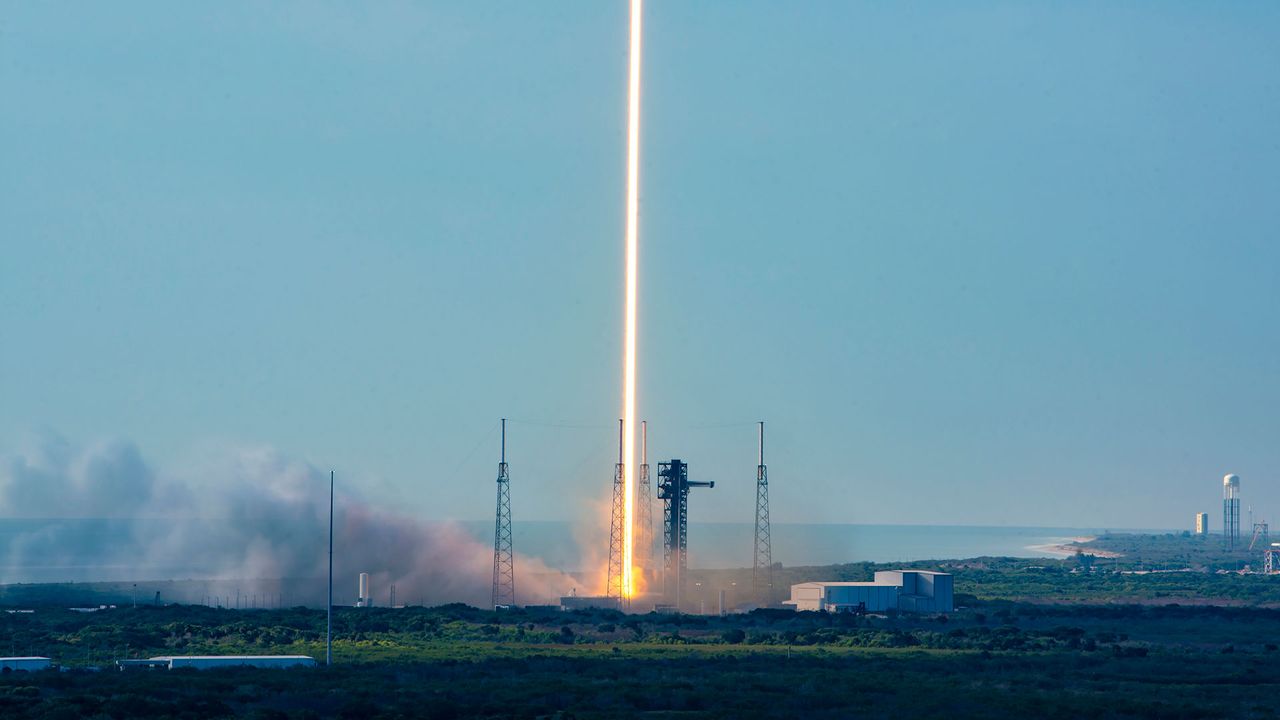
SpaceX launched a Falcon 9 rocket carrying 29 Starlink satellites to orbit on the morning of its initial public offering. Liftoff occurred at 8:27 a.m. ET, slightly more than an hour before the company began trading on the NASDAQ stock market.
The timing underscores SpaceX's dual momentum. The company conducted a standard Starlink deployment while simultaneously entering public markets. Starlink, SpaceX's constellation of internet-providing satellites, has grown to thousands of operational spacecraft since its first launches began in 2019. Each batch of 29 satellites adds capacity to the global broadband network, which now serves customers across North America, Europe, Latin America, and the Asia-Pacific region.
The Falcon 9 launch demonstrates SpaceX's operational cadence. The company has achieved routine reusability with its first-stage boosters, landing and reflying them dozens of times. This efficiency drives down launch costs and allows SpaceX to maintain a high flight rate for commercial customers, government missions, and its own constellation expansion.
Starlink represents SpaceX's most ambitious business venture beyond launch services. The constellation competes with traditional internet providers and other satellite operators like Amazon's Project Kuiper and OneWeb. Deployment continues at a steady pace, with SpaceX regularly launching batches of satellites on Falcon 9 flights.
The synchronicity of today's launch and IPO reflects SpaceX's expanding operations. The company now manages multiple revenue streams: the Starlink internet service, Falcon 9 launches for government and commercial clients, cargo and crew transport to the International Space Station under NASA contracts, and development of the Starship vehicle. Going public provides capital to accelerate development across these programs and expand Starlink's service footprint worldwide.