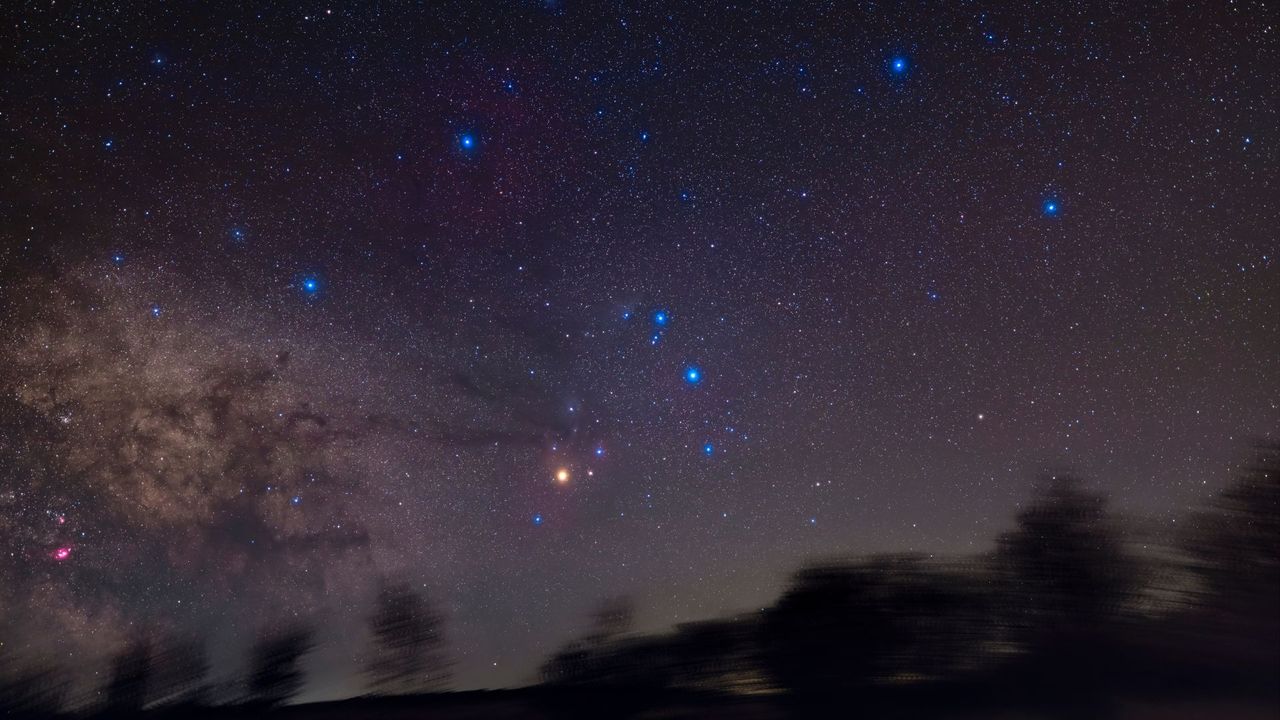
The new moon phase arriving June 14, 2026 creates ideal conditions for observing Mercury, Venus, and Jupiter during late spring evenings. Without moonlight washing out fainter celestial objects, stargazers gain unobstructed views of the inner planets and bright stars across the night sky.
Mercury and Venus, the two innermost planets in our solar system, reach their highest visibility during twilight hours when the new moon eliminates competing light pollution. Jupiter, the solar system's largest planet, dominates the sky with its distinctive brightness and cloud bands visible through binoculars or modest telescopes. The absence of lunar illumination extends observation windows and sharpens the contrast between planetary bodies and their stellar backgrounds.
New moon phases occur when Earth, Moon, and Sun align with the Moon positioned between Earth and our star. This geometry removes lunar reflected sunlight from our skies for several days, transforming the nighttime environment into an observer's advantage. Constellations invisible during full moon periods emerge with dramatic clarity.
The late spring timing places these planets in favorable positions relative to the ecliptic, the path the sun follows across our sky. Mercury and Venus remain relatively low on the horizon but achieve maximum elongation, their greatest angular distance from the sun as seen from Earth. This positioning makes them accessible to naked-eye observers during the hour or two following sunset or preceding sunrise.
Professional and amateur astronomers use new moon phases for various observation programs. The darkness aids searches for deep-sky objects like nebulae and galaxies that require dark skies. For planetary observers, the reduced sky brightness improves seeing conditions and allows detection of finer surface features and atmospheric details on Jupiter and other bright targets.
The June 2026 new moon represents a routine but reliable opportunity for outdoor skywatchers. Whether using telescopes, binoculars, or naked eyes, observers can track planetary motions and watch