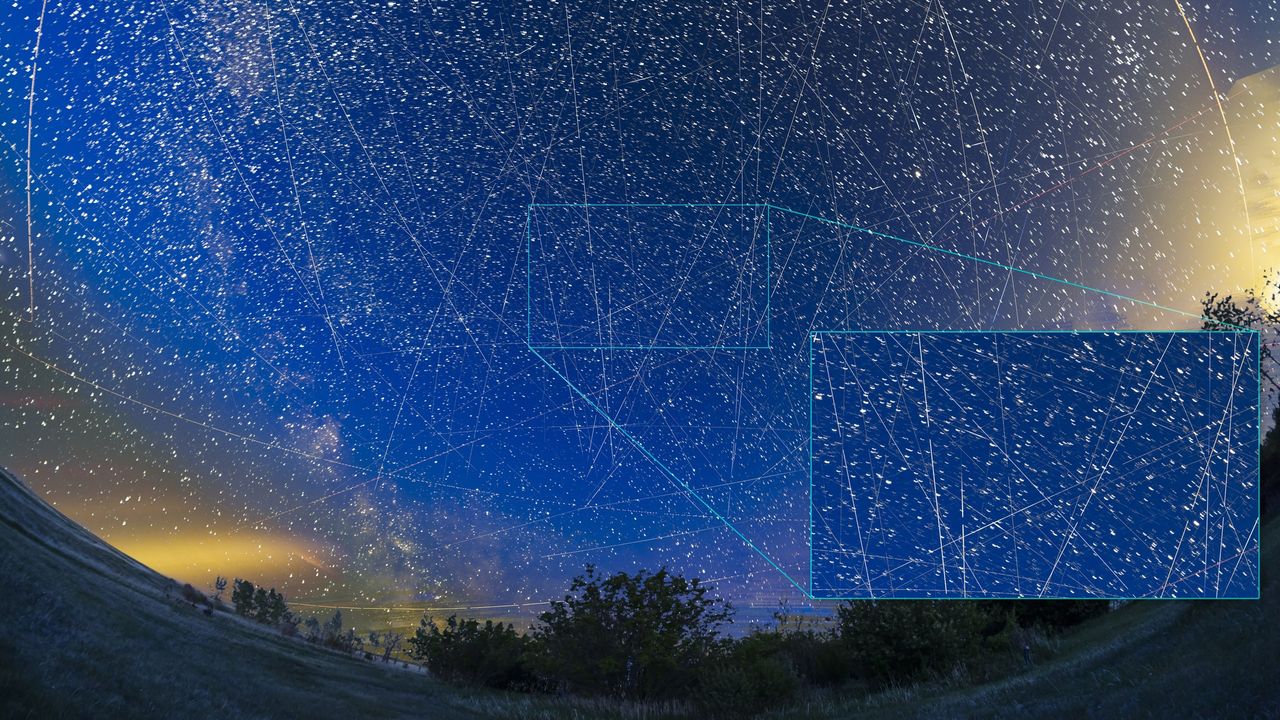
Thousands of satellites now orbit Earth, fundamentally altering how we observe the cosmos and experience the night sky. Companies like SpaceX deploy massive constellations, with Starlink alone comprising over 5,000 active satellites designed to provide global internet coverage. Amazon's Project Kuiper and other ventures promise to add tens of thousands more.
The consequences ripple across astronomy and human experience alike. Satellite trails now streak through deep-sky photographs, contaminating observations that astronomers spent hours capturing. Professional observatories and amateur astrophotographers report increasing difficulty isolating celestial objects. The problem worsens as constellations grow.
Light pollution from satellites compounds decades of ground-based light contamination. Orbital megaconstellations scatter sunlight at dusk and dawn, brightening the sky when it should be darkest. This affects circadian rhythms in wildlife and erodes the fundamental human experience of a starlit night. Dark-sky preserves and observatories invested millions to escape terrestrial light pollution only to face interference from above.
The problem carries scientific weight. Space-based observatories like the James Webb Space Telescope require precise timing to avoid satellite interference. Ground-based instruments tracking near-Earth objects for planetary defense purposes struggle with false detections from orbital clutter. Long-term monitoring of variable stars, supernovae, and exoplanet transits becomes harder.
Solutions remain limited. SpaceX tested darkening treatments on Starlink satellites and adjusted deployment strategies to reduce brightness during critical observing hours. The International Astronomical Union established working groups to coordinate mitigation efforts. Some proposals include better orbital placement, specialized coatings, and coordinated satellite operation schedules.
Yet the tension persists. Internet access addresses real global needs, particularly in underserved regions. Satellite technology serves disaster response, climate monitoring, and agricultural management. The challenge demands balancing connectivity