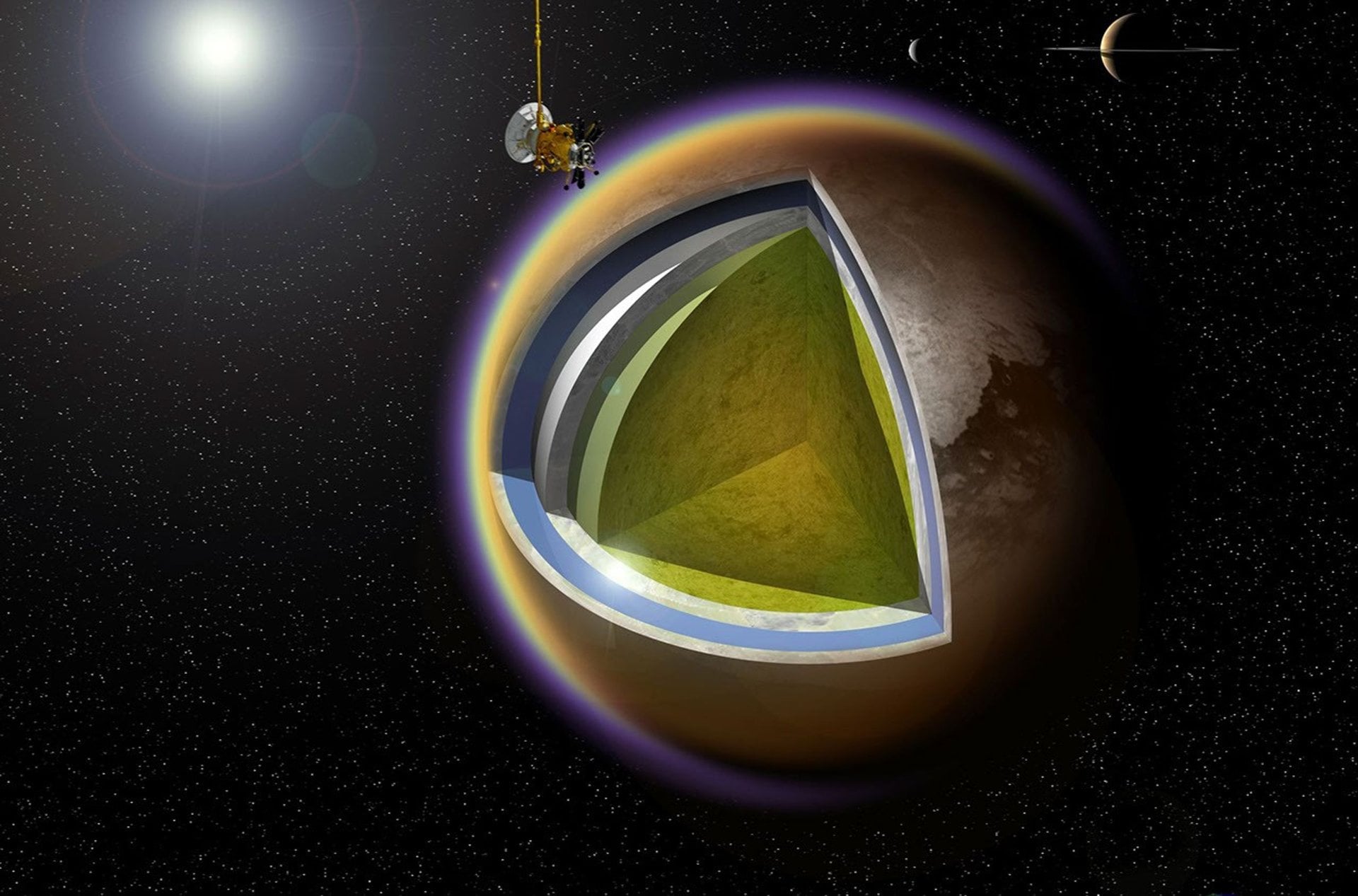
Researchers funded by NASA have completed a comprehensive assessment of Titan's in-situ resource utilization (ISRU) potential, concluding that Saturn's largest moon offers unparalleled advantages for human exploration and long-term settlement compared to the Moon, Mars, and other candidate destinations.
The study examined Titan's accessible resource base. The moon possesses abundant liquid hydrocarbons in its polar seas, water ice at its surface and subsurface, organic compounds in its thick nitrogen atmosphere, and chemical deposits created by complex prebiotic chemistry. These resources far exceed what planners can access on comparable worlds. Liquid methane and ethane lakes cover roughly 3 percent of Titan's surface, concentrated near the north and south poles. The moon's cryogenic environment preserves volatiles that would evaporate elsewhere.
For ISRU applications, Titan's resources enable multiple strategic advantages. Hydrocarbons extracted from the seas provide fuel and chemical feedstocks. Water ice supplies drinking water, radiation shielding, and hydrogen for propellant production. The thick atmosphere, composed primarily of nitrogen with trace methane and organic aerosols, offers both protection from radiation and material for synthesizing complex compounds. Unlike the Moon or Mars, Titan's atmosphere enables power generation through wind turbines and eliminates certain heat management challenges.
The study's findings reshape how planners approach long-duration human presence beyond Earth. While the Moon offers proximity and Mars holds geological interest, Titan presents a chemical and geological treasure house. The moon's distance from the Sun (1.5 billion kilometers) requires advanced life support and robust power systems, but the abundance of processable materials compensates for logistical challenges.
Previous Cassini spacecraft observations revealed Titan's hydrocarbon cycles operate similarly to Earth's water cycle, complete with rainfall, rivers, and seas. Beneath the icy crust