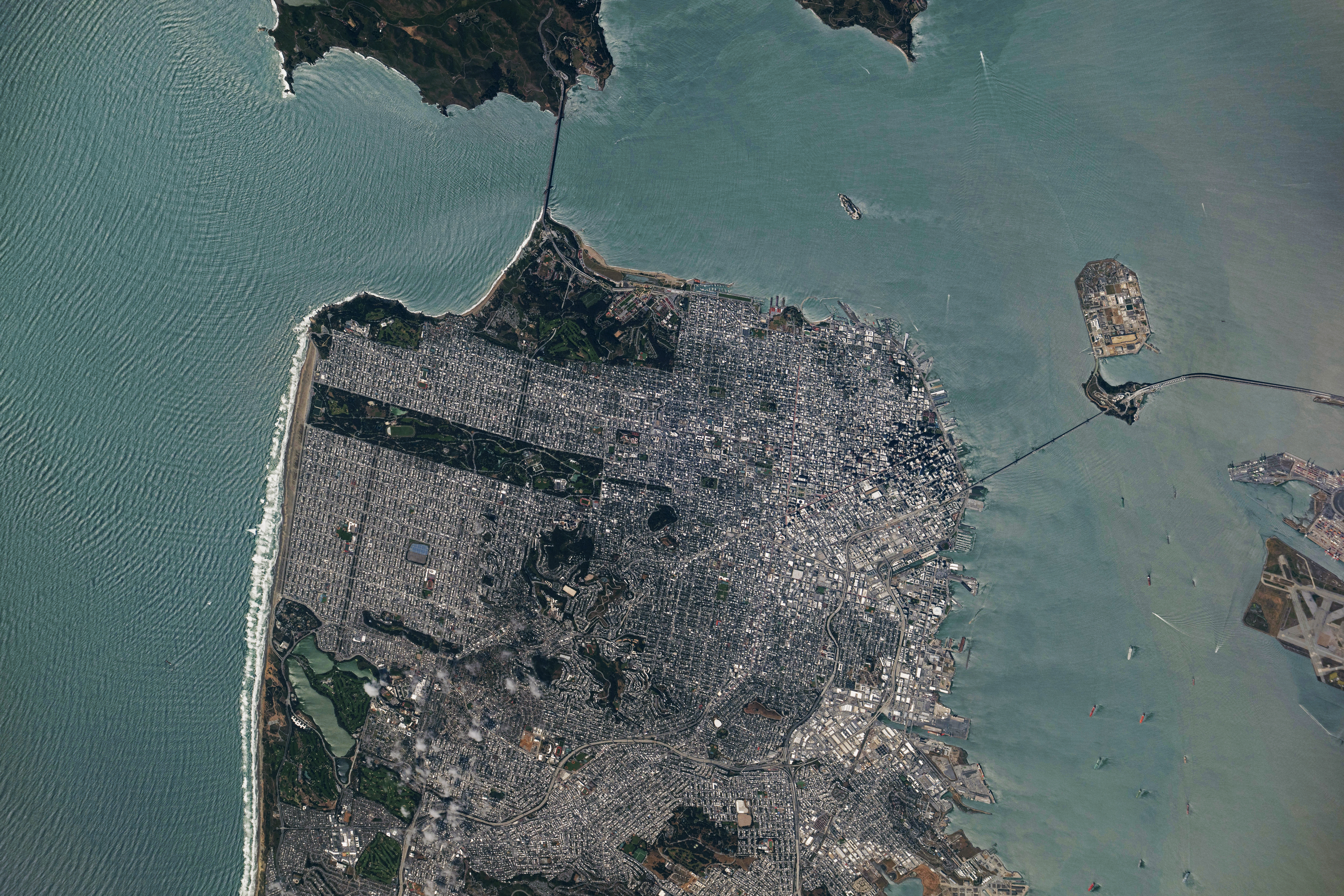
An astronaut aboard the International Space Station captured a striking photograph of San Francisco's urban landscape on May 27, 2026, revealing the city's distinctive infrastructure from 250 miles above Earth. The image shows two of the region's most recognizable structures. The Golden Gate Bridge links the northern San Francisco Peninsula with Marin County, while the San Francisco-Oakland Bay Bridge extends eastward across the bay.
Photography from the ISS provides Earth observation data that complements satellite missions and ground surveys. Astronauts aboard the station, which orbits at roughly 17,500 miles per hour, document cities, coastlines, and geographic features with handheld cameras. These images offer unique perspectives on urban development, environmental changes, and infrastructure that inform city planning and scientific research.
The ISS, jointly operated by NASA, Roscosmos, and international partners including ESA and JAXA, has maintained continuous human presence in low Earth orbit since November 2000. Crews rotate every six months, conducting experiments in microgravity while documenting Earth's surface. The station travels over 250,000 miles monthly, circling the planet every 90 minutes and providing unprecedented vantage points for observing human civilization and natural phenomena.
San Francisco Bay's geography presents distinctive visual signatures from orbit. The patchwork of urban areas, water bodies, and natural landscapes creates clear contrasts visible in space-based imagery. Such photographs serve dual purposes: they document how cities evolve while providing crew members with direct perspectives on the planet they study scientifically. NASA regularly releases these images through its Earth Observatory and other archives, making them available to researchers, educators, and the public for geographic analysis and educational outreach.