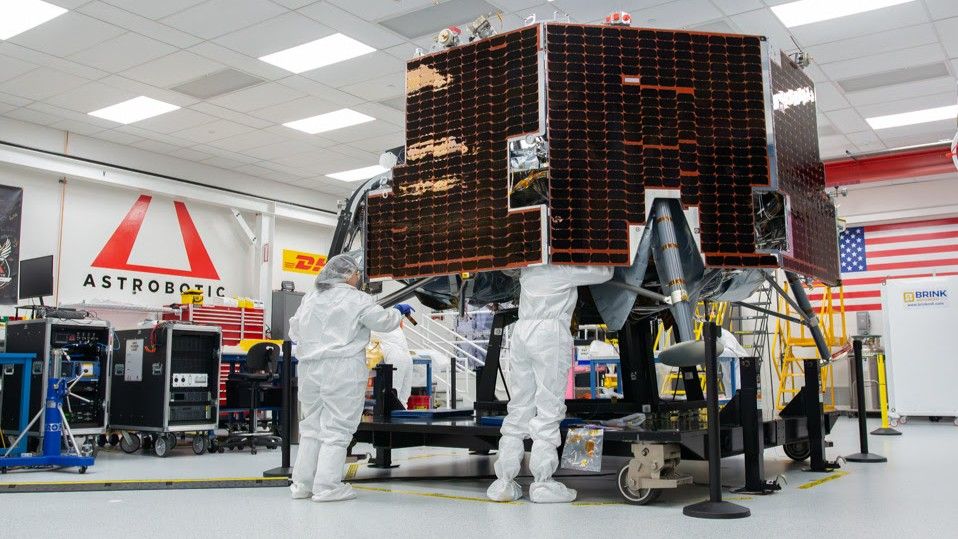
Astrobotic revealed Griffin-1, a lunar lander designed to transport one of the heaviest cargo loads ever delivered to the Moon. The vehicle represents a major step forward in NASA's Moon Base effort, which aims to establish sustained human presence on the lunar surface.
Griffin-1 builds on Astrobotic's existing Peregrine lander platform but with substantially increased capacity. The company designed it specifically for hauling massive payloads that future lunar bases will require, from construction equipment to life support systems and scientific instruments. This capability addresses a critical gap in current lunar logistics, where most existing landers max out at relatively modest mass deliveries.
NASA selected Astrobotic as a Commercial Lunar Payload Services provider under its Artemis program. The space agency's Moon Base initiative depends on reliable cargo transport to assemble habitats, solar arrays, and research stations. Griffin-1 fills that role by offering significantly higher payload capacity than Peregrine, which completed its maiden flight in January 2024, though it experienced a fuel leak during descent.
The lander's design incorporates lessons from Peregrine's mission. Engineers reinforced structural elements and improved thermal management systems to ensure Griffin-1 can survive the lunar environment and protect sensitive cargo during landing. The vehicle targets a payload capacity of several hundred kilograms, positioning it among the most capable lunar cargo spacecraft in development globally.
Astrobotic competes with other providers like ispace and Firefly Aerospace in the commercial lunar delivery market. This competition drives innovation while reducing NASA's direct development costs through fixed-price contracts. The agency pays only for successful deliveries, creating strong incentives for reliability.
Griffin-1 launches within the next few years, supporting NASA's timeline for establishing lunar base infrastructure before human crews return under Artemis. Each successful cargo mission expands what scientists can accomplish on the Moon, from drilling deep