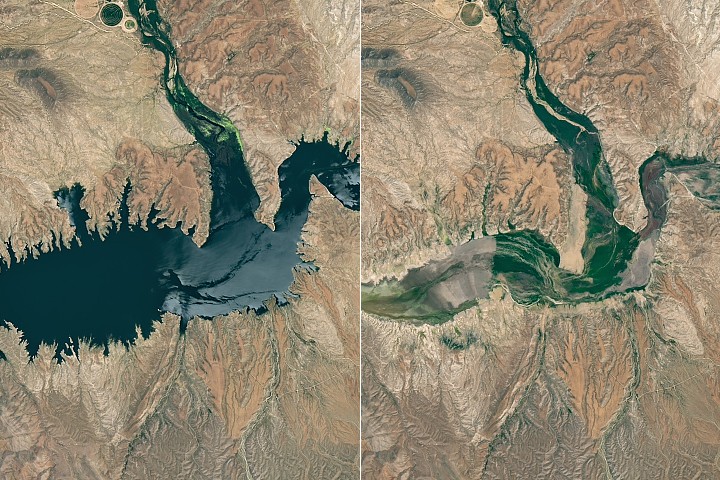
A severe drought combined with water management releases has dropped San Carlos Reservoir in Arizona to critically low levels, triggering a fish die-off event that spans across the reservoir system. NASA satellite imagery and ground monitoring have documented the dramatic decline in water storage at this critical Arizona water resource.
San Carlos Reservoir serves as a major water storage facility for central Arizona, supplying irrigation water and hydroelectric power generation across the region. The reservoir's collapse reflects the broader water crisis affecting the Colorado River Basin, where multiple years of below-average precipitation and sustained demand for agricultural and municipal water have depleted supplies faster than natural recharge can replace them.
The fish kill observed at San Carlos Reservoir results from multiple stressors triggered by low water conditions. Reduced water depth concentrates dissolved oxygen depletion, while warmer temperatures in shallow pools stress temperature-sensitive fish species. Water releases for downstream users further destabilized the ecosystem by creating fluctuating conditions that fish populations cannot tolerate.
NASA's Earth observation satellites have tracked the visual transformation of the reservoir, revealing exposed shorelines and dramatically reduced surface area compared to historical levels. These remote sensing tools provide water managers with real-time data on storage capacity and help federal agencies coordinate water releases across the Colorado River Compact states.
The San Carlos situation underscores the cascading ecological consequences of sustained drought in the arid Southwest. Fish populations in Arizona's reservoirs depend on stable water management practices that balance human water demands with ecosystem requirements. The current crisis demonstrates that water allocation models developed during the last wet century may not sustain both human and ecological needs under persistently dry conditions.
Water managers now face difficult choices between maintaining downstream water deliveries and preserving reservoir ecosystems. Resolution requires coordination across Arizona, California, Nevada, and federal water agencies managing the Colorado River system.