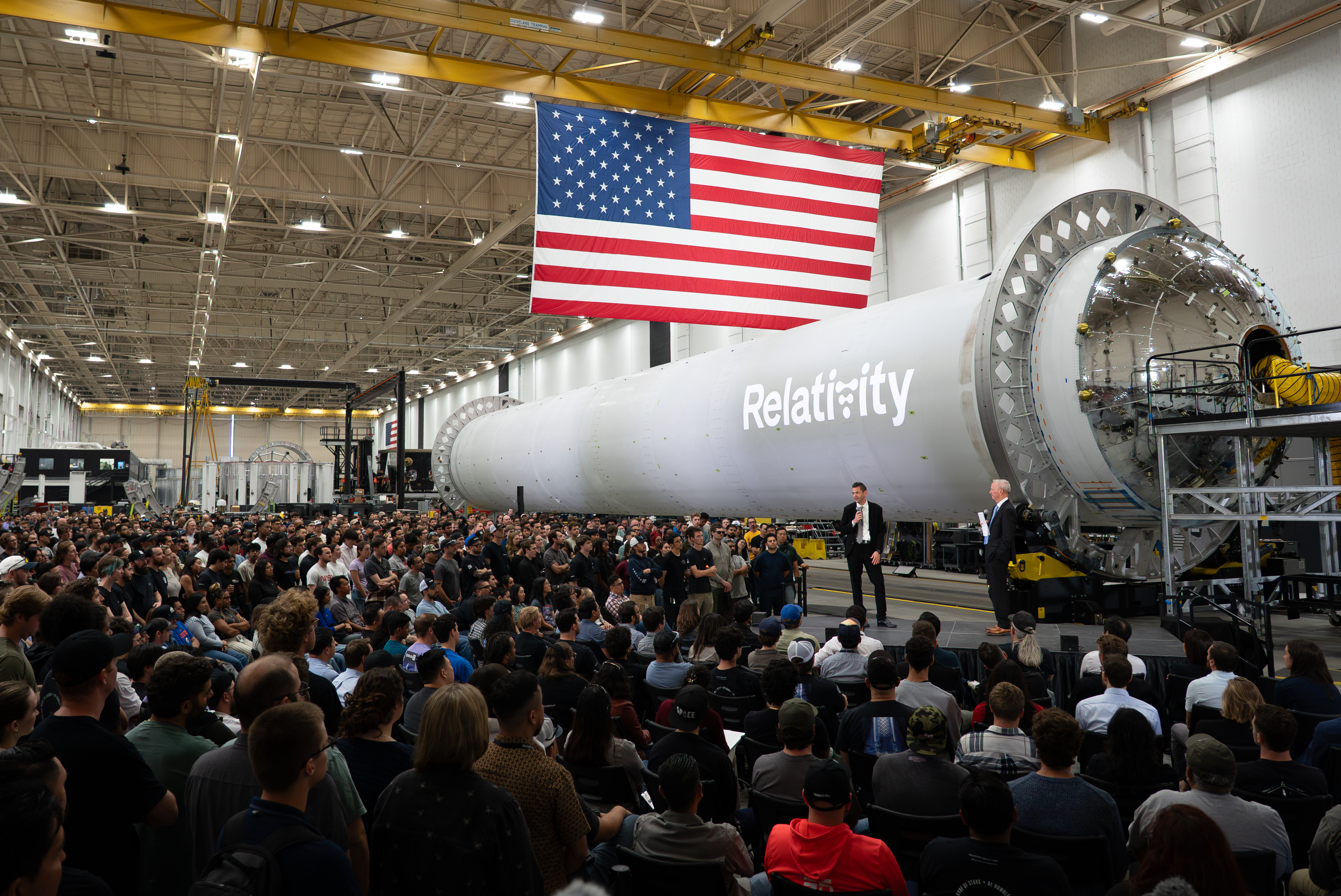
NASA and Relativity Space have formed a partnership to send the Aeolus atmospheric-science instrument package to Mars. NASA provides the scientific payload while Relativity Space handles the spacecraft, launch vehicle, and cruise operations to deliver the instruments to the Red Planet.
The Aeolus suite represents a focused approach to Mars atmospheric research. These instruments will measure wind patterns, temperature profiles, and dust dynamics in the Martian atmosphere. Understanding Mars' thin but dynamic atmosphere remains essential for planning human missions and interpreting the planet's climate history.
Relativity Space brings 3D-printed rocket technology to the mission. The company manufactures launch vehicles using additive manufacturing, which reduces production timelines and costs compared to traditional manufacturing. This partnership demonstrates NASA's strategy of leveraging commercial capabilities to achieve scientific objectives more efficiently.
The collaboration follows a broader shift in NASA's Mars exploration strategy. Rather than exclusively developing and launching its own missions, the agency now increasingly partners with commercial operators who can deliver specific payloads at reduced cost. This model accelerates science deployment while freeing NASA resources for other priorities.
Mars atmospheric data collected by Aeolus will complement existing orbital observations from NASA's MAVEN spacecraft and Perseverance rover measurements. The combined dataset will refine climate models and improve predictions about seasonal dust storms that affect the entire planet. These storms can last months and reduce sunlight by 99 percent in affected regions.
The partnership also serves practical exploration goals. Accurate atmospheric models directly inform landing-site selection and surface operations planning for future crewed missions. Atmospheric density variations affect parachute design, entry speeds, and trajectory calculations for spacecraft approaching Mars.
This public-private model represents evolution in how space agencies accomplish ambitious science. Commercial partners like Relativity Space assume operational and manufacturing risks while NASA concentrates on instrument development and scientific analysis. The arrangement accelerates the pace of Mars exploration and reduces the