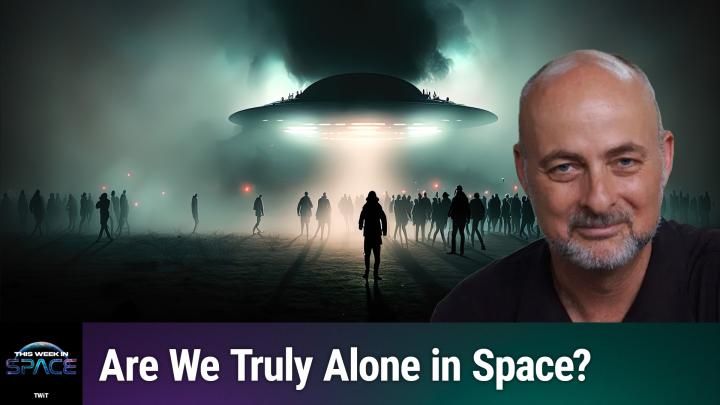
Dr. David Brin joined This Week In Space podcast Episode 215 to discuss extraterrestrial disclosure and humanity's readiness for contact with alien civilizations. Brin, author of the Uplift series and acclaimed science fiction exploring first contact scenarios, brings both scientific rigor and narrative expertise to questions that bridge astronomy and philosophy.
The discussion centered on what disclosure of extraterrestrial life would mean for society, science, and our place in the cosmos. Brin has spent decades exploring these themes through fiction while engaging with real scientific possibilities. His work examines how civilizations might respond to discovering they are not alone, drawing on astronomy, astrobiology, and game theory.
Co-hosts Rod Pyle and Susan Karlin examined the implications of potential announcements from space agencies or research institutions about confirmed extraterrestrial signals or biosignatures. The conversation likely touched on recent advances in exoplanet detection through missions like NASA's James Webb Space Telescope and Kepler missions, which have identified thousands of worlds beyond our solar system. Some of these exoplanets exist in habitable zones where liquid water could exist.
Brin's perspective combines scientific literacy with awareness of humanity's psychological and social readiness for such discoveries. His fiction explores scenarios from initial detection through long-term coexistence with alien species. The podcast episode reflects growing mainstream interest in astrobiology and the search for extraterrestrial intelligence (SETI), which has accelerated with improved detection capabilities and deeper understanding of how common habitable conditions may be across the galaxy.
The Fermi Paradox, first posed by physicist Enrico Fermi, remains central to these discussions: if the galaxy contains numerous habitable worlds, why have we not yet detected signals from advanced civilizations? Brin's work tackles this question from multiple angles, considering technological, biological, and sociological factors that shape contact