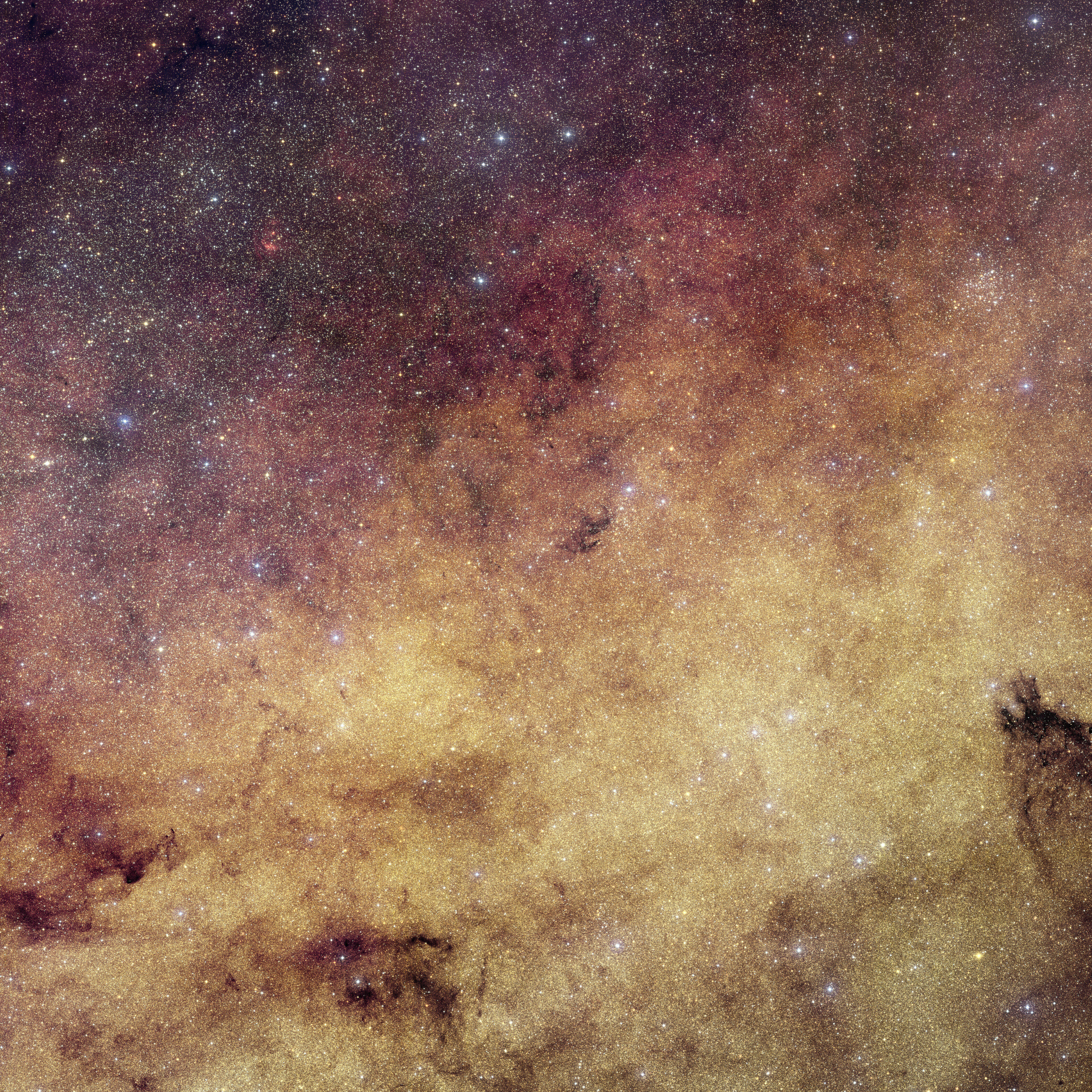
The Euclid space telescope has captured new imagery of the Milky Way's galactic center, revealing stellar populations and structures in unprecedented detail. The European Space Agency mission, which includes contributions from NASA, obtained these observations in a region that overlaps with targets planned for NASA's Nancy Grace Roman Space Telescope, scheduled to launch later this summer.
Euclid, designed to map the geometry of the dark universe by observing billions of galaxies across 10 billion years of cosmic history, demonstrates remarkable versatility in studying nearby galactic features. The telescope's advanced imaging capabilities pierce through dust that obscures visible-light observations, allowing astronomers to catalogue stars and clusters near the supermassive black hole Sagittarius A* at the galaxy's core.
This early observation provides a valuable preview of what Roman will accomplish when it begins operations. Roman's infrared instruments will conduct deeper surveys of the galactic center, mapping stellar kinematics and chemical abundances in regions hidden from ground-based telescopes. The complementary datasets from both missions will refine models of galactic structure, stellar evolution, and the dynamics surrounding the central black hole.
The overlap in observed regions enables direct comparison between the two facilities' capabilities. Euclid's visible and near-infrared wavelengths complement Roman's infrared sensitivity, creating a multi-wavelength perspective on the same cosmic landscape. This coordinated approach maximizes scientific return and tests observational strategies both telescopes will employ throughout their missions.
The galactic center remains one of astronomy's most complex environments. Dense stellar populations, magnetic fields, and gravitational forces create dynamics that ground-based observatories struggle to resolve. Space-based infrared observation removes atmospheric interference and reaches fainter objects obscured by dust extinction.
NASA and ESA's collaborative approach to deep-space observatories reflects modern astronomical practice. Rather than compete, these missions coordinate observations to answer