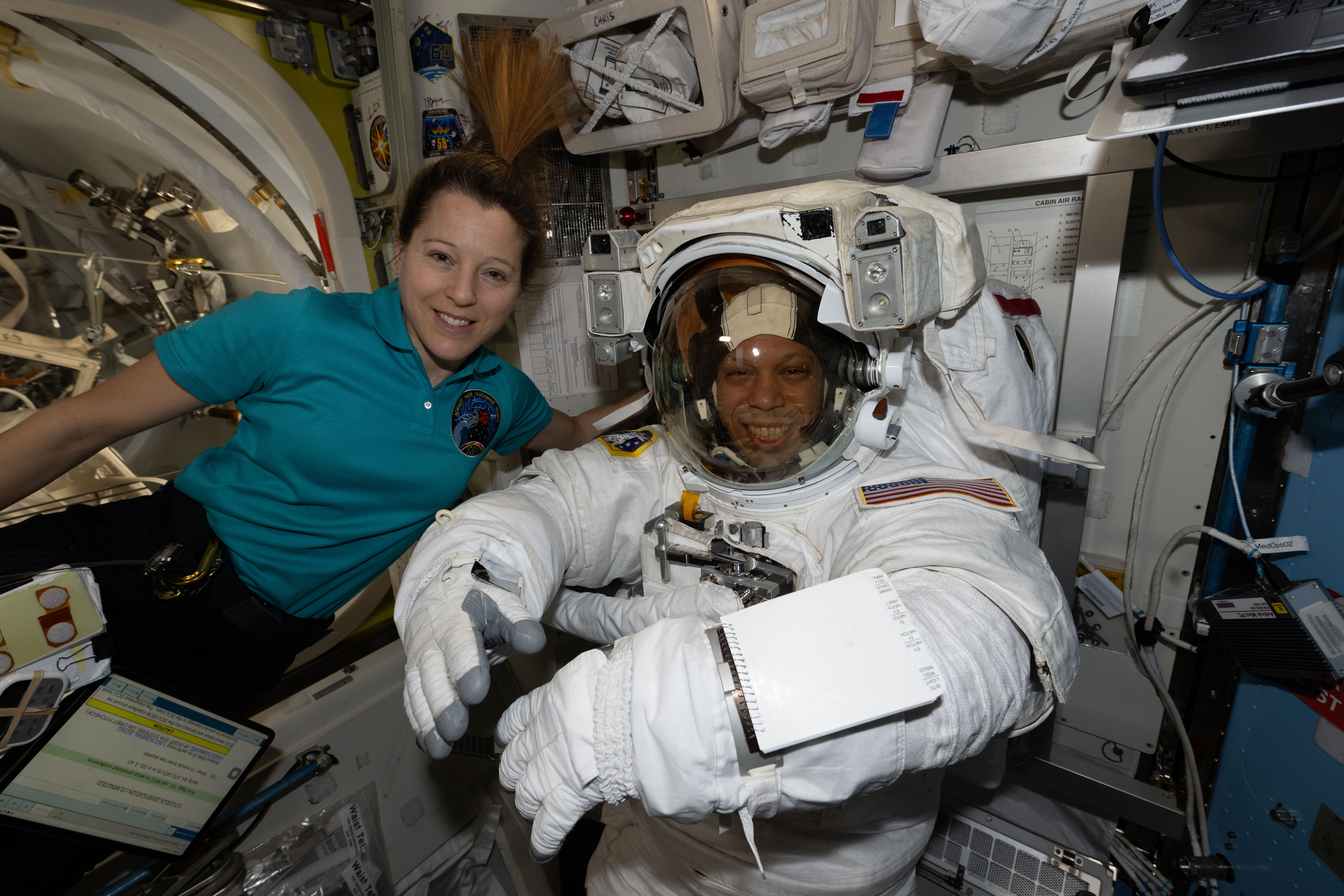
NASA astronaut Chris Williams is preparing for a scheduled spacewalk from the International Space Station, undergoing critical preflight checks of his extravehicular activity suit. On June 23, 2026, European Space Agency flight engineer Sophie Adenot assisted Williams in the Quest airlock module, where he tested the spacesuit's fit, mobility, and all onboard systems including communications and life support equipment.
The spacewalk represents a core component of ISS operations and maintenance. Williams, as a flight engineer aboard the station, will conduct extravehicular work essential to the orbital laboratory's function. These missions require meticulous preparation, as spacesuits represent the only barrier between astronauts and the vacuum of space. Each suit undergoes comprehensive testing to ensure redundancy in life support systems and unobstructed communication with mission control.
The Quest airlock module serves as the departure point for all American spacewalks from the ISS. Its dual-chamber design allows astronauts to transition from the station's pressurized environment to the vacuum beyond without depressurizing the entire complex. The module contains specialized equipment for suit checkout procedures and umbilical management.
Spacewalks from the ISS typically address a range of objectives: module repairs, installation of new hardware, maintenance of external equipment, and scientific instrument deployment. The specific mission profile for Williams' excursion has not been detailed in available reporting, but routine station operations require approximately four to six spacewalks annually across all expedition crews.
Astronauts train extensively for extravehicular activity in underwater facilities and in high-fidelity simulators before executing actual spacewalks. The integration of ESA personnel like Adenot in pre-spacewalk preparations reflects the collaborative nature of ISS operations. The station operates as a joint venture of NASA, ESA, Roscosmos, JAXA, and CSA, with crew members