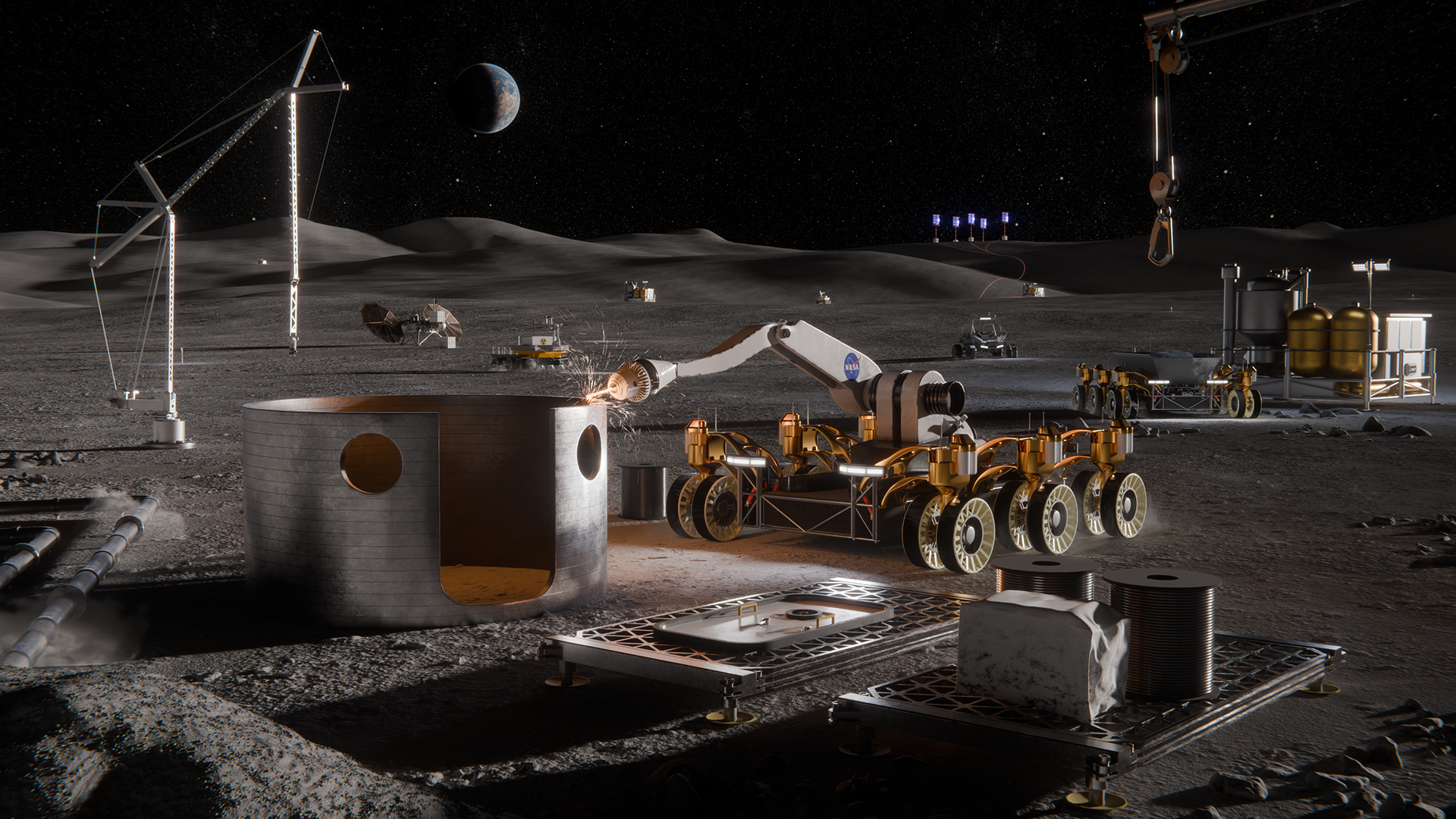
NASA issued a draft Broad Agency Announcement under its NextSTEP-3 program on June 29, 2026, targeting technology development for lunar surface operations and cislunar infrastructure. The solicitation invites proposals to mature critical systems and close technological gaps essential for sustained human presence on the Moon.
NextSTEP-3, or Next Space Technologies for Exploration Partnerships, represents NASA's structured approach to engaging industry and academic institutions in solving specific engineering challenges. This particular announcement, designated Appendix A, focuses on accelerating the technological readiness levels of systems that remain underdeveloped for lunar missions.
The timing reflects NASA's Artemis program timeline. The agency needs mature technologies operational before crewed lunar landings resume, targeting the mid-2020s for surface operations. Cislunar architecture—the infrastructure, transportation systems, and facilities operating between Earth and lunar orbit—requires parallel development to enable efficient logistics and long-term exploration sustainability.
Key technology gaps typically include life support systems for extended surface stays, power generation and storage in the lunar environment, landing systems for heavier payloads, in-situ resource utilization equipment, and surface mobility platforms. The announcement seeks proposals across these domains and others critical to lunar architecture.
The draft BAA format allows industry to respond with innovative approaches rather than NASA prescribing exact solutions. Companies and research institutions submit concept studies demonstrating feasibility and development pathways toward production-ready systems. Selected projects receive funding and technical oversight to advance designs from lower readiness levels toward flight qualification.
This acquisition strategy has proven effective in previous NextSTEP phases, accelerating commercial partnerships while reducing development timelines and costs. NASA benefits from competitive proposals while contractors gain contracts and technical validation from the agency.
The June 2026 issuance signals NASA's commitment to concrete technology advancement ahead of Artemis missions. By soliciting these solutions now, the