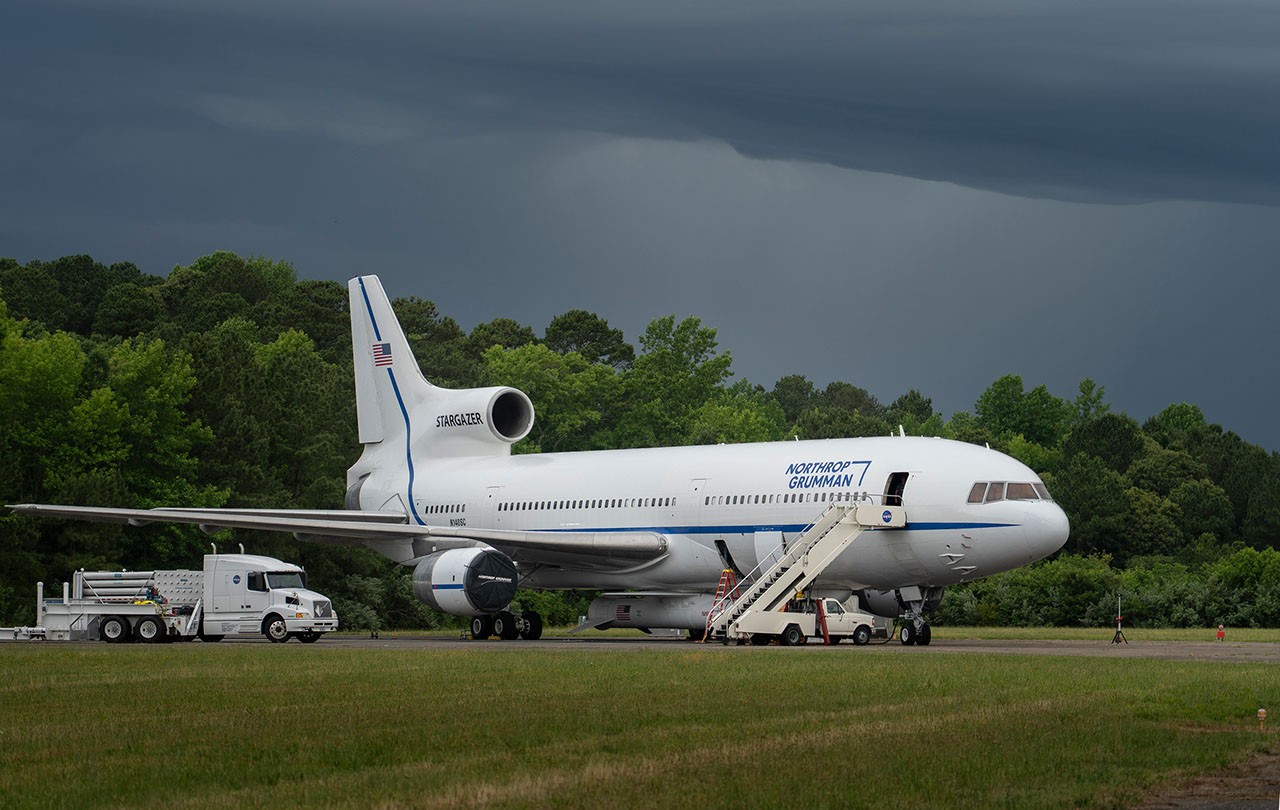
NASA and its partners have prepared the Swift Boost Mission for launch on June 30, targeting an orbital altitude increase for the aging Swift gamma-ray observatory. The mission will employ a SpaceX Falcon 9 rocket to deliver a propulsion module that will raise Swift's orbit and extend the spacecraft's operational lifetime.
Swift, launched in 2004, has spent two decades detecting gamma-ray bursts and other high-energy transient events across the cosmos. The observatory operates in a low Earth orbit that gradually decays over time due to atmospheric drag. Without intervention, Swift would reenter Earth's atmosphere within years, ending one of astronomy's most productive gamma-ray detection platforms.
The propulsion module will perform a series of burns to elevate Swift's altitude by approximately 100 kilometers. This adjustment will dramatically reduce atmospheric drag and extend the mission's viability for another decade, allowing Swift to continue observations of stellar explosions, neutron star mergers, and other violent cosmic phenomena that reveal fundamental physics.
Swift's rapid-response capabilities remain unmatched in the field. The spacecraft detects gamma-ray bursts within seconds and automatically repoints its instruments to capture follow-up observations in X-ray and ultraviolet wavelengths. Ground-based observatories worldwide rely on Swift's burst alerts to conduct simultaneous observations, creating a coordinated network of telescopes examining the universe's most energetic events.
The Swift Boost Mission represents a practical approach to space sustainability. Rather than retiring a functioning instrument, NASA engineers designed a solution to preserve its scientific returns. The propulsion module's attachment to Swift demonstrates the growing feasibility of on-orbit servicing and refueling, techniques essential for maintaining space infrastructure and extending the operational value of major astronomical assets.
Launch preparations at Kennedy Space Center are on track. The mission opens a new chapter for Swift, transforming it from a slowly decaying observatory into a rev