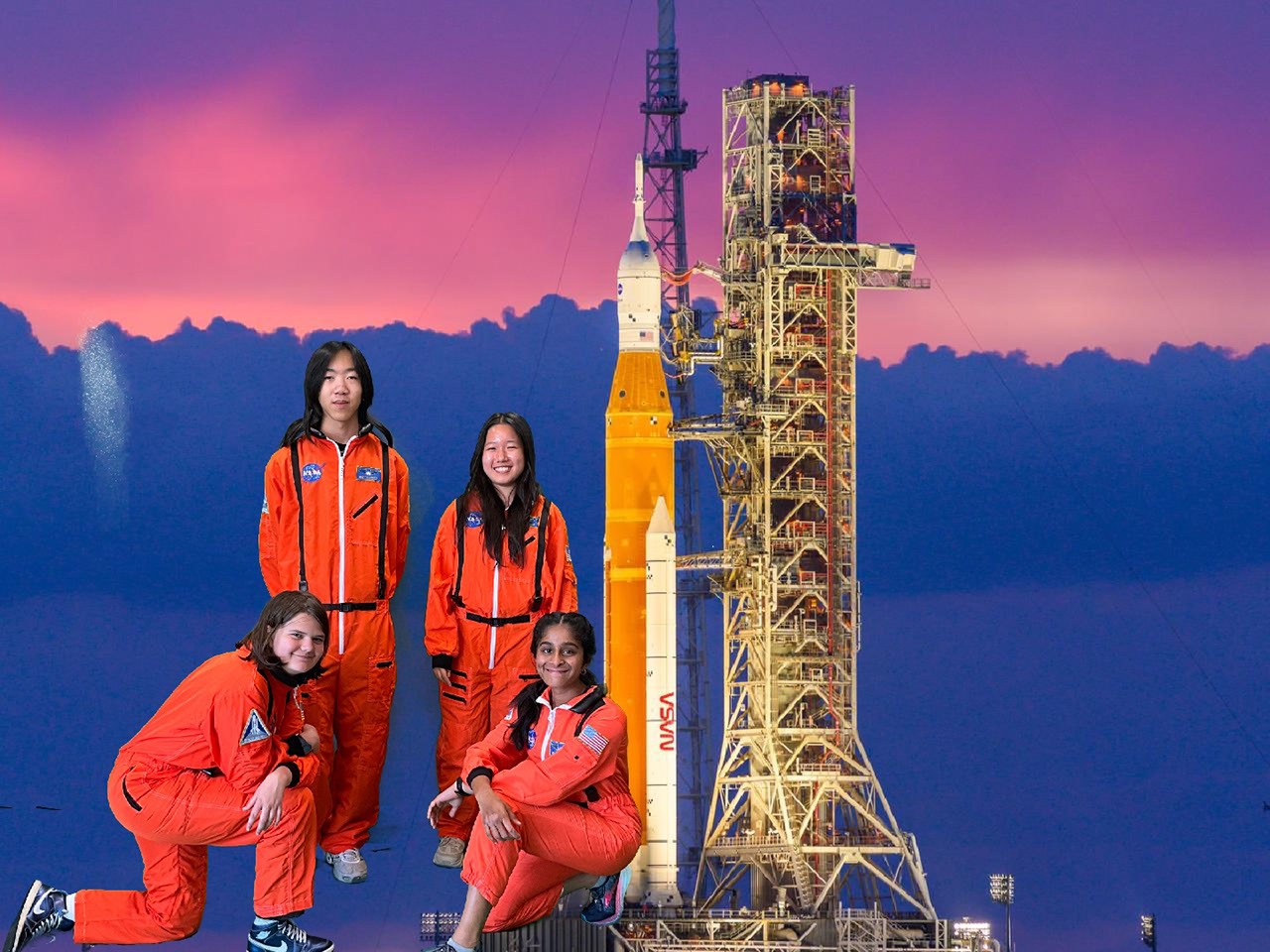
NASA's Northwest Earth and Space Science Pathways project wrapped up its 2025-2026 ROADS from Earth to Venus National Challenge, bringing authentic space science to over 500 students across 120 teams in eight states. The program, part of NASA's Science Activation initiative, immersed participants in engineering and discovery work modeled on Venus exploration missions.
ROADS challenges students to engage with real planetary science by designing rover concepts and conducting observations informed by actual Venus mission data. The competition structure pushes young scientists beyond classroom theory into hands-on problem-solving that mirrors the work of professional engineers at NASA and partner institutions. By grounding the challenge in Venus, a planet with extreme atmospheric pressure, temperatures exceeding 450 degrees Celsius, and a dense carbon dioxide atmosphere, students confronted genuine engineering constraints that rover designers face.
Venus exploration represents a frontier in planetary science. NASA missions like Akatsuki currently study the planet's atmosphere and climate patterns, while future missions aim to deploy surface robots and atmospheric probes. Understanding Venus through student-led investigation builds the next generation's capacity for planetary exploration while illuminating Earth's own climate systems through comparative planetology.
The ROADS program demonstrates how NASA's Science Activation efforts translate space exploration into educational opportunity. By connecting students to real missions and authentic data, the initiative transforms abstract physics and engineering into tangible challenges that students solve collaboratively. This approach develops technical literacy while fostering the problem-solving mindset that drives innovation in space exploration.
The eight-state footprint reflects NESSP's reach across the Pacific Northwest and beyond, indicating growing demand for hands-on space science education. Success in programs like ROADS establishes pathways for student participants to pursue careers in planetary science, aerospace engineering, and related fields. The 120 teams collectively represent hundreds of young minds now equipped with direct experience in the kind of thinking required to explore our solar system.