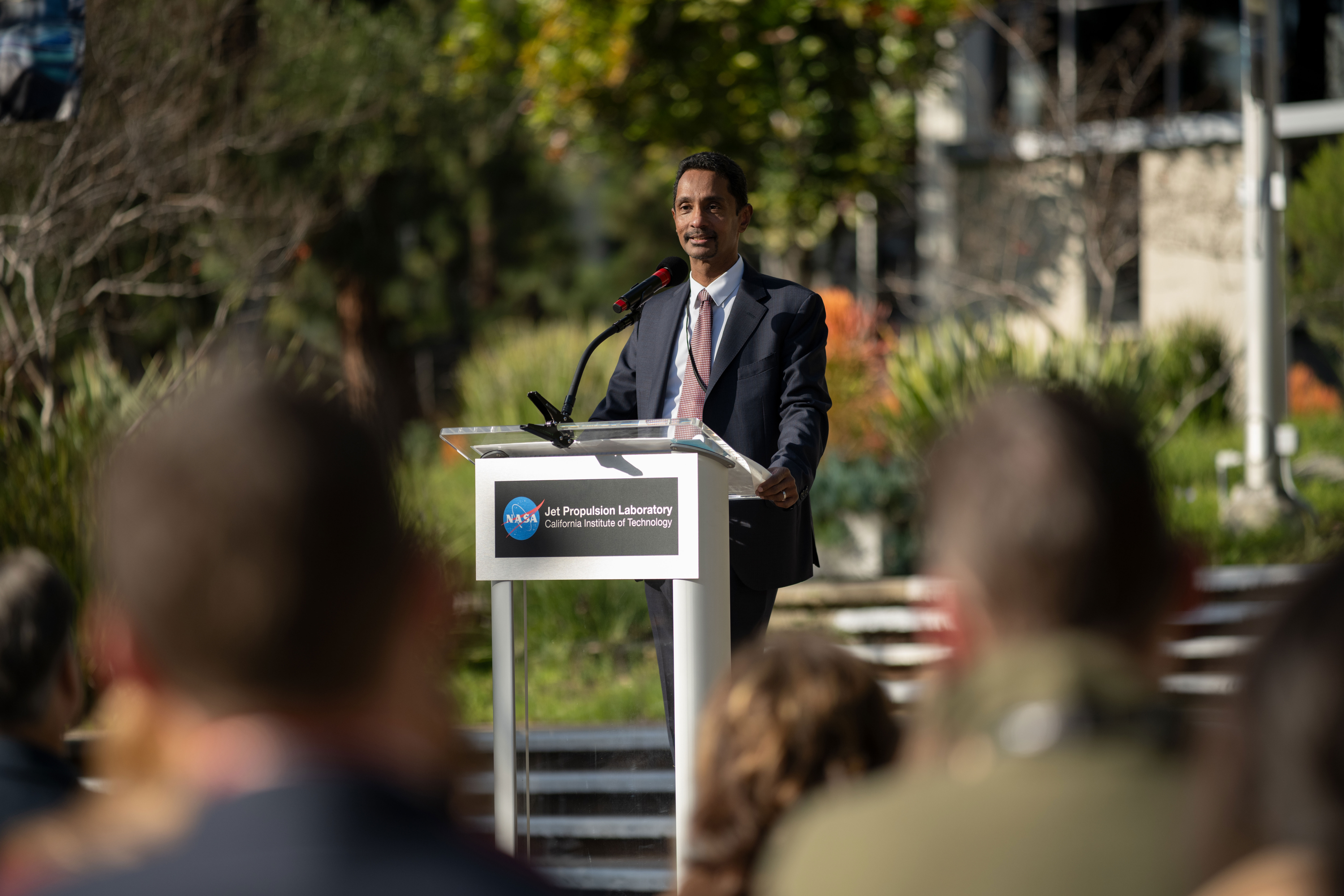
Ray Jayawardhana formally assumed the presidency of the California Institute of Technology today, becoming the institution's tenth leader. Jayawardhana, an accomplished astrophysicist, holds the Sonja and William Davidow Presidential Chair and serves as professor of astronomy at Caltech.
His appointment, announced January 6, marks a transition in leadership at one of the world's premier research institutions. Jayawardhana succeeds Thomas Rosenbaum, who led Caltech for a decade beginning in 2014.
Caltech has shaped space science and planetary exploration since its founding in 1891. The institute operates NASA's Jet Propulsion Laboratory, which manages the Mars rovers, the James Webb Space Telescope operations coordination, and numerous deep space missions. Jayawardhana's background in astrophysics positions him to guide the institution through an era of accelerating discoveries in exoplanet science, cosmology, and space instrumentation.
Jayawardhana brings research expertise in star and planet formation, topics central to understanding how planetary systems emerge from stellar nurseries. His scientific credibility within the astrophysics community reflects the caliber of talent Caltech recruited for its leadership.
The appointment signals Caltech's continued commitment to maintaining excellence across physics, astronomy, planetary science, and engineering disciplines that define its research portfolio. As president, Jayawardhana will oversee JPL's operations, manage institutional partnerships with space agencies worldwide, and direct funding allocation across divisions pursuing questions from subatomic physics to cosmological structure.
Leadership transitions at major research universities influence institutional priorities and funding strategies across entire fields. Jayawardhana's election reflects Caltech's determination to remain at the forefront of space science leadership during a period of expanding commercial spaceflight, increasing international competition in space exploration, and unprecedented capabilities in astronomical