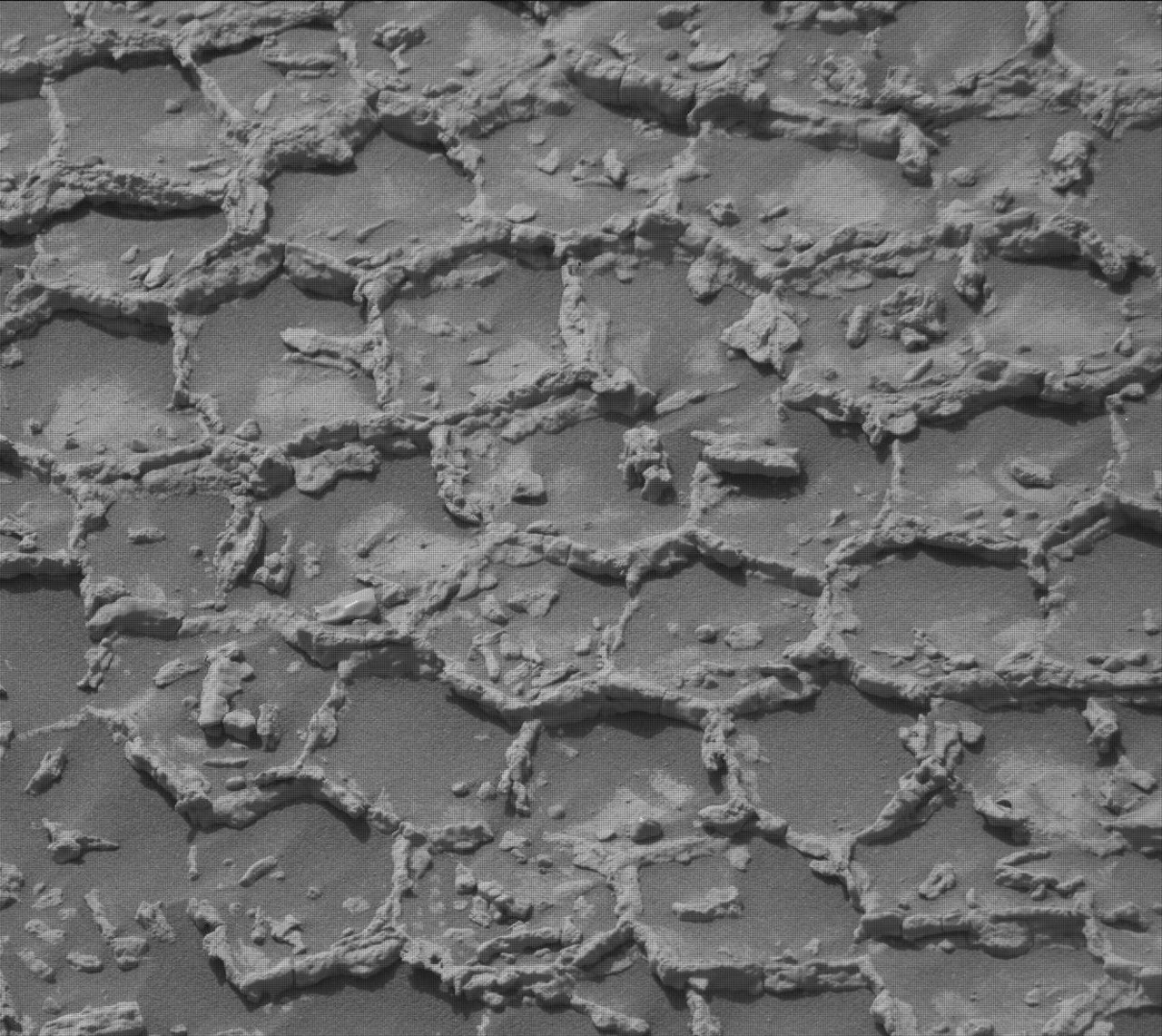
NASA's Curiosity rover continues its systematic survey of Gale Crater, reaching a light-toned geological unit that orbital imagery suggested would be smooth terrain. During sols 4934-4940, the six-wheeled rover executed observations across two planning cycles, with the Monday planning session positioning Curiosity within this distinctive unit for detailed analysis.
The rovers current location presents polygonal surface features, a common geological signature on Mars that results from subsurface ice or mineral-driven fracturing. These patterns hold clues to Mars' ancient climate and hydrological history. Curiosity's instruments, including the Mastcam imaging system and the REMS environmental sensors, document these formations as part of the rover's ongoing investigation into Gale Crater's diverse geology.
The rover has now traversed over 28 kilometers since its August 2012 landing, far exceeding its original two-year mission design. Each sol of operation adds data to NASA's understanding of Martian surface processes and subsurface composition. The multi-sol planning approach, with sequential decision cycles, allows the rover team to adapt observations based on real-time discoveries while managing power constraints and instrument degradation.
Curiosity's investigations in this region contribute directly to NASA's broader Mars exploration strategy. The rover serves as a pathfinder for future crewed missions, documenting hazards, resources, and habitability conditions. Observations of polygonal terrain specifically help scientists understand water-rock interactions and the potential for past microbial life.
The rover's longevity demonstrates the effectiveness of its nuclear power source, a radioisotope thermoelectric generator (RTG) that provides consistent energy independent of dust storms or seasonal variations. As Curiosity approaches 15 years of Martian operations, its continued productivity validates the engineering decisions that made this extended mission possible. Each new geological unit explored represents incremental progress toward