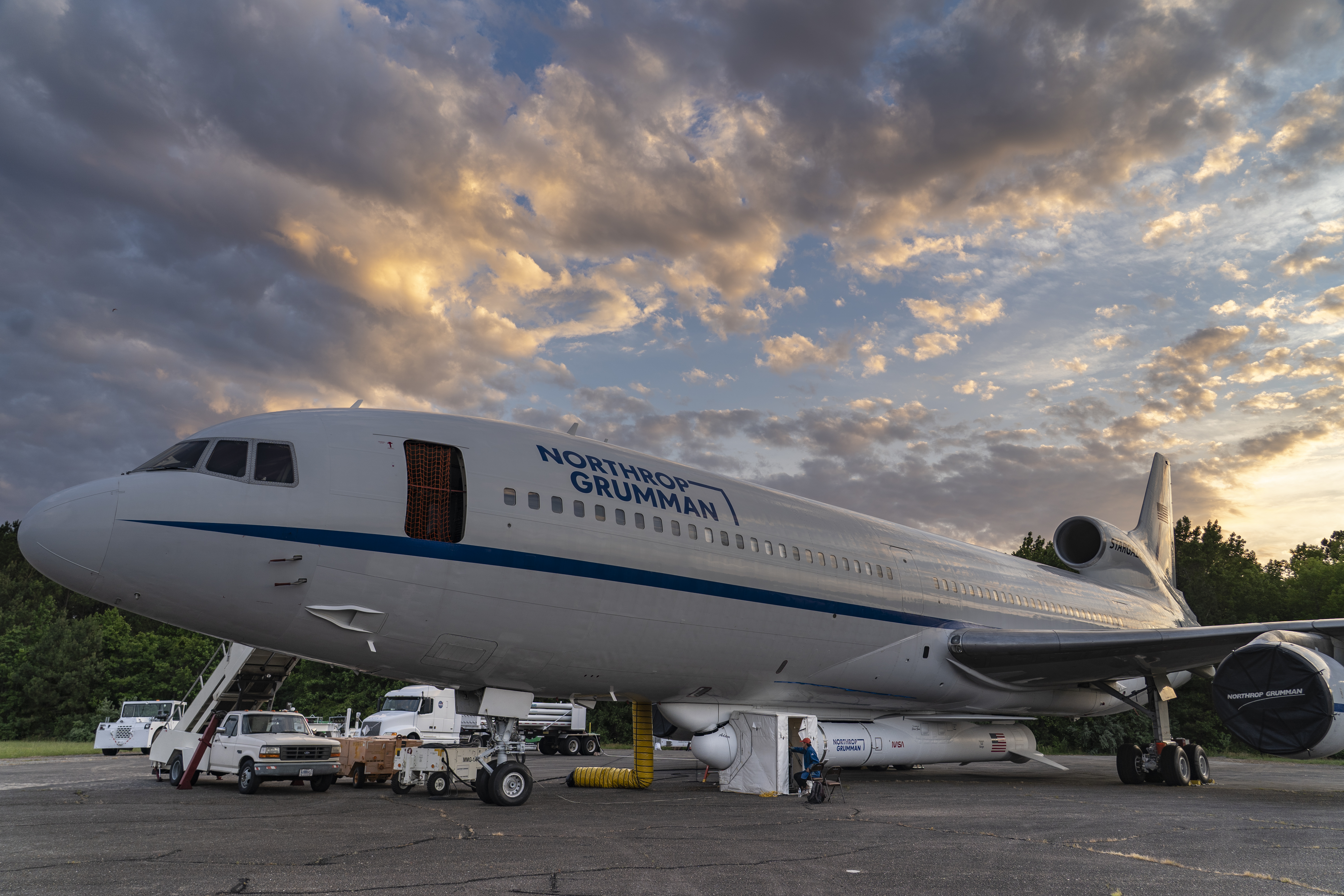
NASA's Swift Observatory, a veteran gamma-ray burst detector launched in 2004, will receive an orbital boost from an unprecedented robotic servicing mission. LINK, a spacecraft built by commercial company Katalyst Space, stands ready to launch no earlier than Thursday, July 2, from Kwajalein Atoll in the Marshall Islands.
The Neil Gehrels Swift Observatory, named after the mission's late principal investigator, tracks violent cosmic explosions that mark the deaths of massive stars and the collisions of neutron stars. After two decades of operations, the spacecraft's orbit has decayed from atmospheric drag. Without intervention, Swift would eventually reenter Earth's atmosphere and burn up, ending its contributions to high-energy astrophysics.
LINK represents a turning point in space exploration. Rather than designing and launching an entirely new observatory, NASA will extend Swift's operational life through orbital refueling and servicing. This approach demonstrates the viability of spacecraft longevity programs that could revolutionize how missions are sustained in orbit. Katalyst Space's robotic servicing platform was engineered specifically for proximity operations with uncooperative spacecraft, those not designed with servicing ports or fuel transfer systems in mind.
The mission addresses a critical bottleneck in astronomical research. Swift's rapid response capabilities, which pinpoint gamma-ray burst locations within seconds, have made it indispensable for coordinating ground and space-based observations of transient events. The observatory has discovered thousands of bursts and helped establish that short gamma-ray bursts originate from neutron star mergers, a connection confirmed when gravitational wave detectors and electromagnetic telescopes observed the same event in 2017.
By raising Swift's orbit, LINK will reduce atmospheric drag and extend the observatory's operational window by years. This commercial-government partnership showcases how private spacefaring companies now contribute directly to NASA's core science