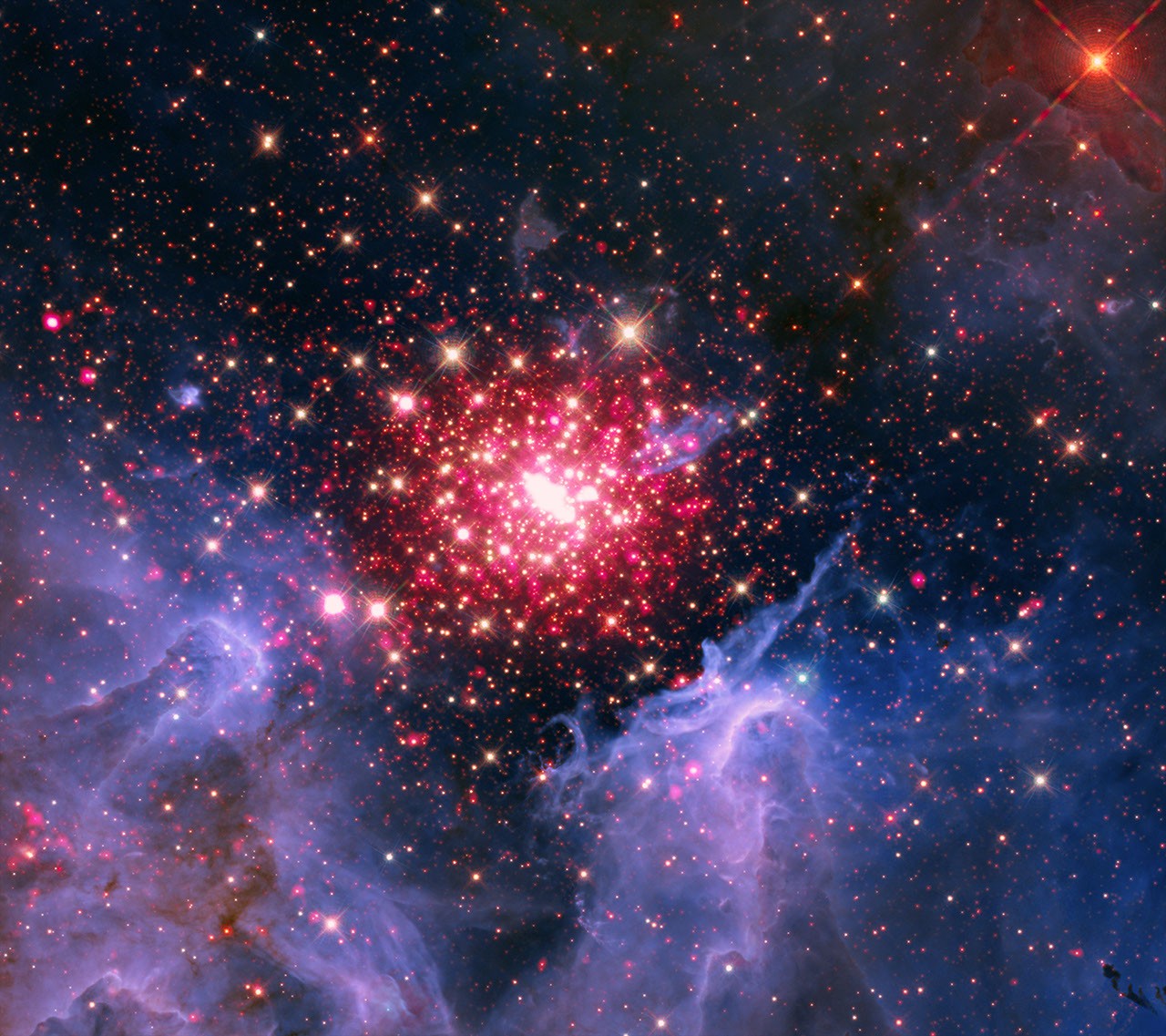
NASA's Chandra X-ray Observatory has released four cosmic images rendered in red, white, and blue for the nation's 250th anniversary celebration. The images showcase objects Chandra observes across the universe, from nearby stellar remnants to distant galaxy clusters billions of light-years away.
The release includes new sonifications that convert astronomical data into audio, making the science accessible through sound. This technique transforms X-ray emissions and other observational data into musical tones and rhythms, allowing listeners to experience cosmic phenomena in an entirely different sensory dimension.
Chandra, launched in 1999 aboard Space Shuttle Columbia, observes high-energy X-ray radiation invisible to human eyes. The observatory detects X-rays emitted by superheated gas surrounding black holes, shock waves from supernova explosions, and material heated to millions of degrees within galaxy clusters. By rendering these observations in visible light colors, Chandra's scientists bridge the gap between what instruments detect and what humans can perceive.
The four featured objects represent different cosmic scales and phenomena. Each image captures distinct astrophysical processes that help scientists understand stellar death, black hole behavior, and the large-scale structure of the universe. The sonifications pair with these visuals, creating a multimedia presentation that engages both sight and sound.
This anniversary release underscores NASA's broader mission to democratize space exploration and make cutting-edge astronomy available to the public. Chandra continues operating as one of NASA's flagship observatories, complementing data from other telescopes like the James Webb Space Telescope and the Hubble Space Telescope to build comprehensive pictures of cosmic phenomena.
The patriotic color scheme transforms complex X-ray observations into accessible imagery while celebrating American scientific achievement and exploration. Chandra's continued discoveries demonstrate how space-based observatories extend human understanding far beyond our planet.