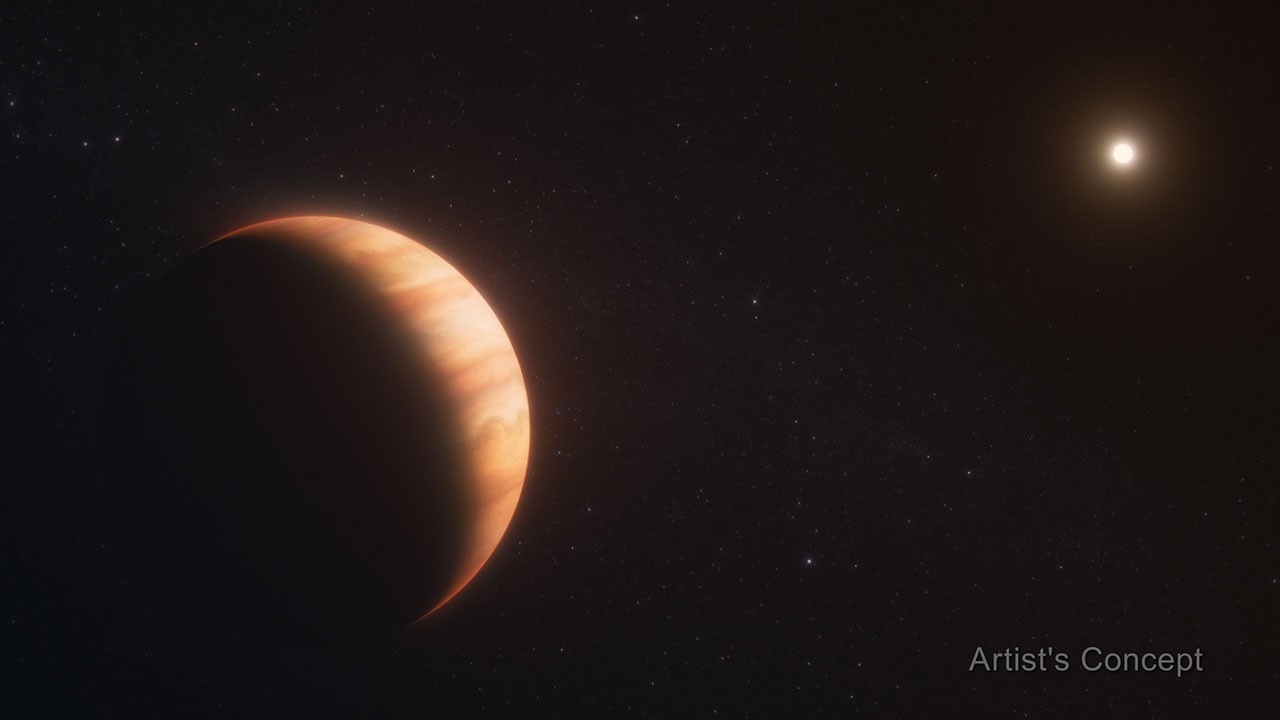
NASA's James Webb Space Telescope has observed a planetary system that survived its host star's death, offering astronomers a rare glimpse into the violent aftermath of stellar collapse. The discovery reveals how planets can endure the catastrophic expansion of a dying star swelling into a red giant.
The observations focus on a white dwarf system, the dense stellar remnant left after a Sun-like star exhausts its nuclear fuel and sheds its outer layers. Webb detected a planet orbiting this collapsed star, having somehow navigated the star's expansion phase billions of years ago when the stellar envelope expanded outward dramatically.
This finding holds profound implications for understanding solar system evolution across the universe. Earth and the other rocky planets in our solar system will face a similar fate when the Sun enters its red giant phase in approximately 5 billion years. By studying this preserved system, astronomers gain empirical data on what physically happens to planetary orbits during stellar death.
The white dwarf system demonstrates that planets can survive at surprising distances from their parent stars, even after extreme stellar upheaval. Webb's infrared capabilities proved essential for detecting the faint signatures of material orbiting the white dwarf, revealing details about the planetary system's composition and orbital characteristics that ground-based telescopes cannot access.
This discovery addresses fundamental questions about planetary stability and system architecture across cosmic timescales. Understanding how planets respond to their stars' life cycles shapes models of exoplanet survival rates and informs the search for habitable worlds. The data also constrains theories about planetary migration, tidal forces, and the mechanisms that either eject planets from dying systems or allow them to remain bound to their stellar remnants.
Webb continues to demonstrate why infrared astronomy opens new windows on stellar archaeology. The telescope's observations reveal not just what our own solar system's future holds, but the diversity of planetary fates across the galaxy.